Chronicle Editor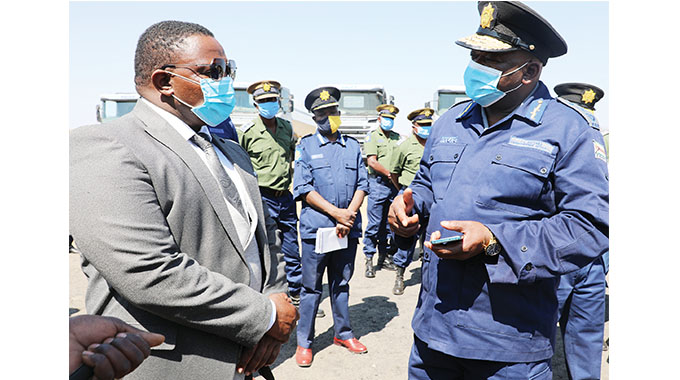
Mashudu Netsianda, Senior Reporter
THE Ministry of Home Affairs and Cultural Heritage is in the process of introducing an integrated computerisation system that links all its departments as part of efforts to curb corruption while improving efficiency.
The ministry has also already set up a technical committee to spearhead the computerisation programme for the departments of immigration, Registrar-General’s Office and the police.
The integrated system will allow inter-departmental access protocols for required vital information.
The backlog of passports was a result of challenges in the importation of the special paper needed to produce passports, as only a handful of companies in the world produced it, with Zimbabwe yet to find a viable local alternative.
The Registrar-General’s Office has managed to reduce the passport backlog by 50 percent, taking advantage of a lull in new applications due to Covid-19 restrictions that have limited travel to the offices.
Before the lockdown, production of passports had been seriously affected by increasing applications and foreign currency shortages.
The RG’s Office has produced 200 000 passports since the beginning of the lockdown period out of a backlog of about 400 000 passports.
In a media briefing in Bulawayo yesterday, Home Affairs and Cultural Heritage Minister Kazembe Kazembe said in terms of integrated solution, a lot of ground has been covered.
“We are looking at coming up with an integrated solution and a lot of ground has been covered in that regard. Going forward, we want to see our systems computerised as integrated and this is going to be done in phases,” he said.
“Given the challenges that we are facing in our immigration department, we agreed that we will start with that department. What we want to see at the end of the day is a situation where we have a system at immigration that talks to a system at the police, at Interpol as well as at the Registrar-General’s Office and that is what we are looking at.”
Minister Kazembe said the Permanent Secretary in his ministry has put together a technical committee which is going to look into the integration of the computerised system.
“The integrated system will ensure that there are access protocols allowing the relevant departments to access information. We are looking at a situation where, say you arrive at the border post or airport, the moment you present your passport, and if the system is integrated the immigration official will automatically be able to tell that the person is on police wanted list through merely punching a computer key,” he said.
“As we speak, we have started the computerisation programme with the hope of integrating it. We are trying to do away with separate systems such that you end up having a duplicated system.”
Minister Kazembe said they are working with the Ministry of Higher and Tertiary Education, Innovation, Science and Technology Development with the hope of developing local solutions.
“Computerisation is the way to go because it will assist in curbing corruption because if we go the e-service route, it will minimise physical interaction between people. Mostly important computerisation will result in efficiency so that our citizens and travellers are served on time and there will also be cost reduction,” he said.
Turning to the issue of passports, Minister Kazembe said the RG’s Office has been working in the background during the lockdown to reduce the passports backlog.
“While we were focusing on reducing the spread of Cvid-19 since March when lockdown was introduced, we had to temporarily stop some of the services. However, we are now working on resuming those services and our Permanent Secretary is working with the RG’s Office in that regard,” he said.
“We are saying the long-term solution is to go online and this is going to take time, but meanwhile we cannot wait this long as we should come up with a way of resuming those services but at the same time without escalating the spread of Covid-19.”
Minister Kazembe said Government had initially planned to clear the backlog within six months before the outbreak of Covid-19.
“Unfortunately, what we didn’t plan for was Covid-19. When it struck, Treasury had to divert finances towards dealing with the pandemic. The closure of borders also meant that we could not bring in the consumables that are required in printing passports,” he said.
“The consumables are of a security nature, which is why they are imported and they are controlled by ICAO (International Civil Aviation Organisation), which is a specialised agency of the United Nations, and they have specific requirements that have to be met.”
Minister Kazembe said despite Covid-19 having negatively impacted on the process of passport production, the RG’s Office managed to clear the backlog by producing 200 000 passports. — @mashnets


 Online Reporter