Online Reporter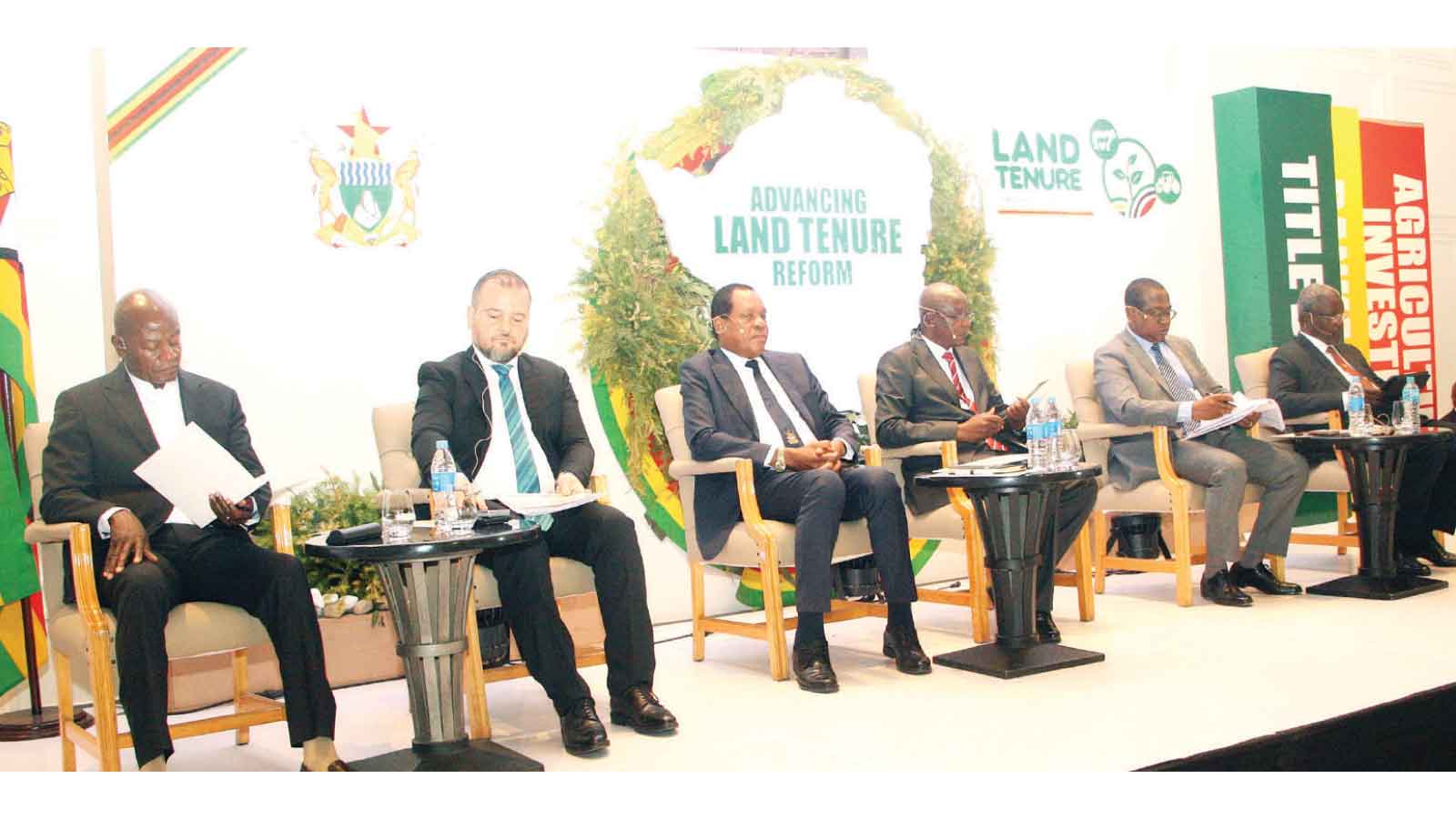
Theseus Mauruki Shambare
Herald Correspondent
GOVERNMENT has trained focus towards unlocking nearly US$20 billion in land value through secure, transferable and bankable title deeds to drive investment, agricultural productivity and economic growth.
Having addressed historical imbalances of colonial land ownership, President Mnangagwa officially launched the new Land Tenure Implementation Programme in 2024 — a pivotal shift in Zimbabwe’s agrarian reform trajectory.
Through the Land Tenure Implementation Committee (LTIC) chaired by Dr Kudakwashe Tagwirei, the Government is now transitioning the narrative from who owns the land to how the land can drive economic prosperity.
The primary objective of the policy is to unlock the “dead capital” trapped in agricultural land.
Specifically, it aims to make land bankable, boost agricultural productivity and national output, establish a modern, digitised land administration and promote inclusivity by ensuring that women, youths and previously marginalised groups are not left behind in the formalisation process, granting them legal security over their properties.
In his presentation during the High-Level Land Tenure Breakfast Meeting held in Harare yesterday under the theme “Advancing Land Tenure Reform: Title Deeds, Bankability and Agricultural Investment”, Justice, Legal and Parliamentary Affairs Minister Ziyambi Ziyambi said the land redistribution programme had reached finality, with the Second Republic now focused on ensuring beneficiaries derive greater economic value from the land.
“The Land Reform Programme is a done and dusted issue. No reversal whatsoever will happen,” Minister Ziyambi said.
“It is now a question of getting value from the land and this can only be done through the issuance of secure tenure so that investors can come. But most importantly, the citizens themselves must feel free to invest in their land knowing that no one will take it from them.”
He said the new title deeds would incorporate enhanced security features to strengthen verification and protect beneficiaries against fraud.
“The new title deeds carry enhanced security features, including unique serial numbers, holograms, micro-text and QR codes linked to the national digital registry as well as linked to banks for verification in real time,” he said.
Yesterday’s high-level land tenure indaba brought together Government Ministers responsible for Lands, Finance, Agriculture and Justice, alongside financial sector executives, agribusiness leaders, legal experts, development partners and traditional leadership.
The engagement focused on accelerating land tenure reforms, issuing title deeds, improving land administration and unlocking the economic value of agricultural land.
The Land Tenure Implementation Committee (LTIC) was established following a Presidential directive as part of the major overhaul of the country’s land administration system.
LTIC chairman Dr Tagwirei said the committee was now focused on turning secure tenure into an economic catalyst.
“Land tenure reform is not merely an administrative process; it is an economic transformation programme,” he said.
Dr Tagwirei said Government had so far surveyed 4,2 million hectares, while traditional large-scale commercial holdings had declined by 62,6 percent as small-scale agricultural holdings expanded.
“We have surveyed 4,2 million hectares,” he said.
“Traditional large-scale commercial holdings have fallen by 62.6 percent, while small-scale agricultural holdings have expanded.”
Dr Tagwirei said implementation of the Presidential Title Deeds Programme was gathering pace, with 27 045 plots surveyed and 10 231 mapped to beneficiaries, while 1 824 agreements of sale worth about US$110 million had been concluded.
“As of 24 August 2026, we have surveyed 27 045 plots and mapped 10 231 to their beneficiaries. We have concluded 1 824 agreements of sale, worth $110 million,” he said.
Finance, Economic Development and Investment Promotion Minister Professor Mthuli Ncube said nearly US$20 billion in land value was currently missing from the country’s economic accounts and could be unlocked through the Title Deeds Programme.
“The average price of land in these farms is about six cents per square metre. And when we worked out this value, it comes to almost US$20 billion.
“Just by merely completing the Title Deeds Programme, we will move the whole of Zimbabwe into upper-middle-income,” said Prof Ncube.
He said secure property rights would lengthen the investment horizon for farmers while enabling financial institutions to provide longer-term financing.
“Because once there are property rights and you have a claim on that land, banks will find it easy to lengthen the horizon of investment on that land,” he said.
Prof Ncube, however, stressed that title deeds alone would not guarantee access to loans.
“The title deed is a necessary enabler of finance, but it is not by itself alone. Banks lend primarily against the capacity of an enterprise to generate cash flows and then repay,” he said.
He said agricultural financing would therefore need to be supported by viable business plans and key enablers.
“These enablers include irrigation, insurance, extension, storage facilities, accessible and reliable market and climate risk insurance,” said Prof Ncube.
Agriculture, Mechanisation and Water Resources Development Minister Dr Anxious Masuka said the reforms would fundamentally change the way farming was conducted, with agriculture increasingly treated as a formal business.
“My expectation is that by 2030, we will have registered these companies: 360 000. I look at the 24 000 A2 farmers, not as A2 farmers; I look at them as corporates,” he said.
He said the transformation was intended to make agriculture a catalyst for rural development and industrialisation.
“I often say agriculture must be a business,” said Dr Masuka.
Dr Tagwirei said the programme would directly benefit about 353 000 citizens, with farmer payments potentially capitalising a US$16,8 billion development fund.
“The programme titles some 353 000 citizens directly,” he said.
“The US$16.8 billion development fund, built from farmers’ own payments, will finance development projects across sectors nationally—from infrastructure to energy, water, social services.”
Lands and Rural Development Minister Vangelis Haritatos said the Government was modernising land administration through the One Stop Title Processing Centre and an integrated digital system.
“Today, we have consolidated these three databases into one integrated digital system,” he said. “It allows us to verify land parcels instantly, detect duplication before it happens, and maintain a single source of truth for all land records.”
The reforms are anchored on President Mnangagwa’s Vision 2030 agenda, with Dr Tagwirei summing up the objective as: “Secure tenure, bankable land, a productive Zimbabwe.”
The LTIC is transforming land from a mere political asset into a powerful economic tool—aiming to create a wealthy, prosperous, and self-sustaining black farming class that significantly contributes to Zimbabwe’s Vision 2030.