Ivan Zhakata-Herald Correspondent
GOVERNMENT, through the Zimbabwe Parks and Wildlife Management Authority (ZimParks) and working with its partners, has initiated the formulation of a National Human-Wildlife Coexistence Strategy to strengthen coordination, improve responses to human-wildlife conflict, and protect both communities and conservation priorities.
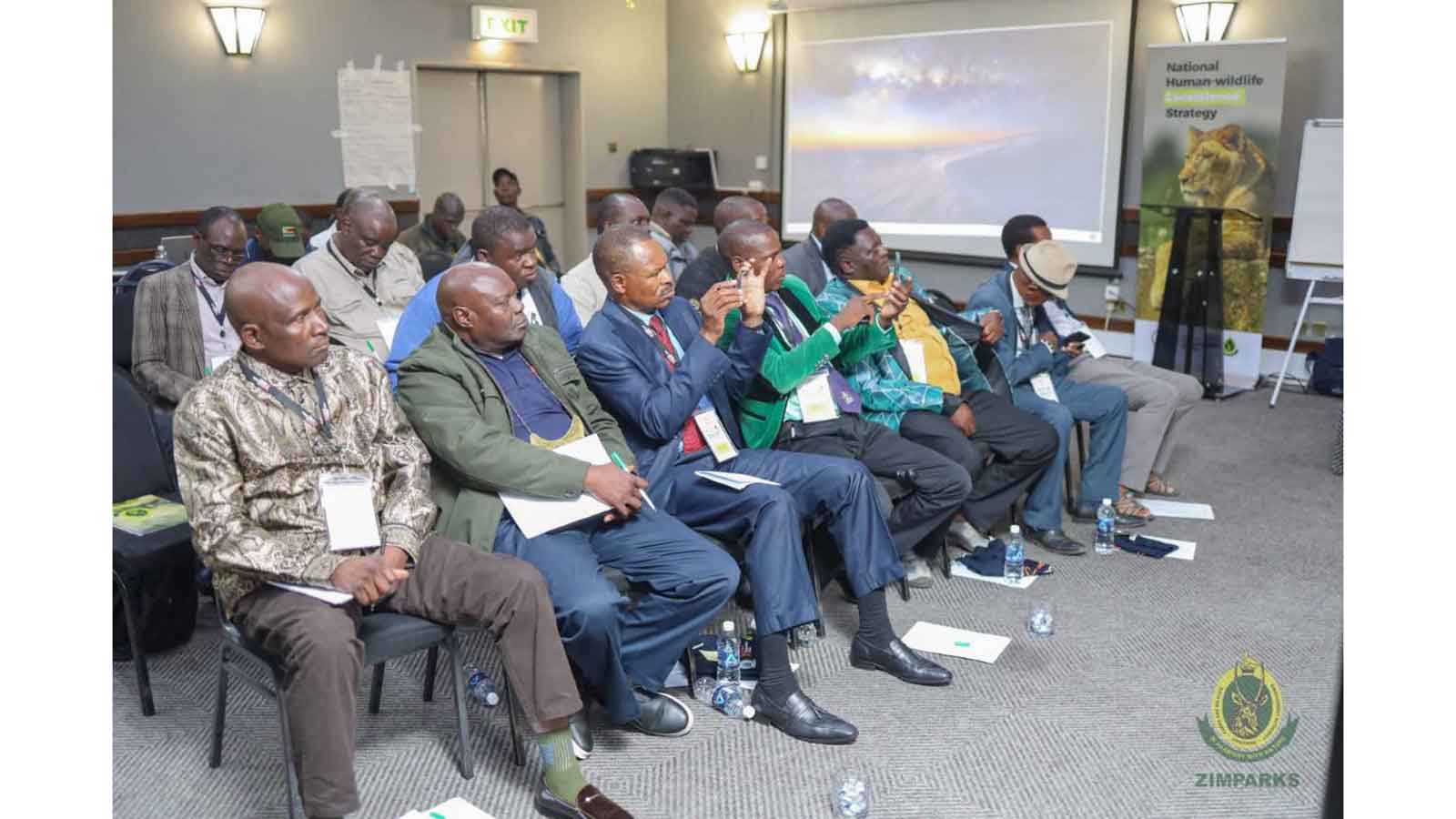
The strategy is being developed at the National Human-Wildlife Coexistence Strategy Development Workshop, which opened in Harare on Tuesday and brought together Government ministries, conservation organisations, traditional leaders, academia, the private sector, development partners and communities affected by human-wildlife conflict.
Zimbabwe Parks and Wildlife Management Authority (ZimParks) director of operations Mr Arthur Musakwa, in a presentation read on his behalf by the head of Management Services, Mr Givemore Mukuya, said the workshop marked an important milestone in the country’s efforts to promote safer and more sustainable coexistence between people and wildlife.
“Today marks an important step in Zimbabwe’s journey towards safer, more sustainable coexistence between people and wildlife,” he said.
“The Government of Zimbabwe, working with its partners, has initiated the formulation of a National Human-Wildlife Coexistence Strategy—an important national framework designed to strengthen coordination, improve responses to human-wildlife conflict, and protect both communities and conservation priorities.”
Mr Musakwa said the workshop will provide stakeholders with an opportunity to review existing interventions, share experiences and develop practical, people-centred solutions to one of the country’s most pressing conservation challenges.
He said Zimbabwe recorded 12 374 human-wildlife conflict incidents between 2016 and 2025, resulting in 486 deaths, 554 injuries and the loss of 4 025 livestock.
“Over 12 000 human-wildlife conflict incidents were recorded between 2016 and 2025. A national coordinated framework is urgently overdue,” he said.
The presentation shows that crocodiles and elephants accounted for 83 percent of all recorded fatalities, with crocodiles responsible for 173 deaths and elephants for 114.
Mr Musakwa said recurring droughts, habitat encroachment, population growth and inadequate barriers between wildlife habitats and human settlements had intensified conflicts, particularly in hotspot districts including Binga, Hwange, Chiredzi, Hurungwe and Mbire.
He said although ZimParks had introduced rapid response teams, problem animal control programmes, community liaison structures, wildlife translocation initiatives, beehive fences, chilli barriers and the CAMPFIRE programme, significant challenges remained, including inadequate funding, fragmented institutional responsibilities, delayed compensation mechanisms and weak early warning systems.
“The diversity of voices in the room, including those directly affected by human-wildlife conflict, reinforces a powerful truth: coexistence is a shared responsibility that demands collective action,” Mr Musakwa said.
“Through open dialogue, evidence-based planning and strong partnerships, Zimbabwe is laying the foundation for a future where communities are safer, wildlife is protected and conservation delivers lasting value for all.”
Human-wildlife conflict has become one of Zimbabwe’s most pressing conservation and rural development challenges, particularly in communities bordering national parks, safari areas and conservancies.
Climate change-induced droughts, expanding settlements and increasing competition for land and water have intensified encounters between people and wildlife, resulting in loss of life, destruction of crops and livestock, while increasing pressure on conservation efforts.