Sikhulekelani Moyo
Zimpapers Business Hub
ZIMBABWE is demonstrating meaningful progress in rebuilding key infrastructure needed to support sustainable industrial growth, with business leaders saying improved electricity supply, water security and rail rehabilitation are creating a compelling investment proposition.
Bulawayo businessman and former Zimbabwe National Chamber of Commerce (ZNCC) Matabeleland region vice president, Mr Louis Herbst, said the improved electricity availability, local manufacturing and transformer exports are an important economic signal.
“This demonstrates progress not only in power generation and reliability, but also in our growing capacity to manufacture critical infrastructure equipment, substitute imports and compete in regional export markets,” he said.
Mr Herbst said developments in water security and transport infrastructure bolster this assertion.
“The Gwayi-Shangani Dam, now nearing completion, together with the associated pipeline project, present significant opportunities for Bulawayo and the wider Matabeleland region,” he said.
“Reliable water supplies will unlock opportunities in manufacturing, agriculture, agro-processing and industrial expansion. Equally, the rehabilitation of National Railways of Zimbabwe locomotives and rolling stock signals renewed commitment to restoring freight capacity, reducing logistics costs and improving the movement of raw materials and finished products.”
Mr Herbst said when considered collectively, the developments establish conditions for new factories, industrial parks, engineering enterprises, energy projects and export-oriented businesses.
For local and foreign investors, he said this represents an opportunity to participate in an economy progressively resolving some of the fundamental infrastructure constraints that have historically limited industrial competitiveness.
Bulawayo, he said, with its established industrial base, skilled workforce and strategic regional position, is particularly well placed to benefit.
“The next phase must be about translating infrastructure investment into productive economic activity, increased manufacturing capacity, import substitution, export earnings and sustainable employment,” added Mr Herbst.
“Zimbabwe is progressively building the infrastructure for industrialisation. The opportunity now is for capital, technology and enterprise to follow. Vision 2030 can no longer be a slogan; it is now clearly and evidently a reality!”
Improved power supply and growing solar investments are some of the key milestones delivered under the Second Republic led by President Mnangagwa, whose administration is now seized with revamping industrial manufacturing growth, among other sectors of the economy.
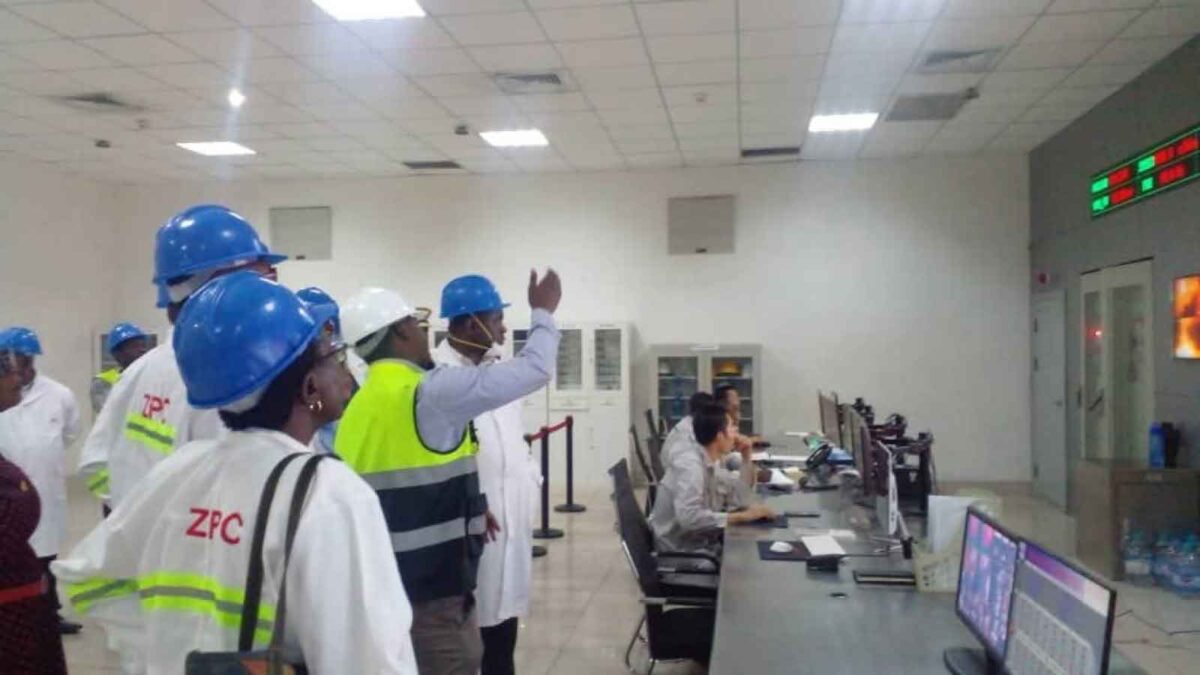
To resolve the electricity supply deficit, the Government installed two new generators at Kariba and is working on renewal of the old section of the Hwange power plant.
Bulawayo Business Forum (BBF) chairperson, Mr Heresy Herry, said industry must acknowledge the work done by the Zimbabwe Electricity Supply Authority (ZESA).
“I think as an industry, we need to start by acknowledging the work that’s been done by ZESA. There has been significant stability in terms of power supply,” he said.
“There has been consistency in that regard and there’s been a positive knock-on effect because that has allowed us to plan our shifts accordingly, which has found expression in our capacity utilisation. So, there’s been a positive knock-on effect, which has really also translated and been transferred on to our profit and loss accounts.
“Plus, also remember alternative power is very expensive. You can’t run a business on a generator, especially at scale. So, that was always a significant body blow for business whenever we had to find ourselves funding, purchasing diesel to augment the power that is not there. We are totally appreciative of ZESA’s performance in being able to provide power with consistency.”
Mr Herry said the industry was still facing challenges around transmission and distribution infrastructure.