Tinaye Agere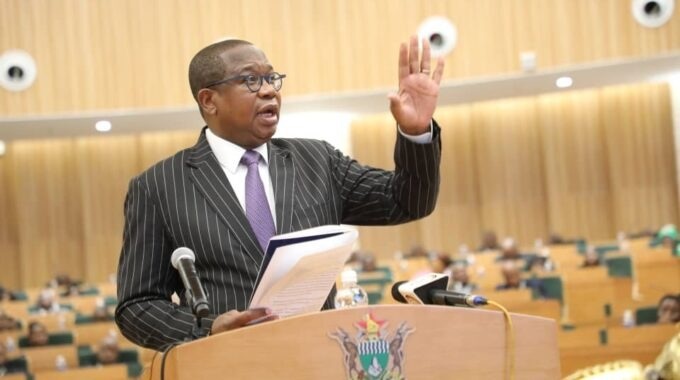
Business Reporter
THE Government is conducting a national price list survey covering goods and services it procures to ensure value for money by standardising the costing of programmes and projects for guided procurement processes across ministries, departments and agencies (MDAs), a Cabinet Minister has revealed.
The value-for-money procurement process was introduced in 2022 to curb overpricing by contractors and suppliers of goods and services to the State.
The process, which entails scrutinising all invoices to pay the correct market price, has significantly improved efficiencies and cost savings for the Government.
Since its introduction, the Government has been able to realise significant savings. It has achieved this by reviewing its procurement processes and implementing stricter procedures to avoid paying for overpriced products and services.
The national price list survey seeks to provide pricing guidance for public procurement, ensuring fair value for goods and services while streamlining the process.
Previously, procurement delays significantly hindered the implementation of Government programmes.
In 2022, the Government suspended payments to overcharging contractors due to escalating project costs and budget constraints.
The contractors capitalised on inflation by employing forward-pricing tactics, artificially inflating costs for future project stages to maximise profits.
Upon receiving payment, most of the beneficiaries offloaded the money on the black market, driving currency volatility and inflation.
The price list survey, being conducted by the Procurement Regulatory Authority of Zimbabwe and the Zimbabwe National Statistics Agency, is expected to curb these practices by establishing transparent and standardised pricing benchmarks.
In the 2025 Budget Strategy Paper, Finance, Economic Development and Investment Promotion Minister Professor Mthuli Ncube said the move was part of fiscal consolidation measures.
“The national price list survey is critical in ensuring value for money and will be used in standardising the costing of programmes and projects, as well as guide overall procurement processes by MDAs,” said Minister Ncube.
To support the electronic Government procurement (eGP) system, launched on October 23, 2023, Minister Ncube said priority would be directed towards investments in infrastructure that enhances security and enables electronic bidding. This was crucial for end-to-end bid encryption to prevent collusion and foster a competitive, secure procurement environment.
In addition to expanding eGP to all Government ministries and agencies, the Government would integrate environmental, social and governance (ESG) factors into the procurement system to promote responsible consumption and sustainability.
Prof Ncube said the Government would implement measures to prioritise local suppliers of goods and services for procurement by Government ministries and agencies, in line with existing laws and regulations.
This would support the upcoming Zimbabwe Industrial Reconstruction and Growth Plan, and the local content policy.
This comes as Buy Zimbabwe, a local advocacy group promoting locally produced goods and services, has called on the Government to implement a strategic public procurement policy prioritsing locally manufactured goods to stimulate the competitiveness of Zimbabwean companies.
Buy Zimbabwe general manager Mr Alois Burutsa argues that the Government, as the economy’s biggest spender, should lead by example through procuring locally produced goods.
He said a well-defined procurement policy would significantly reduce reliance on foreign imports by the Government and, as a result, empower domestic industries.
Mr Burutsa said this at the recently launched dissemination of the 2023 Zimbabwe National Competitiveness Report and Soya Bean Value Chain Competitiveness Report by the National Competitiveness Commission.
“As the largest buyer in the economy, the Government is expected to lead by example in procuring local goods and services,” he said.
Although the Government encourages local procurement, a comprehensive policy compelling State entities to prioritise local goods is lacking.
The vehicle purchase policy of 2016, which mandated local acquisition of trucks, buses and smaller vehicles, is part of attempts by the Government to address the shortcomings in public procurement.
While there had been some compliance, local car producers criticised Government entities for favouring imported vehicles, even when locally assembled options were available.
“State entities, however, often countered that, saying the quality and durability of imports were superior to locally assembled cars.
At the same event, Industry and Commerce Permanent Secretary Dr Thomas Utete Wushe said the Government strongly supported public procurement of locally produced goods to enhance competitiveness.
Public procurement of locally produced goods offers many economic advantages. It strengthens domestic businesses by providing a guaranteed market and increasing demand for their products.
This also fosters growth, encourages investment and creates jobs within the local economy. Further, it reduces reliance on imports, leading to a more stable balance of payments and potentially lower foreign exchange costs.
While acknowledging the importance of local procurement, Professor Albert Mukochekanwa of the University of Zimbabwe cautioned that quality considerations must be addressed.
He noted that some domestically produced goods might not currently meet the same quality standards as imports.
Analysts also noted the need to balance local procurement with maintaining high standards, while emphasising the importance of quality control measures and ongoing support for domestic producers to improve offerings by local companies.



 Online Reporter