Online Reporter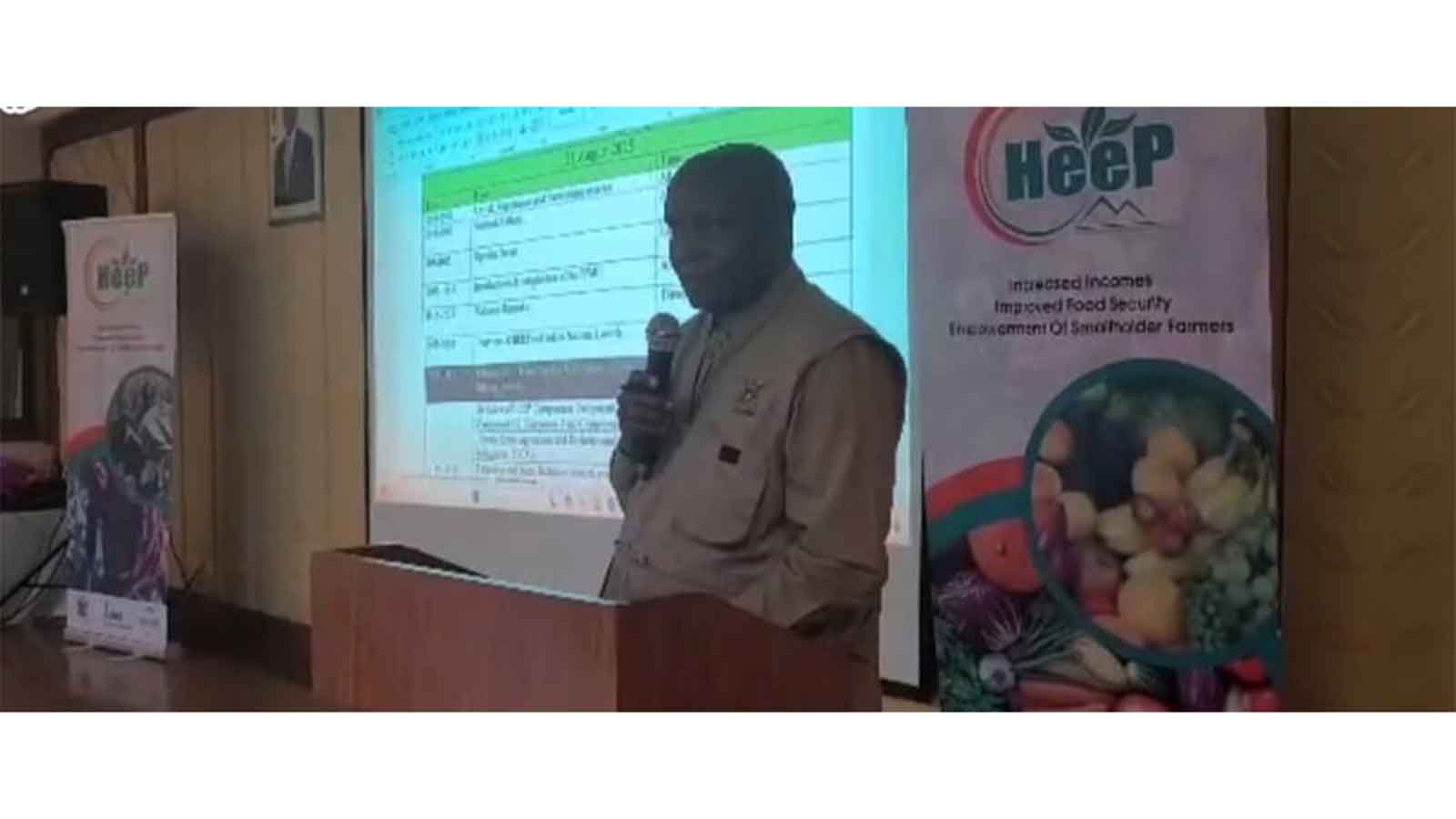
Nelson Gahadza-Business Reporter
THE Government has reaffirmed its commitment to strengthening climate resilience among communal farmers by expanding agricultural insurance coverage among smallholder rural farmers.
This comes after smallholder farmers in Buhera District received payouts under the Farmers Basket Insurance Scheme following drought-induced crop losses sustained during the 2025/26 farming season.
The payout ceremony, held in Buhera on Wednesday, brought together officials from the Ministry of Lands and Rural Development, the Insurance Council of Zimbabwe (ICZ), the Insurance and Pensions Commission (IPEC), AFC Insurance and traditional leaders.
The event was hailed as a significant milestone in the Government’s efforts to integrate insurance into mainstream agricultural production and build resilience against climate-related shocks.
Speaking after the ceremony, the ministry’s director of business development, Mr Abraham Mashumba, said the initiative reflected the Government’s growing emphasis on protecting communal farmers from the increasing risks posed by climate change.
He said changing weather patterns had fundamentally transformed agricultural production, with droughts, floods and disease outbreaks becoming more frequent, making agricultural insurance an indispensable component of modern farming.
“The event is the culmination of a long campaign among our communal farmers, who continue to bear the brunt of climate change. Droughts, floods and diseases are now the new normal, and we can no longer afford to be caught unprepared.
“Our focus as Government is to improve the incomes of communal farmers and, more importantly, secure sustainable livelihoods.
“While we continue investing in irrigation development, input support programmes and other interventions, we recognise that these measures alone cannot fully protect farmers against major climatic shocks,” he said.
Mr Mashumba said the Government embraced the Farmers Basket Insurance Scheme after the Insurance Council of Zimbabwe proposed extending agricultural insurance to communal farmers.
This segment of farmers accounts for nearly 70 percent of Zimbabwe’s population but has historically remained outside the formal insurance sector.
While commercial farmers have long benefited from agricultural insurance, communal farmers have largely remained uninsured despite their critical contribution to national food security.
He said extending insurance cover to communal farmers was fully aligned with Vision 2030, which seeks to transform rural livelihoods and build economically resilient communities.
“What we are witnessing today is proof that agricultural insurance can work in the communal farming sector. These payouts will enable farmers to recover more quickly after a difficult season and return to production instead of relying solely on emergency relief,” Mr Mashumba said.
Mr Mashumba explained that the scheme uses a combination of weather-index and yield-index assessments to determine payouts, enabling farmers affected by adverse climatic conditions to receive compensation based on estimated production losses.
He said the Government now regarded insurance as a critical agricultural input alongside seed, fertiliser and irrigation.
“We have invested significantly in irrigation development, Presidential input schemes and other production support programmes. Insurance must now be recognised as another essential input because it strengthens farmers’ resilience and safeguards agricultural production,” he said.
However, he acknowledged that coverage remained limited, with the programme currently operating in only 10 districts and selected wards across the country.
Mr Mashumba said the Government would continue working with insurance companies, regulators and development partners to increase awareness and expand participation. “We still have a lot of awareness campaigns to undertake. What is encouraging is that communities, including traditional leaders, are embracing agro-insurance. That gives us confidence that this initiative will continue to grow,” he said.
Mr Mashumba added that stronger partnerships between Government and the private sector were essential for strengthening agricultural value chains and improving rural livelihoods.
According to Mr Mashumba, wider adoption of agricultural insurance would eventually enable the Government to redirect resources currently spent on recurring food relief programmes towards long-term agricultural development initiatives.