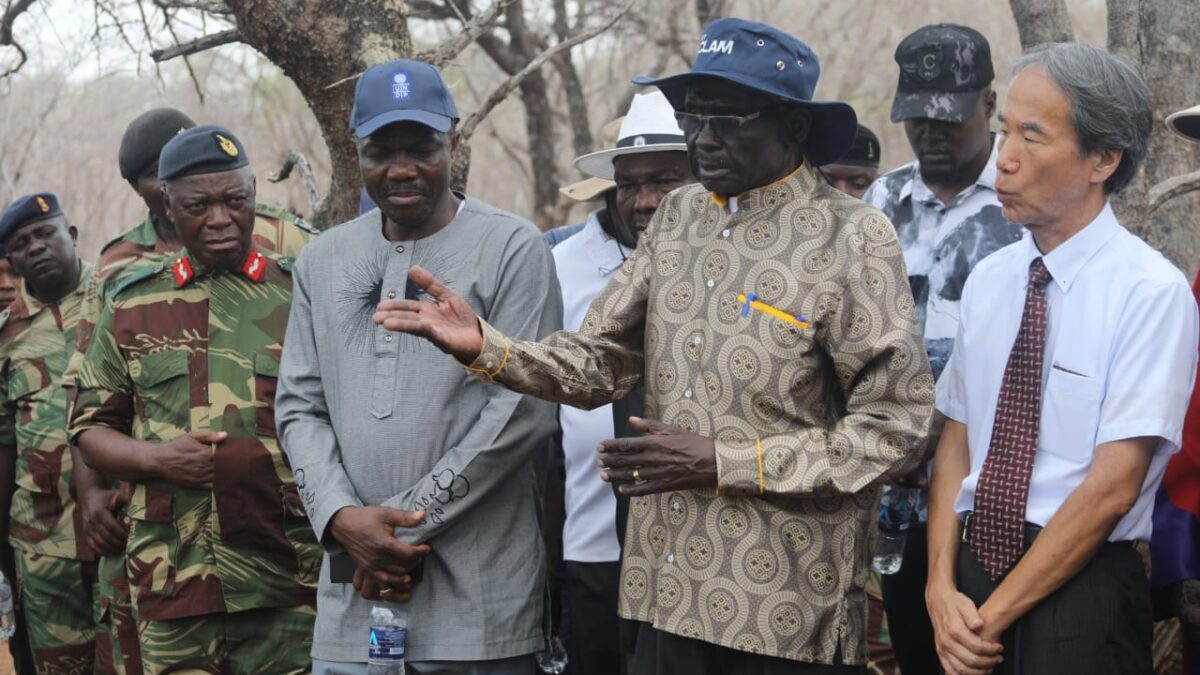
Theseus Mauruki Shambare in RUSHINGA
GOVERNMENT and its development partners have cleared more than 100 000 square metres of land and destroyed over 1 000 landmines in Rushinga and Mudzi districts under Project RECLAIM, improving safety for communities living in former minefield areas.
The latest consolidated figures up to October 2026 show that 221 016 square metres of land had been released and 2 746 mines destroyed, with operations in Rushinga accounting for 133 653 square metres and 1 981 mines.
In Mudzi, the Mines Advisory Group (MAG) cleared 87 363 square metres and destroyed 765 mines, bringing the combined achievement to 94,6 percent of the project’s 233 702-square-metre target.
Speaking during a high-level field visit to Rushinga District on Wednesday, Deputy Minister of Defence Brigadier General (Retired) Levy Mayihlome, who represented Minister of Defence Oppah Muchinguri-Kashiri, reaffirmed Government’s commitment to the national demining programme.
“The Government is fully cognizant of the fact that residual landmines continue to threaten human life, restrict access to fertile crop and grazing land, and to stifle rural development,” he said.
HALO Trust Country Director Oliver Gerard-Pearse said the organisation had recently reached another milestone in its Zimbabwe operations.
“As an organization, HALO just last week destroyed its 250,000th landmine here in Zimbabwe, here in Rushinga District,” he said.
HALO Trust is implementing demining activities in Rushinga, while MAG is working in Mudzi under Project RECLAIM, which is implemented by the United Nations Development Programme (UNDP), with funding from Japan and UNDP and leadership from the Ministry of Defence, headed by Minister Muchinguri-Kashiri.
UNDP Resident Representative Dr Ayodele Odusola said the project was also introducing equipment to improve the safety and efficiency of clearance operations.
“Every new tool we use has one simple aim: to protect the people doing this work, to return safe land to communities sooner and boost confidence of the people who will use the land productively,” he said.
The equipment includes Japanese-made ALIS detectors being trialled for use in Zimbabwe and a mini-excavator designed to reduce manual digging and deminers’ exposure to danger.
Mashonaland Central Deputy Provincial Director for Coordination Kudzayi Chimusoro, who represented Minister of State for Provincial Affairs and Devolution Advocate Christopher Magomo, said clearance was making previously dangerous areas accessible to local people.
“Our people were facing landmines that were hindering them from farming their fields and keeping their livestock such as goats and cattle,” he said.
Project RECLAIM, signed in August 2025, has a total funding commitment of US$3,35 million, comprising US$2,95 million from Japan and US$400 000 from UNDP.
It supports demining in the two districts alongside initiatives aimed at strengthening community livelihoods.