

 admin
admin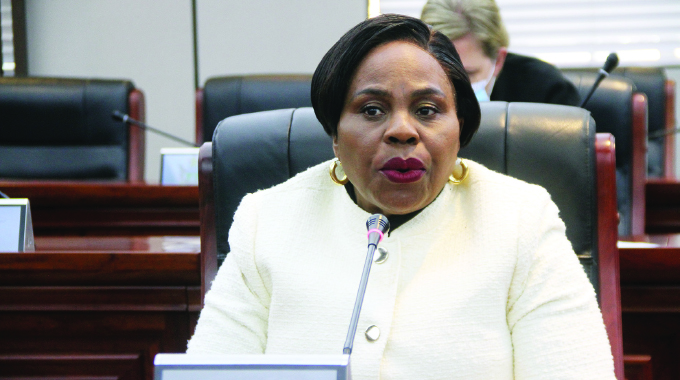
Sikhulekelani Moyo
Bulawayo Bureau
THE Ministry of Women Affairs, Community, Small and Medium Enterprises Development, in partnership with the United Nations Development Programme (UNDP) and other stakeholders, has launched Equanomics, an initiative to address gender disparities through fiscal policy reform.
This underscores the critical role that fiscal policies play in promoting gender equality and aims to reshape how tax systems and public spending can support women’s empowerment.
In her address during the launch of the initiative in Bulawayo on Wednesday, the Minister of Women Affairs, Community, Small and Medium Enterprises Development, Senator Monica Mutsvangwa, said achieving gender equality and the Sustainable Development Goals (SDGs) by 2030 requires substantive reforms in current economic structures.
She said that while taxation and fiscal policies could perpetuate inequalities and reinforce traditional gender norms, they also hold the potential to be transformative tools for advancing gender equality and reshaping power dynamics within society.
“I would like to extend my heartfelt congratulations to UNDP and the Ministry of Finance, Economic Development, and Investment Promotion, and all of you for your tireless efforts in amplifying the voices of women in macroeconomic policy development,” said Sen Mutsvangwa.
“Your dedication to building a socially just society is truly commendable and inspiring. Today marks yet another milestone in our collective journey toward inclusivity and economic justice.
“The Equanomics initiative is a remarkable advancement, and I believe it will significantly benefit my Ministry in collaboration with the Ministry of Finance, Economic Development, and Investment Promotion in our endeavour to achieve Gender Responsive Budgeting within the Government.”
She said by focusing on gender responsive fiscal policies, the initiative would empower women and promote equitable economic opportunities across all sectors.
This project comes at a pivotal moment when Zimbabwe is seeking pathways to more inclusive economic growth that does not leave anyone behind, particularly women.
It is a remarkable step toward fostering inclusive economic policies that recognise and address the unique challenges faced by women, especially domestic workers and those operating within the informal sector.
“My ministry fully recognises that our fiscal policies are not yet gender-responsive. The reality we face today is that our current tax systems often inadvertently perpetuate gender inequalities, placing disproportionate burdens on women, particularly those engaged in informal sector activities and care work,” said the Minister.
“Women are the backbone of our economy, contributing immensely through their labour, both paid and unpaid. Yet, they continue to be disproportionately affected by tax policies that do not adequately consider gender disparities.
“It is imperative that we acknowledge this reality and work collaboratively to redesign our tax systems in a manner that promotes equity and justice.”
In his remarks at the occasion, UNDP Resident Representative in Zimbabwe, Dr Ayodele Odusola, represented by Deputy Resident Representative Lealem Berhanu Dinku said investing in gender equality is not only a question of justice but a question of great economics.
“When women and girls possess equitable access to resources, education, healthcare, and decision-making authority, entire communities prosper, gross domestic product experiences growth, poverty diminishes, and resilience strengthens,” said Dr Odusola.
“Today, we convene to address a harsh reality: despite progress made in advancing human development, entrenched economic disparities endure, disproportionately affecting women, girls, and other disadvantaged groups.
“Fiscal policies, which are fundamental to national budgets, frequently unintentionally exacerbate these inequities. When approached from a gender perspective, they possess the potential to end barriers, redistribute opportunities, and create inclusive economies.”
Dr Odusola said public spending systems globally remained inadequate in addressing the distinct requirements of women, men, boys, and girls.
He said gender-neutral fiscal policies frequently sustain structural inequities, constraining the transformational capacity of public finance.
The Equanomics project is a global UNDP initiative that aims to contribute to addressing equality issues in participating countries, including Zimbabwe.
It seeks to reconceptualise fiscal policy as an instrument for advancing social equity through tax, fiscal policy, and public financial management reforms that contribute to reducing women’s poverty, eliminating economic discrimination, and aligning public spending with gender equality goals.
It recognises the importance of evidence-based, inclusive, and gender-sensitive economic governance systems, as well as the criticality of bringing together a diverse coalition of stakeholders, encompassing financial ministries and grassroots champions, to collaboratively develop inclusive policies.


 Online Reporter
 Bongani Ndlovu