Online Reporter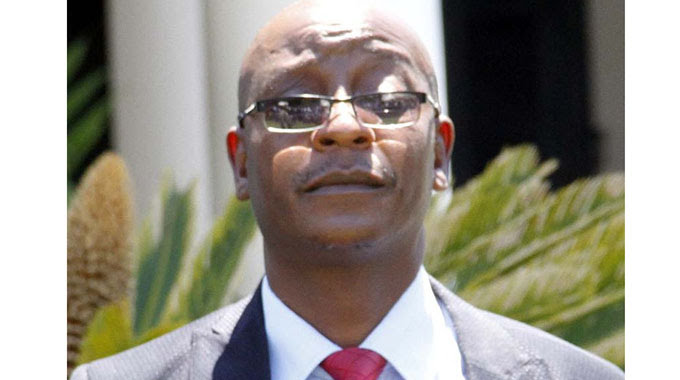
Precious Manomano
Herald Reporter
Zimbabwe’s prison conditions must meet international standards, fostering a rehabilitative rather than punitive environment, Justice, Legal and Parliamentary Affairs Minister, Cde Ziyambi Ziyambi, said in a recent interview.
He underscored the Government’s commitment, outlined the positive steps being taken despite challenges, and emphasised that modernisation efforts are firmly on course.
Minister Ziyambi said the modernisation agenda represents a long-term vision for the Zimbabwe Prisons and Correctional Services (ZPCS).
“We are on course with the modernisation of prisons. We acknowledge that we may not receive 100 percent support from the Government, and we are looking at ways to partner with others to move towards our goals. We have plans in place, but we are currently exploring the best ways to ensure we realise our objectives,” he said.
One of the major developments in this initiative is the proposal to establish a non-governmental organisation called the Pathways to Reintegration Foundation (PAREF).
“We went to Cabinet and requested approval to form our own NGO, which is driven by the realisation that we need additional resources and expertise that may not be fully provided by the Government,” Minister Ziyambi said.
The foundation would tap into expertise and funding from other sectors to ensure robust support for ZPCS reintegration programmes. These programmes are designed to facilitate the smooth reintegration of inmates into society once they complete their time in correctional facilities.
“We want to ensure that our inmates are fully integrated into society upon leaving our correctional service,” the minister said, stressing the critical nature of financial and infrastructural support in achieving these goals.
In addition to the establishment of PAREF, the Government is also planning to create a staff college.
“They decided to start even without physical infrastructure and we are saying that is very noble. As a Government, we will step in to ensure that we progressively put structures in place and build a state-of-the-art staff college,” Minister Ziyambi said.
This college is expected to play a pivotal role in training correctional staff and imparting skills necessary for effective prison management.
Minister Ziyambi also introduced the concept of smart prisons, which goes beyond mere physical infrastructure.
“The concept encompasses the use of advanced technologies to improve prisoner welfare and enhance justice delivery,” he said.
This forward-thinking approach aims to leverage technology in creating more humane and efficient correctional environments.
These modernisation efforts in Zimbabwe’s prison system come at a time when global human rights organisations continue to advocate improved conditions in correctional facilities across Africa.
By taking these positive steps, Zimbabwe hopes not only to enhance the living conditions of inmates but also to establish a model for other countries facing similar challenges. Countries such as Uruguay and Rwanda have already implemented similar plans, showcasing successful frameworks for reform in their correctional systems.
The pursuit of a modernised prison system in Zimbabwe reflects a broader commitment to human rights and rehabilitation. With the establishment of partnerships, innovative funding solutions, and an emphasis on technology and staff development, the Government aims to transform the prison experience into one that prioritises hope, recovery, and integration into society.
Through these concerted efforts, Zimbabwe seeks to set a standard for correctional reform in Africa, ultimately fostering a safer and more rehabilitative environment for all citizens.