Online Reporter
Nqobile Bhebhe
Zimpapers Business Hub
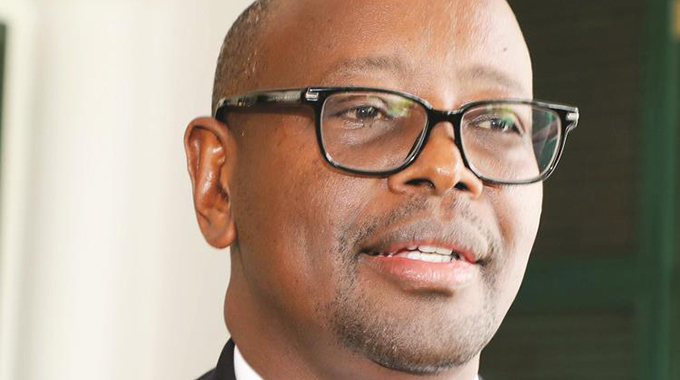
GOVERNMENT is stepping up efforts to close the long-standing trust deficit around currency and financial products by strengthening policy consistency, legal certainty and engagement with the private sector, the Deputy Minister of Finance, Economic Development and Investment Promotion, David Mnangagwa, has said.
Speaking during a plenary session at the Zimbabwe Economic Development Conference (ZEDCON) 2026 in Bulawayo yesterday, Deputy Minister Mnangagwa said policy-makers needed to speak with one voice on currency issues to rebuild confidence among businesses and the public.
“Each time we discuss the trust deficit, especially when it comes to currency issues, it’s important that everybody in the policy-making position chimes in so that it is very clear that we are saying the same thing or based differently,” he said.
Deputy Minister Mnangagwa said unresolved mistrust could persist across generations, making it critical for the Government to continuously address concerns surrounding currency management.
“What this means is that the trust gap and deficit, if not dealt with, is something that can linger on for generations.
“So whatever hysteresis is lingering on, we need to deal with it at every moment and how we have looked at it and have made sure that there is clarity, is making sure that the policies that govern our management of currency and everything surrounding it are enshrined within the law.”
Deputy Minister Mnangagwa also sought to provide clarity on Zimbabwe’s potential transition to a mono-currency regime, saying the process would be conditions-based rather than tied to a fixed date.
“The Governor (RBZ) has consistently and repeatedly, in his monetary policy, described the conditions and precedents that would be required for us to go to a monocurrency,” he said.
Deputy Minister Mnangagwa said existing US dollar-denominated contracts would remain valid even after the conditions for a mono-currency were met.
“But what this means is that any contracts that have been signed or people are party to right now, if they are denominated in US dollars, will continue to be in US dollars when monocurrency does prevail.”
Deputy Minister Mnangagwa said the transition would ultimately be determined by economic conditions rather than an announced deadline.
“And the when is not defined by a particular date, but by certain conditions that will, to an ordinary Zimbabwean, happen without them actually realising that they are now in monocurrency,” he said.
The Deputy Minister added that the objective was to create conditions where currency users would no longer face significant loss of value when switching between currencies.
“So we want to make sure that this conversation around the trepidation that private sector market business has had around issues in the past is dealt with not in a way of denialism, but continuous engagement,” he said.
The loss of value experienced during periods of economic instability affected savings, pensions, insurance policies and other long-term financial arrangements, contributing to a trust deficit that policymakers are now seeking to address.
Insurance and Pensions Commission (IPEC) Commissioner Dr Grace Muradzikwa said restoring confidence in financial products was central to rebuilding savings and long-term investment.
“I think it is something that we are seized with.
“We will be forward-looking in our approach. Instead of addressing historical issues, we are forward-looking; we want to address what created the loss of value so that it doesn’t happen again and that’s what we have been doing,” she said.
Dr Muradzikwa said IPEC had reviewed products offered by regulated entities to ensure that they could deliver on their promises.
“The issue to do with products, I want to tell you that we went through a process where we actually withdrew all the products that are being offered in our sector and we asked all our regulated entities to reapply.”
She said the process was designed to tackle one of the key sources of mistrust — failure to preserve value.
“And in the process of reapplying, we wanted to check whether they would deliver on the promise because the loss of value is coming from failure to deliver on the promise.”
Dr Muradzikwa said rebuilding confidence would require continued cooperation among financial-sector regulators and a focus on creating conditions that encourage savings.
“So I am hoping that it will address some of the trust issues, the confidence issues, and we are happy to work together with the other financial sector regulators to ensure that we move forward on this trust issue.”
Dr Muradzikwa said Zimbabwe needed to avoid becoming trapped in historical grievances.
“Otherwise, we are never going to move forward if we keep talking about this.
“I know it’s a reality; it happened, and it is difficult to promise that you will ever be compensated for loss of value.
“So I believe let’s not go there. I think we need to be forward-looking.
“Create the conditions that enable us to move forward and to create savings.”