admin
admin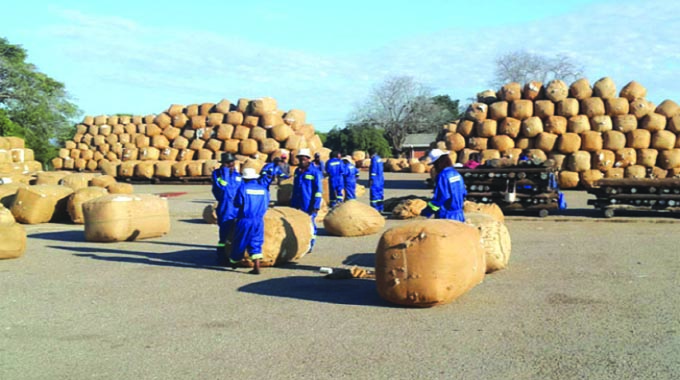
Business Reporter
GOVERNMENT has scaled up input support for the cotton farmers, with 400 000 households expected to receive free inputs covering a hectare each, a Cabinet minister said last week.
This is double last year’s package and could translate to a yield of more than 200 000 tonnes.
“We are expecting good rains this season and we would want to capacitate our farmers,” Agriculture, Mechanisation and Irrigation Development Minister Dr Joseph Made said.
Last year, farmers received free inputs worth $25 million and the expected potential harvest was 130 000 tonnes.
However, production is expected to be way below the initial estimate as yields were affected by poor rains and late distribution of the inputs.
Industry players estimate that production could be as low as 35 000 tonnes, the lowest since 1992 when output declined to record 52 000 tonnes since independence. However, analysts said while the Government should be commended for supporting farmers with free inputs, the appetite for growing cotton remained subdued due to poor prices.
While providing free inputs was critical, it was also important for the Government to come up with a price mechanism that incorporate a pre-planting price and forward sales.
“Some major cotton producing countries in West Africa such as Burkina Faso, Cameron and Ivory Coast announce a pre-planting price and that is what we should typically do,” said Edmore Rufaro, an independent commodity analyst based in Harare.
“The biggest issue here is a total loss of confidence among farmers and that needs to be addressed.”
Mr Rufaro said with illegal subsidies mainly by the western countries, particularly the US and increasing production of synthetic garments which are giving stiff competition to cotton fabrics, a pre-plant price would help insulating farmers from low global prices.
“There is a total lack of empathy for the poor African farmers by those countries providing illegal subsidies not only in cotton, but in other agricultural commodities such as sugar.”
The issue of farm subsidies has been a highly emotive issue in view of the implications on world trade and political power dynamics. Fundamentally, the richer nations saw it as their right to look after their farmers’ viability while the emerging nations felt that such action was unfair and perpetuated trade structures, which suppressed competitiveness while at the same time perpetuating poverty in least developed countries whose economies are heavily dependent on global commodity prices.



 Online Reporter