admin
admin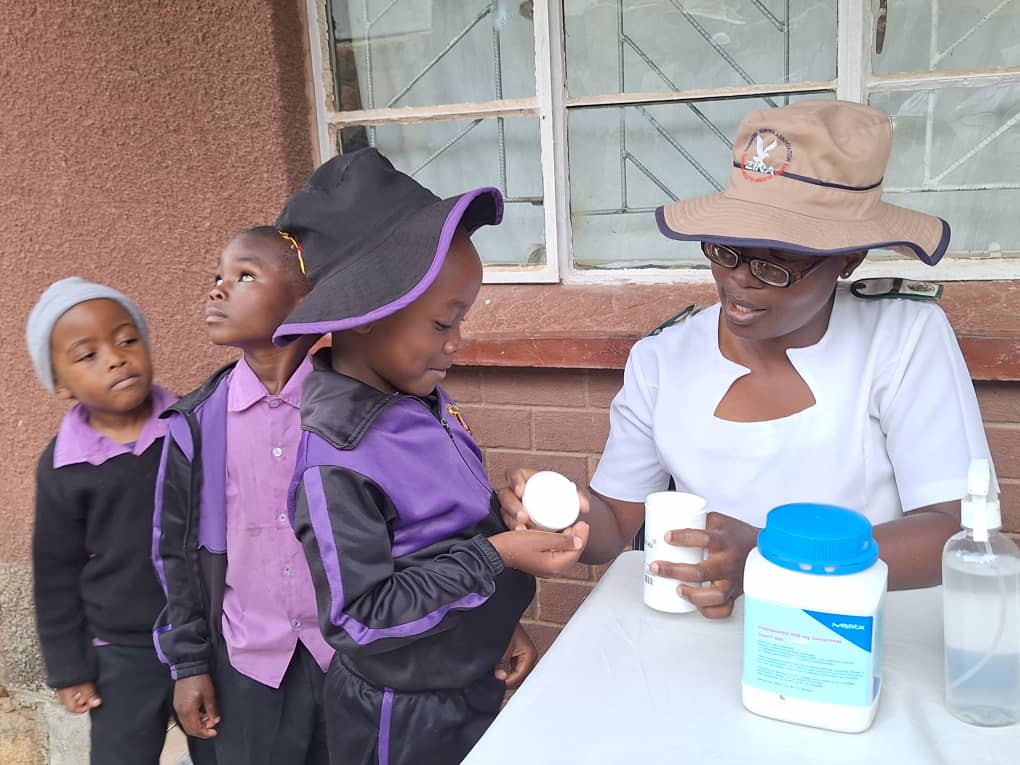
Rumbidzayi Zinyuke in Nyanga
Manicaland is expecting to reach more than 85 percent of children targeted under the mass drug administration rolled out against schistosomiasis (bilharzia) and soil transmitted helminths (intestinal worms).
The two diseases, which are endemic to all seven districts in the province, are neglected tropical diseases of significant public health concern and the Government is working towards eradicating them.

The mass drug administration was informed by the results of a national survey conducted in 2021 to assess the burden of the diseases across the country by the Ministry of Health and Child Care through the National Institute of Health Research with technical and financial support from the WHO Expanded Special Project for Elimination of Neglected Tropical Diseases (WHO-ESPEN), the END FUND and Higher Life Foundation.
The survey showed 714 wards in the country would need mass drug administration against the neglected diseases with Mashonaland West having the highest number of wards in need followed by Mashonaland Central and Manicaland.
Manicaland acting provincial epidemiology and disease control officer Dr Cephas Fonte said the survey had shown that 252 out of the 260 wards in the province were endemic for both the diseases.
Of these, 162 wards had a co-epidemic of the two diseases while 182 words had schistosomiasis.
“Reading from previous experiences we have had good coverage in Manicaland when it comes to responses to any type of disease we have had,” he said.
“So for this mass drug administration, we are really hoping that we will get to above 85 percent coverage. The district with the highest burden is Mutare followed by Makoni, Chipinge and Buhera. Chimanimani has the lowest burden in the province.
“For the mass drug administration, we are covering every district in Manicaland. For schistosomiasis, we are targeting 5 to 15-year-olds, and the population we have is about 654 865 children. Then for the worm infestation, we are covering about 551 698 children.”
He said while there were some communities who were hesitant to take the drugs, the province was reaching out to them to provide targeted services which work best for them.
The last mass drug administration carried out in the province was in 2022 which covered the whole population.
In Nyanga district, over 30 000 children are set to receive the drugs in 23 wards.
Residents welcomed the initiative to administer the drugs to treat bilharzia and intestinal worms.
Mrs Selina Dozva from Nyamhuka in Ward 30 said: “We appreciate this programme because our children are affected by many diseases as they grow so this treatment will help them as they grow.
“In the past, my children were always treated against such diseases so there is nothing wrong with getting children treated. Parents should take these campaigns seriously.”
Another resident from Ward 24 Ms Loice Chitsike also emphasised the need for children to receive treatment for the neglected diseases.
“My child was treated yesterday (Tuesday) and we were educated about the importance of these drugs and the effects such diseases can have on children. I believe this programme is good as it will help our children stay healthy and grow.”
Sister Mercy Mandikutse, a primary care nurse at Spring Valley Clinic said the communities had been educated before the rollout hence there was good uptake.
“We have a static point for mass drug administration at this clinic for those who stay close and we also have mobile teams who will be going to outreach points such as schools, pre-schools and in communities where children will get the drugs,” she said.
“We engaged traditional leaders and community health care workers so that they can educate people about this programme.”.
Nyanga district medical officer Dr Majoni Muungani said there were various factors such as weather and sanitation which predisposed villagers to both bilharzia and intestinal worms.
“We have about 23 wards that have a high burden of schistosomiasis and these are driven by the different weather patterns and sanitation issues that are found in these areas,” he said.
“We have a dry part of Nyanga where we usually have rivers that are not flowing, and there are issues of water shortages in those areas.
“So we end up having high cases of bilharzia in those waters, especially during the summer season when there is not enough water.”



 Online Reporter