Bunjiwe Mkwananzi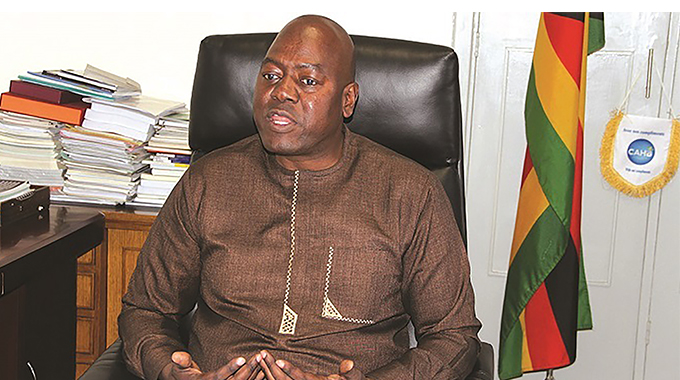
Fairness Moyana in Hwange
ZIMBABWE is targeting the submission of at least one intangible cultural heritage element to Unesco every year as the Government steps up efforts to safeguard traditional practices threatened by changing lifestyles and rapid urbanisation.
Permanent Secretary in the Ministry of Sport, Recreation, Arts and Culture, Mr Nicholas Moyo, said the ministry was building the capacity of communities, traditional leaders, artists and researchers to identify, document and safeguard the country’s intangible cultural heritage.
He said the annual submissions would form part of a broader strategy to ensure Zimbabwe’s cultural practices were documented and passed on to future generations.
“We should be seeing a complete change of the listing of heritage elements from Zimbabwe,” said Mr Moyo.
He was speaking on the sidelines of an awareness-raising workshop on the UNESCO 2003 Convention for the Safeguarding of the Intangible Cultural Heritage held in Hwange on Thursday.
Zimbabwe has so far had Jerusarema/Mbende and the joint Zimbabwe-Malawi Mbira/Sansi element inscribed on UNESCO’s Representative List of the Intangible Cultural Heritage of Humanity.
The country has also submitted Amabhiza, a cultural element associated with Matabeleland and the Midlands provinces, for consideration by UNESCO. The permanent secretary said the ministry expected the Amabhiza nomination to go through the adjudication process, with Zimbabwe hoping for its inscription in 2027.
“We have already submitted the file. It was accepted. It’s waiting for the adjudication process. We hope and we look at 2027 being proclaimed or listed in the intangible cultural heritage list,” he said.
Mr Moyo said the Government wanted to move beyond simply raising awareness about intangible cultural heritage by ensuring that communities had the skills to document their own traditions. He identified urbanisation as the biggest threat to intangible cultural heritage, saying changing lifestyles were gradually eliminating traditional skills and practices.
“I think the biggest threat in intangible cultural heritage is urbanisation,” he said.
Mr Moyo said modern homes and technologies were replacing traditional practices, including ways of making fire and producing household implements.
“We have allowed ourselves the fast-moving, urban lifestyles to threaten our intangible cultural heritage practices,” he said.
The Government is also seeking to link cultural heritage with education and enterprise development under the country’s heritage-based education approach. Mr Moyo said information documented by local researchers, communities, traditional leaders and artists could be developed into books and other learning materials for use in schools.
He said traditional practices could also provide opportunities for entrepreneurship, citing traditional foods and beverages such as umqombothi and amahewu.
He said different communities had their own ways of preparing traditional products, creating opportunities for research, education, branding and commercialisation while retaining their cultural significance.
“How do we then ensure that issues to do with our herbs, our traditional foods, are also packaged to levels that meet food and beverage standards across the world, whether for export or for local consumption?” he said.
Mr Moyo said cultural heritage also had potential to contribute to tourism through live performances, traditional dances, costumes and storytelling.
He said the ministry was encouraging communities to package cultural practices in ways that allowed tourists and other audiences to understand their origins and significance.
Mr Moyo said safeguarding cultural heritage did not mean freezing traditions in their original form, but allowing them to evolve without losing their essence.
“We’re safeguarding the cultural elements. We’re not preserving. We’re not locking it and putting it in a fridge,” he said.
The ministry is also focusing on intergenerational transmission, with young people being deliberately included in cultural heritage training alongside elderly custodians who hold traditional knowledge.
Mr Moyo said the approach was intended to ensure that young people became custodians of Zimbabwe’s cultural heritage.
“We need to be able to be sure that our culture is safe in the hands of our young people,” he said.
Mr Moyo said the ministry was also promoting inclusivity by involving people with disabilities in cultural heritage programmes. The Hwange workshop forms part of efforts to raise awareness of the 2003 UNESCO Convention and strengthen Zimbabwe’s capacity to safeguard its intangible cultural heritage.