Chronicle Editor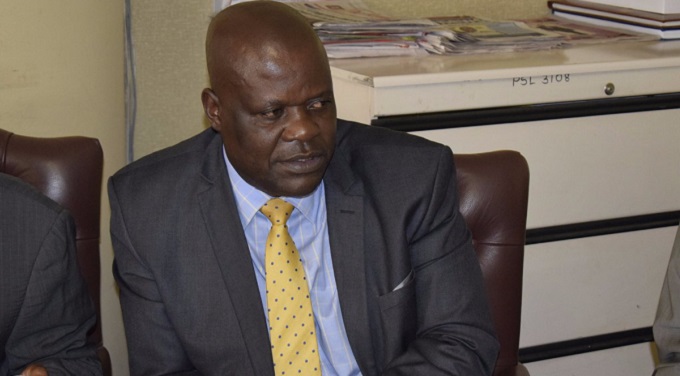
Leonard Ncube in Victoria Falls
GOVERNMENT is working on aligning the country’s economic blueprint, National Development Strategy 1 (NDS1), with the 2030 Agenda and Agenda 2063 to achieve the Sustainable Development Goals by 2030.
Zimbabwe joined other United Nations members in adopting SDGs in 2015 and made a commitment thereafter to implement the goals through national development plans, according to Permanent Secretary for Public Service, Labour and Social Welfare, Mr Simon Masanga. He said there are no stand-alone programmes put in place specifically for SDGs in the country and the SDGs will be attained as the country implements the national development plans, signifying mainstreaming of SDGs into the national development plan.
Government is also implementing the NDS1 (2021-2025), which has 14 thematic areas, while there are 17 SDGs.
A workshop being attended by officials from various Government ministries and departments, development partners such as the United Nations, non-governmental organisations and civil society organisations opened in Victoria Falls yesterday to integrate NDS1 and the 2030 Agenda and Agenda 2063.
Participants called for a change of mindset as the country implements NDS1 whose objective is to grow the economy towards achieving an upper middle-income economy by 2030.
They said NDS1 is as good as localising SDGs hence the need for planning which encompasses both, especially in budgetary allocations.
Every stakeholder should start viewing NDS1 and SDGs as two sides of the same coin towards Agenda 2030, with NDS1 being a localised plan and answer to achieving SDGs.
Mr Masanga said it’s important to interrogate how Government and other key stakeholders function and influence policy and engagement, including continuously improving scarce resource allocation.
He said the resources should be utilised in a manner that increases economic productivity thereby improving the general living standards of the people as the nation moves towards achieving an upper middle-income status by 2030.
“There is a need to streamline implementation and link both development plans through appropriate budgeting so that the country hits two birds with one stone, said Mr Msanga.
He said both NDS1 and SDGs are about improving people’s livelihoods, improving the economy, protecting the environment, addressing social issues, providing education, housing health, ensuring gender equality and empowering people to exploit local resources to benefit themselves.
“The reason why are here is to talk about SDGs because they touch on every aspect of life and it is only sensible that we mainstream them in our planning processes and sector programmes.
“We have realised that we have developed a national planning blueprint called NDS1, which has 14 thematic areas which are to do mainly with the same issues that are under SDGs.
“We are trying to educate our focal persons as they are the same people dealing with SDGs and we are saying, let’s look at the targets that we have set for ourselves under our monitoring and implementation framework developed by all ministries and sectors. We are saying to the planning authority, the Ministry of Finance and Economic
Development, as you make development plans, don’t leave out the issue of SDGs, feed them in your planning matrices,” said Mr Masanga.
He challenged every citizen to reflect on their contribution towards implementation of both NDS1 and SDGs, especially in eradication of poverty and hunger at household level.
Mr Masanga said the world learnt the hard way from the advent of the global pandemic, which destabilised economies and threatened attainment of the SDGs.
“The Covid-19 pandemic is a wake-up call for new bold policy interventions and visionary leadership,’ he said.
Mr Masanga said target indicators in NDS1 are similar to those covered under SDGs and called for concerted efforts towards the attainment of global goals.
“As the 2030 Agenda is about People, Planet, Prosperity, Peace and Partnerships, focusing on these five Ps will enable us to attain a well-balanced growth as living standards are enhanced in a more sustainable manner while caring for the environment as we preserve our only planet earth.
The 2030 Agenda has been incorporated and internalised into Vision 2030 and NDS1 that were established on broad citizenry participation aimed at ensuring that no-one is left behind in our development agenda.
“The prime issue of any government with respect to the SDGs is how to align policies in practice given the breadth and complexity of the 17 SDGs and their 169 targets, and the need to include an unprecedented range of public and private actors in both policy formulation and implementation,” said Mr Masanga.
He said prioritisation in the allocation of resources should be guided by NDS1.
Mr Masanga said a planning document, whose aim is to encompass everyone in the spirit of leaving no one behind, is already in place with regards to the 17 SDGs that apply to Zimbabwe.
Plans are underway to popularise implementation of the SDGs through translating documents into local languages, conducting roadshows, countrywide marketing through banners and inclusion of SDGs learning in schools and colleges.
Mr Charles Mujajati, a director in the Ministry of Finance and Economic Development, said Government is working hard in partnership with development partners to ensure timeous disbursement of funds to projects that seek to drive the country’s development agenda. — @ncubeleon


 Online Reporter