Online Reporter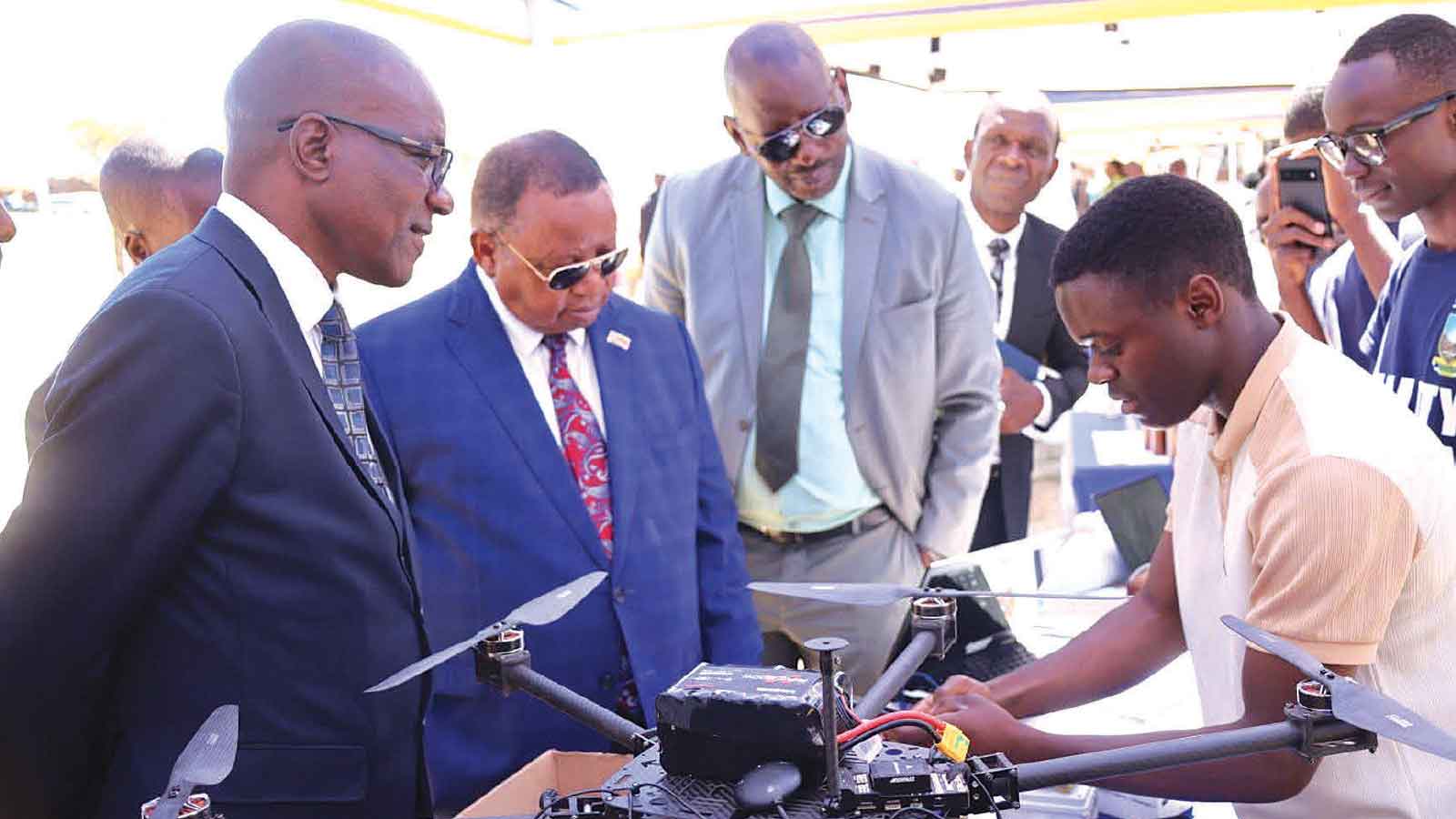
Fungai Lupande
Mashonaland Central Bureau
GOVERNMENT will test and, if successful, procure laboratory equipment developed by Bindura University of Science Education (BUSE) for use in schools countrywide, Higher and Tertiary Education, Innovation, Science and Technology Development Minister Dr Fredrick Shava has said.
He made the announcement at the official opening of the 2026 BUSE Research and Innovation Week recently, where Government challenged universities to move research beyond prototypes and turn innovations into viable businesses, industries and employment opportunities.
Dr Shava said Government would engage the Ministries of Higher and Tertiary Education and Primary and Secondary Education to pilot a laboratory facility developed by BUSE, with the possibility of financing one classroom for testing before adopting and procuring the equipment nationally.
“If they find it useful, then we will adopt it and then purchase from BUSE for the rest of the country,” he said.
The development signals a major push towards creating a direct market for locally developed university innovations while reducing the gap between research, production and commercialisation.
Dr Shava said Zimbabwe had the scientific capability, creativity and entrepreneurial spirit to solve its own challenges, but challenged universities, industry and financial institutions to work together to turn innovations into products that benefit communities.
The 2026 BUSE Research and Innovation Week ran under the theme: “Innovating for Shared Prosperity: Accelerating Industrialisation, Rural Transformation, and Knowledge-Based Growth under Heritage 5.0.”
Dr Shava said the Heritage-based Education 5.0 model required universities to produce graduates who do not just look forward to formal employment, but also create jobs and develop innovations good enough for markets.
“Research can no longer remain a pure academic exercise,” he said.
He urged BUSE to strengthen market penetration, quality assurance, intellectual property protection and commercial scaling of its innovations.
The university is already pursuing industrialisation through projects including the Palpo Technology plant, where products are being manufactured, and the Masawu Processing Plant, which is nearing commissioning.
Dr Shava also singled out a locally developed drone capable of carrying medical supplies to remote areas, saying the technology could potentially improve access to medicines and save lives.
He also praised a Form Three pupil who demonstrated a locally developed maize winnowing machine, describing the innovation as evidence of the potential among young Zimbabweans.
The Minister challenged industry representatives to identify at least one BUSE technology or student enterprise that their organisations could help validate, pilot, procure or scale up.
He said the ultimate measure of the university’s Research and Innovation Week should be the number of innovations adopted, enterprises created, partnerships formed and communities transformed.
“Let BUSE Research and Innovation Week 2026 mark a decisive shift from showcasing to scaling, from isolated projects to connected value chains, and from promising ideas to shared prosperity,” he said.
BUSE Vice Chancellor Professor Eddie Mwenje said innovations including digital platforms, the e-Toll system and Chiringa Government platform were progressing towards wider deployment.
He said the university had also filed 32 intellectual property items, including patents, copyrights and trademarks, to protect its innovations.
BUSE has identified five strategic innovation pillars covering software development and artificial intelligence, food products development, natural products and drug discovery, climate change adaptation and mitigation, and chemical production.
Prof Mwenje said its innovations were aligned with the Research and Innovation Week theme, “Innovating for Shared Prosperity: Accelerating Industrialisation, Rural Transformation, and Knowledge-Based Growth under NDS2.”
The institution is also pursuing a change of name to Bindura University of Science, Innovation and Technology.