admin
admin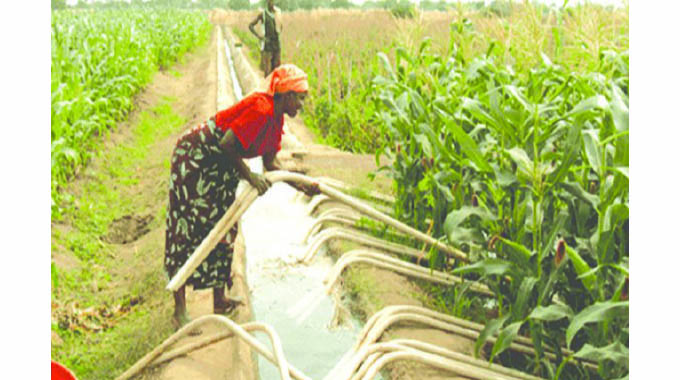
Martin Kadzere
The Government plans to put 35 000 hectares of rural land under the village business units model as part of its programme to enhance food security and promote rural development, a senior official has said.
The programme will complement other initiatives such as the sustainable intensive conservation agriculture scheme (Pfumvudza/Intwasa), which aims to enhance crop productivity, ensure household food security, and increase income by employing climate-resilient farming practices.
Inspired by the successful kibbutz model of collective farming and community living in Israel, the village business units will essentially have one-hectare irrigated plots in every village.
Like kibbutz, these units aim to foster economic growth, social cohesion, and self-sufficiency within rural communities.
Once fully implemented, there will be 35 000 of these units,collectively constituting 35 000 hectares of newly irrigated land.
“This is what the Government will do,” Lands, Agrictulture, Fisheries,Water and Rural Development Permanent Secretary Prof Orbet Jiri said at a recent farming event.
“If we have other partners who can do the same if we have you, who can also do the same in your village, we can unlock a lot more of these one-hectare plots.”
With recurrent droughts becoming a norm due to climate change, analysts say to mitigate the devastating impacts of these droughts and ensure food security, the adoption of irrigation systems is paramount. Irrigation offers a lifeline to farmers by providing a controlled water supply, shielding crops from the impacts of unfavourable weather conditions.
By supplementing rainfall, irrigation enables farmers to cultivate high-value crops, increase yields, and reduce the risk of crop failure.
Moreover, it extends the growing season, allowing for multiple cropping cycles per year and boosting agricultural productivity.
Investing in irrigation infrastructure is not merely ashort-term solution but a strategic move towards building resilience to climate change.
It is a critical step in safeguarding the livelihoods of millions of people who depend on agriculture for their sustenance and income.
The Government has since outlined an ambitious plan to expand irrigation infrastructure to mitigate the impacts of climate change and bolster food security.
The country aims to increase the area under irrigation to 350 000 hectares by 2027, up from the current 75 000 hectares. The expansion is a key component of the Government’s strategy to achieve a strategic grain reserve of 1,5 million metric tonnes by2028.
By boosting irrigation, Zimbabwe seeks to reduce its reliance on rain-fedagriculture, which has been increasingly unreliable due to erratic rainfall patterns.”We all know about the irrigation thrust,” said Prof Jiri.
“All we need to do is to ensure that we work together and encourage left, right, and center in our programming that every vulnerable household has done Pfumvudza and done it well. “The second layer at the national level is to embark on irrigation development, massive irrigation development.
This is what would link our food security from rain-fed agriculture.”Apart from Pfumvudza, the Government is implementing several initiatives to bolster rural development.
These include the Presidential Blitz Tick Grease Scheme which provides tick grease to cattle owners to combat tick-borne diseases.
The Presidential Rural Development Programme prioritises water access for all villages and schools, aiming to build resilient communities and support economic growth while the Presidential Community Fisheries Scheme targets to improve access to affordable protein through community-based fisheries.
The Presidential Poultry Scheme promotes poultry farming for nutrition and income generation, the Presidential Goat Scheme distributes improved goat breeds to enhance livestock resilience while the Presidential Vision 2030 Accelerator Model targets to transform rural irrigation schemes into business units to drive rural industrialisation.


 Online Reporter