

 admin
admin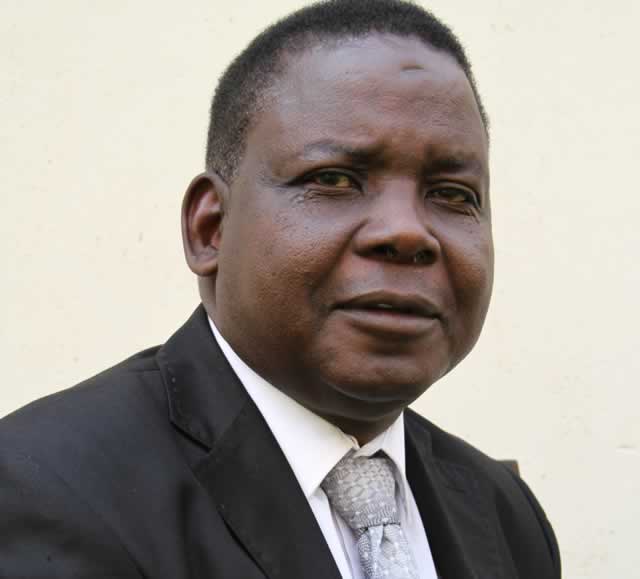
Business Reporter
GOVERNMENT will review mining royalties and rates of taxation to reduce costs and ensure optimal exploitation of minerals, Mines and Mining Development Deputy Minister Fred Moyo has said. He made the remarks in his presentation to parliamentarians during a pre-Budget seminar held at Elephant Hills Resort in Victoria Falls last week.
Addressing challenges facing the sector is critical to mining as it is the anchor for economic growth. The mining sector accounts for 50 percent of local exports.
Zimbabwe has more than 40 mineral occurrences and the major ones include gold, diamond, platinum, coal, nickel, iron, asbestos and chrome.
“Zimbabwe’s (mining) royalty rates are some of the highest in the region, which does not augur well for the country as an investment destination (for mining).
“We will write rules that will enable these rates to be looked at,” Deputy Minister Moyo said.
The deputy minister also pointed out that the mining taxation system was fragmented, cumbersome and required immediate revision to enhance administration.
“A thorough review of the tax and regulatory environment for mining is needed.
“The tax system must be simple and not a multiplicity as is the case now,” the deputy minister said.
He said the objective of clear taxation system is to ensure that the public revenue system captures an appropriate share of the returns from exploiting mineral resources.
The system, he said, should also allow project operators to achieve acceptable returns from their investments, without at the same time prejudicing Zimbabwe’s attractiveness.
Mining firms are supposed to pay 25 percent corporate tax, royalties ranging from 1 to 15 percent, 15 percent value added tax, unit tax of US$3 000 to US$10 000, 20 percent withholding tax and are levied 2 percent by the Environmental Management Agency.
Further, mining companies are liable to a 2 percent presumptive tax, an 0,8 percent levy for the Minerals Marketing Corporation of Zimbabwe and they are also supposed to pay huge amounts of money to obtain mining titles such as special grants and exploration licences.
Deputy Minister Moyo said apart from scaring away potential investment, high royalties and charges negatively impact on the cut-off grade and prevents mining companies from extracting deposits below sub-economic grades.
High rates of royalties and many other fragmented taxes on mines compute to an effective tax rate of around 60 percent, which negatively affects viability of mining as a business.
Addressing the same gathering, Chamber of Mines president Mr Alex Mhembere said Government should streamline the taxation process to come up with a simpler one.
“We call on the Government to streamline the (mining taxation) process so that we come up one system.
“We have a fragmented tax system, making it difficult for treasury to account for money that comes from the mining sector,” Mr Mhembere said.
The complex mining taxation system also presents legal challenges for the Zimbabwe Revenue Authority in determining what is due from industry and in instances when challenged in court over such issues the national revenue authority often backs off.
If not properly addressed, this situation could present drawbacks to the mining sector’s contribution to economic growth in the short to medium term, after Government declared the sector the centrepiece of Zimbabwe’s macroeconomic economic growth.
Other challenges facing the sector include shortage of electricity, poor road and rail networks, high cost of transporting bulky goods, shortage of water, high cost of funding and inputs.
It is therefore that the concerns raised by mining companies will be address through the minerals development policy that Government is working on.
The policy will inform the process leading to a new Mines and Mineral Development Act. Exports from the mining sector totalled US$2 billion in 2012 and are seen bringing in US$1,8 billion this year.
The sector supports 45 000 direct jobs and 500 000 jobs indirectly.
The mining sector also accounts for 50 percent of foreign direct investment into Zimbabwe and contributes significantly to infrastructure development.
It has marginally overtaken agriculture’s contribution to GDP at 16,7 percent in 2012.



 Online Reporter