admin
admin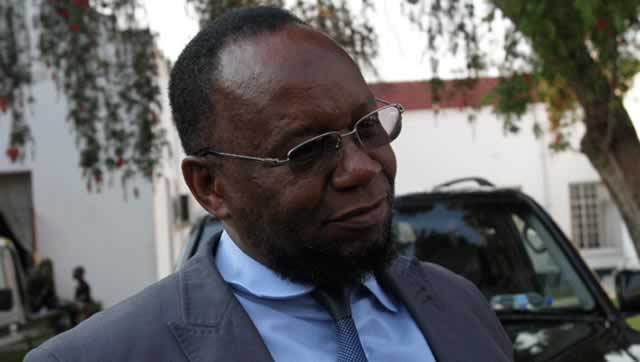
President Mugabe, in announcing his Cabinet, unbundled the education ministry to create the Ministry of Primary and Secondary Education to spearhead the development of education in Zimbabwe. Former Education, Sport, Arts and Culture Deputy Minister Lazarus Dokora was appointed the responsible minister. Our Features Writer Marshall Bwanya (MB) trekked down Minister Dokora (LK) to discuss his vision and other issues
MB: Honourable Minister what is your vision as the Minister of Primary and Secondary Education?
LD: The ministry’s vision is to be a leading provider of quality infant, junior, secondary and non-formal education for the development of united, well-educated Zimbabweans who are patriotic, balanced, competitive and self-reliant, with the values of hunhu/ubuntu.
MB: Teachers have been advocating for salary increments and better working conditions, what programmes has the ministry introduced to address these issues?
LD: It should be realised that it is a constitutional provision that the conditions of service for all members of the civil service are regulated by the Public Service Commission, in consultation with Treasury.
MB: There have also been concerns from parents and guardians over incentives. Do we see these payments continuing?
LD: While the issue of teacher incentives is highly topical, it should be noted that it applies to a small proportion of schools, mostly in urban areas, approximately 38 percent of the total number of schools in the country. The ministry has held wide-ranging consultations with various stakeholders, including responsible authorities, teachers’ associations, school development committees and the generality of parents.
From these consultations the effects of incentives on the quality of service delivery have been noted and measures are underway to address stakeholders’ concerns on this issue, with particular emphasis on the best interest of the learner.
MB: A number of satellite schools were set up especially after the successful completion of the land reforms. What programmes are there to upgrade these schools?
LD: Actually, there are 1 554 satellite primary schools and 666 such secondary schools that the ministry is actively supporting towards meeting the requisite standards to be registered as stand-alone educational institutions.
The upgrading of such schools is among Government’s key priorities for the Social Services and Poverty Eradication Cluster in the Zim Asset blueprint.
While the Public Sector Investment Programme has been in place for infrastructural development, such as school buildings, the demand for resources is such that Government cannot do it alone.
In this regard the ministry is inviting responsible authorities, local communities and the business sector to partner Government in the resource mobilisation drive for the upgrading, rehabilitation of substandard structures and dilapidated buildings as well as the construction of new schools. There is much room for public-private-partnerships in the primary and secondary education sub-sector.
MB: There are reports that most schools are run by acting headmasters. What measures are being undertaken to address the problem?
LD: The ministry is guided by Civil Service Commission regulations on the promotion of school heads.
The process of replacing school heads is ongoing as some go on leave, others retire, resign, die and in some cases, are dismissed on disciplinary grounds.
Therefore, the issue of acting heads of schools needs to be discussed in context.
MB: Are you aware that there is a new local online website www.brainstorm.co.zw that offers primary and secondary pupils model answers to frequently asked questions from under the Zimsec and Cambridge examination syndicates.
Do you think the introduction of such social platforms offering e-learning services have made research convenient for pupils now that they can access loads of relevant information with the click of a button and without the hassle of sifting through volumes of hard copies?
Are platforms such as Brainstorm Academy constructive indigenous avant-garde synergies Government is advocating for to develop the educational sector?
LD: As you may recall, the Head of State and Government, His Excellency President Robert Mugabe, actually spearheaded the computerisation of schools, colleges and universities by donating sets of computers around the country and many well-wishers, parents and school development committees have since followed that example. The aim of this computerisation initiative is to make it possible for all learners to be able to use computers as a learning tool, to access digital libraries, research databases as well as facilities for examination preparation.
Therefore, the publication of model answers through print or electronic media should be viewed as in the context of international practice. It is hoped that all learners will be able to fully exploit information communication technologies to enhance their educational outcomes.
However, examination boards such as Zimsec have to institute measures to widen their item banks in order to minimise the recycling of old questions which can compromise the objectives of learning assessment.
MB: What other programmes has Government introduced to enhance the education system of Zimbabwe?
LB: Government is committed to the equitable, inclusive provision of education for all and therefore has strengthened measures on gender mainstreaming, facilitating access to education for the disadvantaged and promoting the tenets of child-friendly schools in which the special needs of learners with disabilities would be addressed.
In line with the recommendations of the 1999 Presidential Commission of Inquiry into Education and Training, Government has adopted the notion of strengthening the foundational base of the education structure by offering a nine–year primary school curriculum through two levels.
The first is the infant school, which covers the Early Childhood Development Classes A and B, Grades 1 and 2.
The second level of primary education is the junior school, which spans across Grades Three to Seven.
We believe that with a strong beginning like this, all learners will achieve more out of school and progress to secondary schools with more independent learning skills than in the past, when only the privileged few could access pre-school education.
On another note, Government has introduced a more aggressive approach to the teaching of technical and vocational subjects as a key component of the curriculum.
Major emphasis has been put strengthening the teaching and learning of Science and Technology, Engineering and Mathematics at all levels of the education system.
Government views e-learning as a key strategy for empowering learners to access digital and educational material for their school assignments, projects and general research.
The concept of e-libraries and the digitalisation of curriculum and animation of instructional material is therefore a priority.
I also wish to highlight the Government’s thrust towards implementing a holistic curriculum which inculcates the values of pan-African identity, human dignity, respect for the diversity of cultures towards unity of purpose, the full expression of hunhu/ubuntu.
MB: How is the Ministry of Primary and Secondary Education incorporating psychomotor skills as a measure to produce productive and educated personnel?
LD: This psychomotor dimension is part of the implementation of the 1999 recommendations of the Presidential Commission of Inquiry into Education and Training that I have already alluded to. What I need to add is the emphasis on physical education in the curriculum.
The Ministry of Primary and Secondary Education will continue with the sport, arts and culture education curriculum, to prepare learners for healthy lifestyles and develop their talents for possible careers in the relevant industries.
MB: What is the future of the education sector in Zimbabwe?
LD: The future of the education sector will be determined by the national demand for a knowledgeable, skilled and disciplined human capital base. My ministry will play its part, in consultation with sister ministries in the Social Services and Poverty Eradication Cluster to achieve Government’s goals in line with the Zim Asset macroeconomic blueprint.


 Online Reporter