
Theseus Mauruki Shambare
THE Government and its development partners are moving to transform land reclaimed from decades-old minefields into productive agricultural assets, with irrigation infrastructure and climate-resilient farming earmarked as the next phase of Zimbabwe’s demining programme.
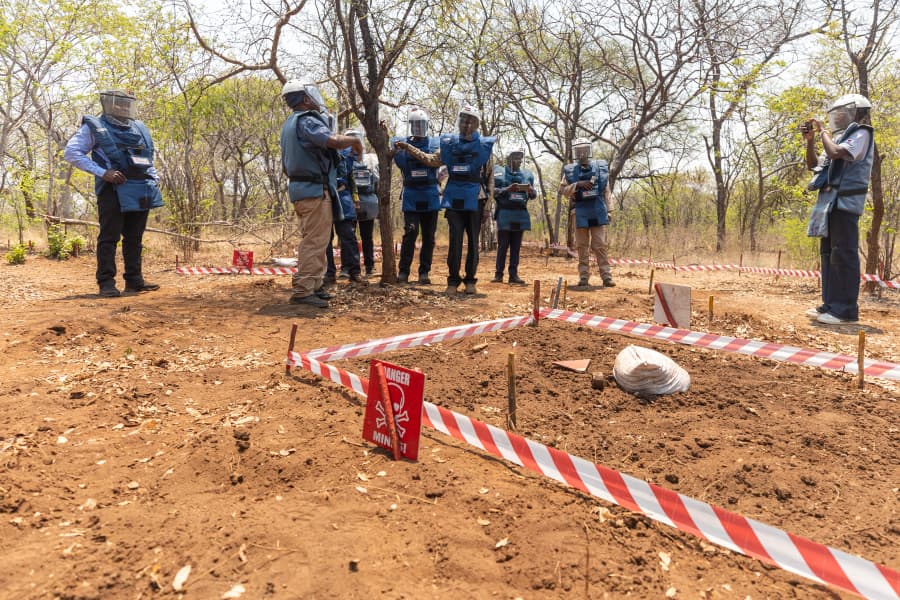
Under Project RECLAIM, the Government, working with the United Nations Development Programme (UNDP) and the Government of Japan, is integrating mine clearance with agricultural development to improve food production, create employment and strengthen livelihoods in affected communities.
UNDP country representative Dr Ayodele Odusola said clearing landmines was only the first step towards restoring the economic potential of affected communities.
“Clearing the mines is only the first step. Safe land must also become productive land so that it feeds families, creates jobs, brings incomes to these communities. This is what makes Project RECLAIM different,” he said.
He said the project’s second phase would focus on irrigation infrastructure, enabling communities to grow crops throughout the year and withstand climate-related shocks.
Working with the Ministry of Agriculture, Mechanisation and Water Resources Development, the initiative will draw lessons from existing climate-resilient agriculture projects, including the 50-hectare Gororo irrigation scheme in Chipinge.
The developments emerged during a high-level field mission under Project RECLAIM in Mudzi on Tuesday, where Government officials and development partners assessed clearance operations and discussed the next phase of the programme.
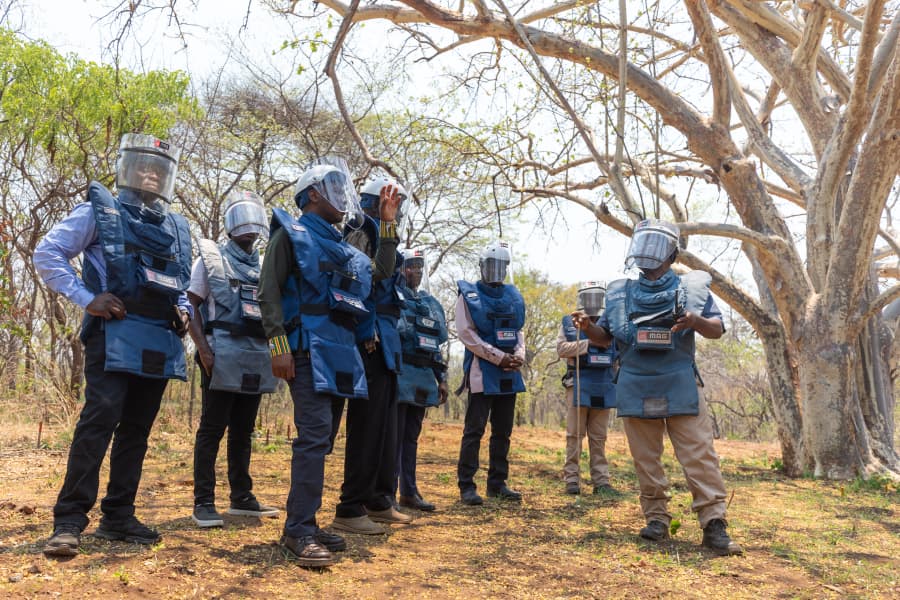
Deputy Minister of Defence Brigadier General (Retired) Levy Mayihlome said the initiative was designed to address the wider developmental consequences of landmines.
“Landmines continue to threaten lives, restrict access to productive land, and undermine livelihoods in affected communities. Government will therefore continue to mobilise resources to accelerate mine clearance and promote inclusive development,” he said.
Project RECLAIM, launched in August 2025, is jointly funded by Japan and UNDP, with Japan committing 433 million yen, approximately US$2,95 million, while UNDP is contributing US$400 000.
The project is being implemented by the Mines Advisory Group (MAG) and The HALO Trust, working with the Ministry of Defence through the Zimbabwe Mine Action Centre.
MAG country director Peter Avenell said minefields had isolated communities from ancestral land, cross-border trading opportunities and natural resources for nearly five decades.
MAG has been operating in Mudzi since 2018, removing more than 12 000 anti-personnel mines and releasing approximately 3,5 million square metres of land.
Avenell said families had been forced to repeatedly cultivate the same pieces of land because surrounding areas remained inaccessible, contributing to soil depletion.
The minefields had also disrupted access to schools, with some children walking up to seven kilometres through the bush to avoid contaminated areas.
He said the released land would allow communities to resume farming, access water and utilise natural resources such as timber, honey and baobab seeds.
“So they can start some more livelihood activities, farming, access to water maybe closer, access to services, looking at the other resources like the wood, the trees for building, for poles, honey, baobab seeds, all the other resources that might be in that area, which they have not been able to get to for 50, almost 50 years now,” he said.
Dr Odusola said UNDP would also support a comprehensive survey of landmine survivors to establish their needs and inform targeted assistance programmes.
He said the organisation remained committed to supporting Zimbabwe’s efforts to eliminate the remaining landmine threat by 2030 while ensuring that cleared land contributed to sustainable community development.