

 Online Reporter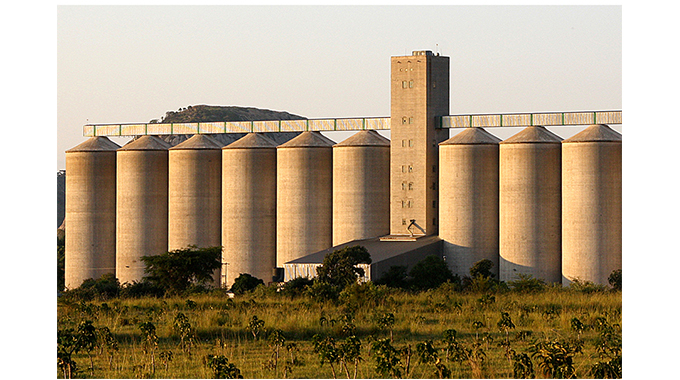
Debra Matabvu
Senior Reporter
Grain deliveries to the Grain Marketing Board for the 2025/26 marketing season have increased by 135 percent compared to the 2024/25 season, with authorities projecting that the country will remain food secure despite the anticipated El Niño‑induced drought next season.
Currently, the GMB holds about 240 000 tonnes of grain stocks, with Government anticipating that the stocks will increase to 450 000 tonnes by the end of this year.
Speaking at a post‑Cabinet media briefing yesterday, Information, Publicity and Broadcasting Services Minister, Dr Zhemu Soda, said the recent second round of crop assessment had revealed a “generally positive” outlook.
The increase is expected to bolster the country’s strategic grain reserves, helping to ensure adequate supplies for households, support the national food security programme and reduce the need for grain imports.
Dr Soda said the total maize area planted increased from 1 813 974 hectares in 2025 to 1 963 292 hectares in 2026, while total production rose from 2 203 556 tonnes to 2 685 021 tonnes.
Soyabean production increased from 52 794 tonnes to 119 067 tonnes, reflecting a 125 percent rise.
Dr Soda said more farmers and traders officially sold their crops through recognised marketing channels during the 2025/26 season compared to the previous season, with sales of maize, soyabean, sorghum and sunflower increasing by 68 percent.
“Cabinet advises that the Second Round of Crop, Livestock and Fisheries Assessment Report reveals that the food security outlook for the country is generally positive,” he said.
“Currently, Government stocks held at the Grain Marketing Board as at July 28, 2026 stand at 239 824 874 tonnes.
“The grain intake pattern reveals that GMB deliveries from the 2025/26 season are 135 percent above the 2024/25 season, with the Agricultural and Rural Development Authority contributing 91,22 percent of the grain deliveries.
“Furthermore, a total of 422 821 tonnes of crops comprising maize, soyabean, sorghum and sunflower have been formally marketed as at July 30, 2026, compared to 251 648t marketed at the same time in 2025.”
Dr Soda also indicated that the GMB had settled all its outstanding farmer obligations from the 2024/25 season, with over US$19 million earned from the 2025/26 season deliveries.
In addition, he said, GMB holds about 68 000 tonnes of third‑party grain stocks since the completion of Artificial Intelligence‑powered silos, with the silos now offering commercial storage services directly through the Warehouse Receipt system.
The country also recorded a 0,3 percent increase in tobacco production this season compared to last season.
“As at July 29, 2026, a record 355,9 million kilogrammes of tobacco had been sold at an average price of US$2,49 per kilogramme,” Dr Soda added.
“This represents a 0,3 percent increase in volume from the 354,9 million kilogrammes in 2025, which was sold at US$3,33/kg.
“Export performance remains strong compared to the corresponding period in 2025, with volumes increasing by 40 percent from 91,3 million kg to 127,5 million kg.”
Government has also set 2026 cotton producer prices at US$0,43 per kilogramme for Grade A, US$0,41 for Grade B, US$0,38 for Grade C and US$0,35 for Grade D, with farmers receiving instant payment upon delivery in line with Reserve Bank of Zimbabwe foreign and local currency regulations.
Meanwhile, winter cropping is progressing well, with wheat planted on 133 048 hectares, up from 121 281 hectares during the same period last year, while the Agricultural and Rural Development Authority (ARDA) surpassed its planting target after putting 65 585 hectares under wheat against a target of 65 000 hectares.
Irish potato production has reached 102 080 tonnes from 3 520 hectares, with average yields improving to 29 tonnes per hectare from 26 tonnes per hectare recorded during the corresponding period last year, while 7 013 hectares have been planted to barley.
Responding to questions from the media, Agriculture, Mechanisation and Water Resources Development Minister, Dr Anxious Masuka, said the various interventions introduced by Government over the past few years had seen an increase in grain production.
He said the grain reserves are enough to feed the nation despite the anticipated El Niño next year.
“We want, by the end of this month, to have reached 300 000 tonnes of the strategic grain reserve,” Dr Masuka said.
“From the current wheat harvest, which will start perhaps in a week or so, we will be able to mobilise again maybe another 150 000 tonnes. So we can carry into 2027, 450 000 tonnes.
“If you recall in 2004, when we had the worst drought in human memory, we distributed 328 000 tonnes to 6,5 million Zimbabweans, and a further 33 000 tonnes to 4,5 million learners. So with 450 000 tonnes, that is enough to cushion the beneficiaries of social welfare through a very difficult year that is predicted from the El Niño.”



