Walter Nyamukondiwa in NYABIRA
Zimbabwe has stockpiled 345 000 tonnes of grain, surpassing the quantity distributed during the devastating 2024 drought, as the Government steps up preparations for a strong El Niño season expected to bring below-normal rainfall.
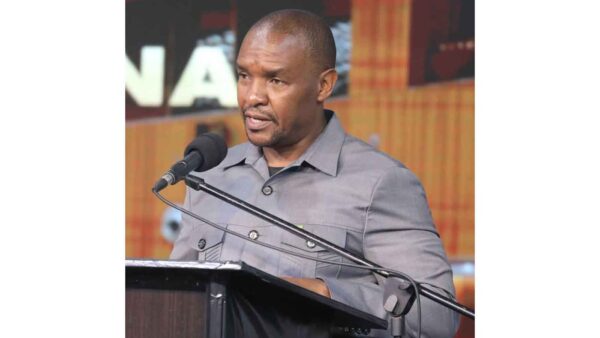
Agriculture, Mechanisation and Water Resources Development Minister, Dr Anxious Masuka, said the country was almost certain to experience a drought season, but assured the nation that measures were already in place to safeguard food security and protect livestock.
Speaking at the 74th graduation ceremony at Gwebi College of Agriculture, Dr Masuka said the Meteorological Services Department had classified the coming season as a drought year, with the El Niño phenomenon expected to bring significantly reduced rainfall.
“So now we are almost 100 percent certain that we will have below-normal rainfall for Zimbabwe,” he said.
He said the warming of the central South Pacific Ocean, which characterises El Niño, was expected to exceed three degrees Celsius, pointing to a particularly strong weather phenomenon.
President Mnangagwa had directed that traditional leaders be briefed on the forecast to ensure communities were adequately prepared rather than alarmed, he said.
Dr Masuka said the Grain Marketing Board had, as of the previous day, purchased 345 000 tonnes of various cereals, compared to the 328 000 tonnes distributed during the 2024 drought.
“As of yesterday, we had actually purchased at the GMB 345 000 metric tonnes of various cereals. In 2024, when we had the worst drought, we distributed 328 000 metric tonnes.
“So we are well on our way to ensuring that should there be this unfortunate event, we will have enough of the strategic grain reserve to feed everyone,” he said.
The grain stocks form part of a broader six-point Government strategy to cushion the country against the anticipated drought, with interventions targeting food availability, agricultural production and livestock survival.
The strategy includes strengthening grain reserves at national and household levels, promoting Climate Smart Agriculture through appropriate financing, and implementing a livestock drought mitigation programme.
Under the livestock programme, the Government plans to establish drought mitigation centres serving every seven to eight villages, equipped with permanent water sources, feeding facilities, livestock sales points and disease control services.
Other measures focus on improving coordination across Government and the agricultural sector, strengthening early-warning systems to ensure timely information reaches communities, and building the capacity of business advisory officers and farmers.
Dr Masuka also called for greater attention to post-harvest management, questioning the loss of up to 30 percent of maize after harvesting.
He urged households to minimise food waste by preparing only what they could consume.
“Let’s invoke the Munhumutapa spirit, that entrepreneurial spirit, that innovation, so that Zimbabwe can come out stronger from this drought,” he said.
Dr Masuka said Zimbabwe and Ethiopia were the only African countries self-sufficient in wheat, adding that Zimbabwe was the only country on the continent providing wheat through food social support programmes.
Meanwhile, Dr Masuka challenged the 85 graduates, including 36 women, to look beyond conventional farming and explore opportunities across the agricultural value chain.
He outlined the Agricultural Development Hexagon, comprising policy and regulation; finance and inputs; production and productivity; transport, logistics and storage; value aggregation, addition and beneficiation; and markets and trade.
He said graduates could build careers in areas ranging from agricultural finance and input supply to farm management, advisory services, logistics and commodity marketing.
The ministry, he said, was involved in 35 agricultural value chains, spanning crops such as maize and blueberries to poultry and beef.
He encouraged graduates to identify a value chain and specialise in a particular area rather than limiting their ambitions to acquiring farming land.
Dr Masuka also challenged the college to enrol more women, while encouraging graduates to pursue further studies at universities, many of which recognise qualifications and prior learning from reputable agricultural colleges.
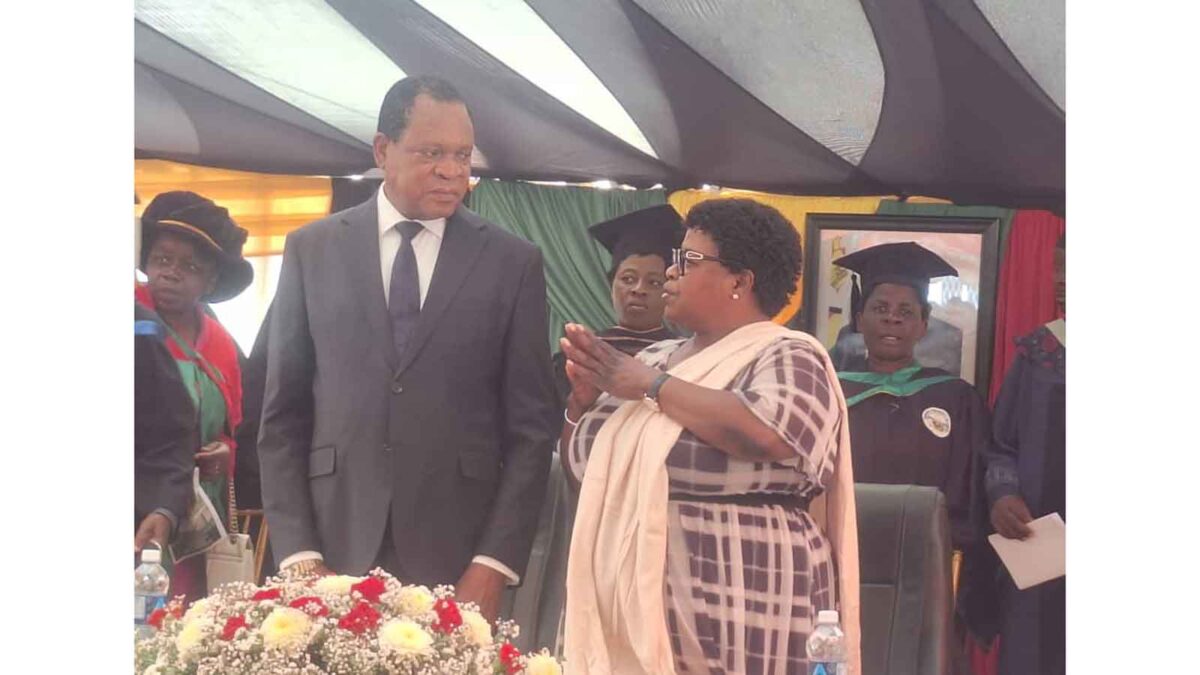
Mashonaland West Provincial Affairs and Devolution Minister Marian Chombo said agricultural education and innovation were critical to building climate-resilient communities and sustaining national food security.
She said the new Agriculture Education for Development (AE4D5.0) curriculum, anchored on heritage-based education, sought to promote food security everywhere and every day while equipping learners with skills to drive agricultural development.
Minister Chombo said Gwebi College of Agriculture was playing a key role in producing innovators, researchers, business advisers, entrepreneurs and practitioners needed to transform rural communities through agriculture.
She said the approach was aligned with President Mnangagwa’s Agriculture, Food Systems and Rural Transformation Strategy, which seeks to lift communities out of poverty and hunger towards an upper middle-income society by 2030.
Minister Chombo also stressed the need for innovation and adaptation as climate change increasingly threatened agricultural production, food security and infrastructure.