dyton mupawaenda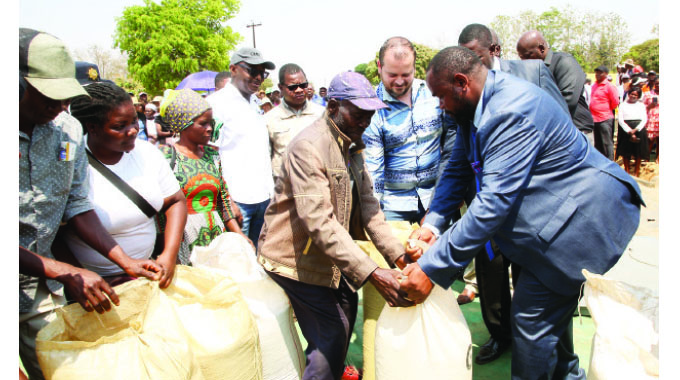
Precious Manomano-Herald Reporter
Muzarabani community has embraced the Government’s new scheme of swapping up to 1 tonne of traditional grains for maize for each household so that they include some white sadza in their personal diet.
A majority of farmers have indicated that although traditional grains have many health benefits, white sadza will boost their morale and confidence in the community.
Traditional grains are more drought resistant and can cope with fairly long dry intervals, so harvests are possible where maize is likely to be wiped out. But farmers in these arid areas still want to try for some maize, even if they lose the crop most years.
The Government feels that inputs will be wasted unless a harvest is almost certain, so no longer backs maize in marginal or unsuitable areas, but has introduced the swap scheme along with premiums for quality harvests of traditional grain to encourage farmers to specialise in crops suitable for their areas.
In an interview with Muzarabani farmers while celebrating the launch of grain swap held at Centenary Grain Marketing Board they indicated that this new programme will end the fleecing of farmers by middlemen and fraudsters.
Mr Gift Golowa of Muzarabani said the programme is greatly appreciated as it gives an opportunity for farmers to acquire crops which do not do well in their region.
‘’I grow sorghum in Chadereka ward 1. Maize does not do well in our area because we usually receive less rainfall. We grow sorghum and our soils are suitable for that crop. We usually expect over three tonnes per year. This programme is a welcome development so this exchange will ensure that the majority can also acquire maize. We are going to make sure that all people in our community have access to this information,’’he said.
Mrs Joyce Mashizha of Kairezi Village 8 said the programme will ensure that people eat the type of sadza that they want adding that they will not continue losing their cattle through trading for maize.
‘’All along we were eating sorghum sadza but now we are proud that we are eating white sadza as well. Farmers used to exchange cattle to get white maize. This is a positive move which is greatly appreciated,’’she said.
Mr Knowlegde Chigumira said Government’s commitment is greatly appreciated adding that this will ensure that farmers also get crops which they cannot produce in their regions.
Mr House Njanji of Chimoyo ward 1 indicated that majority of people in Muzarabani used to exchange cattle in order to get grains adding that the process was not fair.
‘’We used to budget cattle for the grain exchange. We used to exchange one beast for 10 bags of maize so this was very difficult for us,’’he said.
GMB Operations Director Mr Forward Takaindisa said they hold stock in excess of 4000 tonnes of traditional grains and equal amounts of maize that is also sitting on board.
‘’Upon introduction of this initiative, the grain swap scheme we have sufficient stock for the exchange of famers .The initiative is going on very well and we have sufficient stock. The demand for traditional grains has been going very well but maize has multiple uses and our stock feed manufacturers and our millers have demanded more maize but however because of the health consciousness, the demand for traditional grains is going up,’’he said.
Lands, Agriculture, Fisheries, Water and Rural Development Deputy Minister Vangelis Haritatos said the nation should strive to adapt to climate change and work relentlessly to come up with mitigatory strategies and work flat out to realise the fruits of the mitigatory strategies that are employed.
He encouraged farmers to bring whatever excess traditional grains that they have to swap with maize.
“What this means is that we must now look at the business of farming taking into consideration what agro-ecological region that we are growing in.
“We no longer need to look at what we as individuals want to consume because that type of crop may not be viable in the region that we are growing in, therefore let us grow what our agro-ecological region demands of us as farmers, and then trade our excess grains with what other grains we may require from time to time.
“Some regions prefer the traditional grains so they will bring in maize and get the traditional grains at a 1:1 ratio. The reverse is the same, should one have excess maize, they are very much welcome to bring any excess maize and trade for traditional grains,’’he said.
He indicated that there was a need to embrace agro ecological matching drive and this helps in climate proofing agriculture adding that farmers should encourage each other to grow crops using the Pfumvudza approach.
Government has increased the area under the crop to 700 000ha in the next summer cropping season as a measure to attack the effects of the possibility of drought and improving food security.


 Online Reporter