admin
admin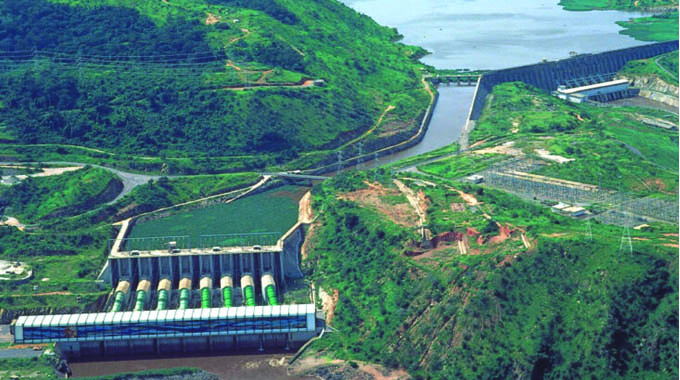
Sifelani Tsiko
Agric, Environment & Innovations Editor
Moves by five development financial institutions to help revive the construction of the Grand Inga hydropower station in the Democratic Republic of Congo, that had failed to take off for years, could help generate more than 40 000 megawatts (MW) of electricity, enough to meet the bulk of the power needs of the SADC region.
This project dubbed “the world’s biggest electricity generation project” had failed to materialise due to various issues, including lack of capital, technical challenges and disagreements among key partner countries.
There is a glimmer of hope now as new reports emerge that the Development Bank of Southern Africa and the Industrial Development Corporation, both South African State banks, are working with Pan-African institutions — the African Development Bank, the African Export-Import Bank, and the New Development Bank, the finance arm of the BRICS group of nations.
“These five parties have taken the initiative to say, ‘Let’s come together, let’s look at what we can do in terms of getting this goal off the ground,'” Mpho Kubelo, the DBSA’s chief risk officer was quoted saying recently. “How do we get it going and who do we need to bring in terms of actual development?”
The five banks have been working together since last year and with full backing of the presidents of both South Africa and DRC.
South Africa, which has been facing electricity generation deficits of up to 6GW, is keen to buy the power produced.
It has an electricity daily peak consumption which rises from a summer average of 32GW to 36GW in winter.
A few years ago, there were plans to construct the hydropower station through a regional development partnership involving five other SADC countries namely Angola, Botswana, Namibia, Swaziland and South Africa.
It was dubbed the Western Power Corridor (WESTCOR) project. However, it stalled due to various challenges.
South Africa and DRC, sources say, plan to implement the construction of Inga in phases, with the first phase targeting 1 800MW and the second 3 000MW.
Five other hydropower plants are expected to be built on the same dam, eventually raising its cumulative capacity to about 40 000 MW.
When completed, energy experts say the Grand Inga would surpass the Three Gorges hydroelectric project of China as the largest hydropower project in the world.
SADC countries have repeatedly called for a substantial investment in energy and water infrastructure to ensure rapid and inclusive industrialisation in the region.
The countries agree that faster industrialisation is the key to more rapid economic growth and greater prosperity.
And without sustainable development of energy and water infrastructure, the development plans cannot be achieved.
SADC countries have for years been grappling to generate enough electricity for their countries.
According to the Southern African Power Pool (SAPP), SADC is short of electricity and needs new generation capacity of about 5 670MW.
The revival of the Grand Inga project can be beneficial to the whole region.
Energy targets set by the region since 2010 have not been met.
The 2020 target by SADC to commission 16 515MW within three years, whereby 5 000MW would be produced in South Africa while Tanzania would produce 4 900MW, was not met.
The 16-member bloc has been working to achieve energy security with several projects being worked on to help the region to enjoy surplus electricity generation.
According to statistics from SAPP, mainland SADC member states had installed capacity of 59 539MW and operating capacity of 54 397MW as of the end of April 2017 against peak demand of around 53 478MW.
This resulted in excess generation capacity of only 919MW while the installed capacity in oceanic member states was 782MW for Mauritius, 246MW (Madagascar) and 106MW for Seychelles.
Total installed capacity for all SADC member states is more than 60 670MW.
Regional countries have ventured into various energy projects to enhance the region’s energy mix of hydro, solar, wind, gas, coal and geothermal power.
The projects all aim to ensure there is access to electricity, affordable electricity, security of electricity and stability of electricity.
Southern Africa’s power crisis requires cooperation and support from regional finance institutions as well as other multilateral banks.
With adequate funding and cooperation from member countries, it is possible for SADC to overcome electricity black-outs that have hurt socio-economic development in the region.
There are some bright spots in efforts to bolster the region’s energy security.
The proposed US$4,5 billion Batoka hydroelectric project, jointly implemented by Zimbabwe and Zambia could help manage energy deficiencies for the two economies.
The project will contribute an additional 2 400MW of power generation capacity to the power supply infrastructure of the two countries at its peak, a key step in improving energy security for both countries.
Zimbabwe also commissioned a huge investment in thermal energy in Hwange Power Station Units 7 and 8 financed through US$1,5 billion in financial assistance from China and the project increased the country’s power generation capacity by 600 MW.
In 2022, Mozambique started work on the more than US$2 billion Temane energy project, which is made up of the 450MW Central Termica de Temane power plant and the associated 563km long Temane transmission project.
The two energy projects are expected to help bolster Mozambique’s energy security, apart from boosting access to affordable energy and help in the country’s contributions to the regional power market.
Other countries in the SADC have also invested in energy projects in various ways, aiming to bolster the region’s energy security.
Zimbabwe will host the 44th SADC Summit of Heads State and Government on August 17 under the theme: “Promoting Innovation to unlock opportunities for sustained economic growth and development towards an Industrialised SADC.”


 Online Reporter