Chronicle Editor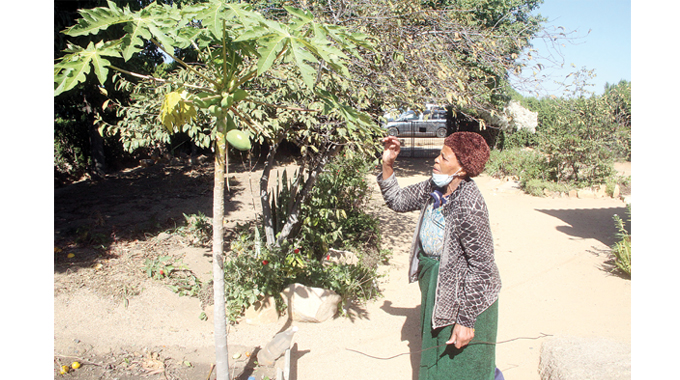
Thandeka Moyo-Ndlovu, Senior Reporter
A big mtshwankela tree is the most visible and stands near the gate for all to see next to the mnyi tree in Mpopoma suburb in Gogo Musa Mnkandla’s (68) yard.
In 2018, Gogo retired as an early childhood development teacher, an opportunity which gave her time to concentrate on her plants, especially wild fruit trees which she had been nurturing for years.
Sitting on about 300 square metres, her house in Mpopoma is surrounded by big wild fruit trees, herbs and vegetables which are now her source of living.
Gogo Mnkandla planted some of the wild fruit trees in the early 1980s when she was allocated her house together with her husband shortly after the country attained Independence.
She planted trees like umtshwankela, umyi and, umviyo as she has always been a fan of these since her teenage days in Lupane, Matabeleland North.
Relocating to Bulawayo after marriage just after the country attained Independence made her wonder if she would ever be able to freely eat these fruits like in the rural areas where they are scattered all over the bushes.
She has not yet seen anyone planting these trees in urban areas.
Upon realising that she would be permanently based in Bulawayo, she gave it a shot.
Today Gogo Mnkandla is a self-taught nursery owner who sells the same wild fruit trees.
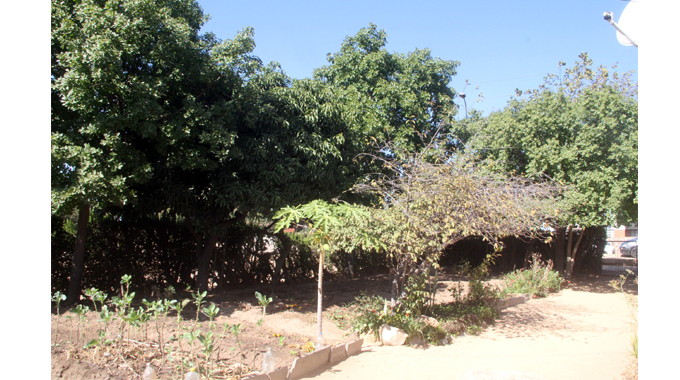
Opposite the mtshwankela and mnyi trees, the tallest, a mazhanje tree which was also planted in 1982. Gogo Mnkandla says this is her favourite tree as it bears the most fruits compared to all her trees. There is also umviyo tree.
“I have always been a fan of wild fruits and when we moved to Bulawayo, I knew that I would no longer enjoy the luxury of accessing easily and freely like I did back home in Lupane, Matabeleland North. This yard only had a few flowers when we moved and I decided to try and plant my favourite wild fruit trees and see if they would grow since we were now in urban areas,” she said.
“I started with the mtshwankela and the mnyi one and to my surprise the trees grew before giving me fruits a few years later. I just finished harvesting the fruits from these trees which I sell to vendors and neighbours to buy food at home.”
Gogo Mnkandla’s wild fruits have been exhibited in public functions as she is ever ready to educate willing residents on how to plant wild fruit trees.
Recently, she participated in the First Lady’s Dr Auxillia Mnangagwa’s Bulawayo’s provincial cookout competition where she was teaching guests on the importance of eating wild fruits.
“Barely a season passes without us having fruits to eat and sell from the yard and I am happy that despite my retirement I am able to eat off from my love of wild fruits.
“These fruits are not only nice compared to these other usual ones but they are high in nutrients and essential in treating many ailments. It’s sad to see that many young people will not get the opportunity to go to the rural areas and have an appreciation of these fruits which kept our forefathers safe from many diseases,” she said.
“Now that I have retired, I find pleasure in nurturing fruit trees before I sell them to my clients. It gives me joy and keeps me younger. On average I can sell fruits from a minimum of five trees daily on good days especially on other seasons besides winter.”
Gogo Mnkandla has also planted a mbumbulu tree normally found in Matopo area which she said is a good source of vitamins.
“I have heard some people claim that they do not have enough land to plant trees but the truth is they just need to start. Trees can be planted anywhere and they are not only a source of life but food as well. I always have something to eat from these trees all year round as I also have banana, pawpaw, avocado, mango, guava and lemon trees. In fact, my two mango trees yield more fruits compared to other trees in this yard. I also have sugarcane and different types of herbs which also have medicinal benefits,” she added.
“Nowadays I have since discovered a market for Fennel seeds used in making candy and other sweet treats. The herb is easy to grow and I have realised that it is on demand, hence I will soon put it everywhere in the yard so that I can supply my clients who need it.
“There is so much that we can do with our hands to make our lives better before we complain. There is life in trees and even in agriculture and it will be wise for all of us to have at least a source of food, be it vegetables or fruits so that we are able to live longer and also green the environment. Long ago, wild fruits could only come from rural areas but now I know that a few homes have access because we decided to plant the same trees in our urban settings.” – @thamamoe.


 Online Reporter