Online Reporter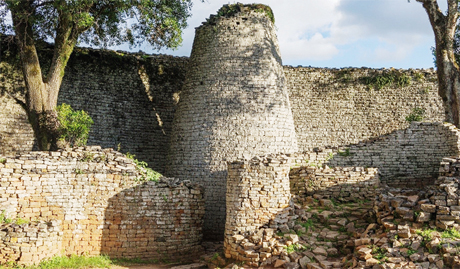
Phineas Chauke, [email protected]
Have you ever paused to think how a people capable of constructing the architectural marvel of Great Zimbabwe got labelled primitive? How did it happen that expert builders who mastered dry-stone engineering, geometric design, ventilation systems and sophisticated spatial planning beget descendants who doubt their own intellectual heritage?
Perhaps the greatest colonial conquest was not of land — but of African confidence.
Great Zimbabwe is an Ancient royal capital built between the 11th and 16th centuries by indigenous African people using granite bricks with no mortar yet the walls still stand many centuries later.
At its height, the site had up to 20 000 residents and such a population called for proper urban planning.
What remains of that once vibrant city today is adequate evidence that the men and women of that era were equal to the task.
The use of thermal shock (alternate heating and cooling) of the bedrock to obtain granite blocks and the lapidary of cutting and chiselling them into fine bricks without modern tools before stacking them neatly into magnificent walls tell a story of rare expert masonry.
The spatial planning, and structural engineering is from another age — probably from the future.
The curved entrances limiting direct invasion and the maze-like layouts most definitely enhanced the security of people and treasured objects.
The city was organised into several distinct sections including the Hill Complex, Valley Enclosures and the Great Enclosure among others.
Renowned for being the largest single structure of ancient times in Sub-Saharan Africa, the Great Enclosure is an architectural masterpiece with a good balance between functionality and majestic aesthetics.
It has a circumference of about 250 metres with walls rising up to 11 metres and reaching a thickness of about 5 to 6 metres at the base, tapering as it rises, for structural integrity.
It is adorned with decorative patterns such as the chevron and herringbone and it houses the iconic conical tower.
Walking around the Great Zimbabwe, one will notice the structures have ventilation and water drainage systems embedded in them.
All that from as far back as the 11th century, without mortar, written language or foreign design templates. Now, that’s just how amazing African ingenuity used to be. It was breakthrough brilliance that was ahead of other civilisations.
Some features of Great Zimbabwe appear startlingly futuristic, raising questions about how advanced indigenous African engineering truly was before disruption.
These were not accidental stone piles. They were products of mathematical precision, environmental understanding and sophisticated urban planning.
The acoustic and spiritual positioning of Great Zimbabwe is widely understood as intentional rather than accidental, reflecting sophisticated indigenous knowledge that integrated landscape, sound, cosmology, and ritual power.
Great Zimbabwe was built on and around granite hills (kopjes) that were already regarded as spiritually powerful places in the cosmology of the local people. Hills are associated with ancestral spirits and territorial spirits.
Elevated locations symbolised authority, mediation between earth and sky, and proximity to the spiritual realm. The
Hill Complex likely functioned as a ritual and political centre, not merely a residence.
The spatial layout expresses a cosmic order. The Hill Complex represents sacred authority, ritual leadership and spiritual interface.
The Great Enclosure was a royal and ceremonial space, possibly linked to fertility and queenship. The Valley Ruins were living spaces of the wider community.
This hierarchy mirrors typical African spiritual structure and flow of power (ancestors–ruler– people) and it reflects a world-view where spiritual legitimacy precedes political power.
Quite interestingly, to the keen observer, there is also what appears to be an astronomical and symbolic alignment embedded in the civil engineering of Great Zimbabwe.
The stone orientations and pathways seem to align with solar movement (light and shadow symbolism) and seasonal cycles associated with fertility, rain and farming.
This design must have been very significant during rain making rituals, which are likely to have been conducted there.
The acoustic positioning of the site must have yielded remarkable sound amplification and control.
The granite walls and narrow stone passages produce exceptional acoustic effects. Granite reflects sound efficiently, narrow corridors focus and channel voices, elevated spaces project sound downward.
This creates controlled sonic zones such as private ritual communication, public ceremonial announcements, hidden voices (authority without visibility).
Voices echo up the slopes to the Hill Complex from the valley. Certain areas amplify low-frequency sounds such as drumming, chanting, and ululation.
The reflection of sound enables a speaker to be heard without necessarily being seen.
This would enhance the mystique of ritual authority, making voices seem disembodied.
Sound was a spiritual technology, not limited to entertainment and other ordinary purposes.
Drums, chanting, clapping, ululating and mbira tones interact with stone surfaces.
Resultant echoes would reinforce feeling of spiritual presence and ancestral emotional association during ritual ceremonies. Controlled access to sound would also strengthen social hierarchy — not everyone could speak or be heard. In African traditions, sound plays a pivotal role in summoning spirits.
Great Zimbabwe is best understood as a living spiritual instrument, not just architecture. Its builders mastered landscape acoustics, social psychology, spiritual geography and environmental harmony.
Unlike sites such as Stonehenge (United Kingdom) or Lalibela (Ethiopia), which emphasise singular religious or astronomical functions, Great Zimbabwe embodies a distinctly holistic design in which architecture, landscape, acoustics, governance, and spirituality operate as a unified system — integrating everyday life with sacred practice in a continuous, living spatial experience.
Now the big question is, did the brilliance that built Great Zimbabwe disappear, or did we simply stop believing it still lives within us? Or maybe someone bewitched us.
*Phineas Chauke is the Marketing, Communication and Advocacy Manager for National Museums and Monuments of Zimbabwe. He can be contacted on +263776058523.