admin
admin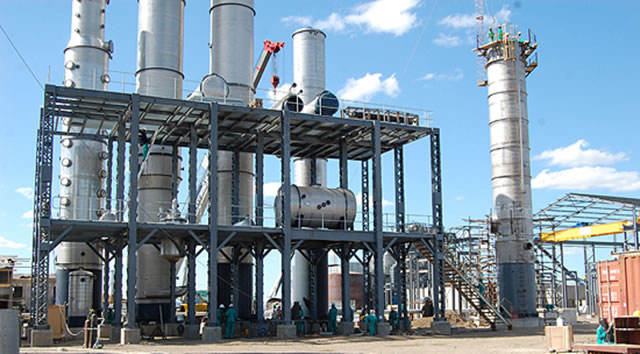

Harare Bureau
GREEN Fuel, Zimbabwe’s largest ethanol producer plans to spend close to $1 billion on expansion in the medium term as the company seeks to become a regional ethanol giant, general manager Graeme Smith has said.About $560 million would be spent on the construction of additional two plants with a combined capacity of 40 million litres of ethanol per month and $400 million on developing farm land measuring 40,000 hectares.
Smith said some money would also be invested in upgrading the current plant which would double capacity to 20 million litres.
“At the moment, we have 9,500ha and the potential total is around 50,000ha,” said Smith. “To develop that, we had a 10 year plan . . . but in the next seven years, we intend to fully develop the entire project to the full potential of 50,000ha.
“Once developed, we will be producing on an annual basis, figures of around 500 million litres and generate 120 megawatts.”
Smith said once the project is completed, Zimbabwe could stop petrol imports.
Zimbabwe uses around 400 million litres of fuel per month.
“In other words, we will be in a position to sufficiently produce enough ethanol to fully substitute petrol imports,” said Smith.
The expansion project is expected to create around 16-17,000 jobs bringing the total workforce at the company to 21,000, making it one of the country’s largest employer.
Green Fuel has so far invested $320 million into the project since its inception in 2009. The plant started running in 2012 and is currently producing 10 million litres of ethanol per month.
It employs about 4,500 permanent workers, 2,500 of which are casual. The company also produces its own electricity for the plant and the farms.
The plant can produce 18MW but is only consuming about 4MW. Smith said the company would install electricity transmission facilities with a capacity of transmitting 14MW on the national grid and for export.
Green Fuel’s operations have been boosted by the introduction of mandatory blending by government, which started at five percent in August last year and was increased to 10 percent and 15 percent two months later.
During the first three months of mandatory blending government realised savings of about $20 million on its fuel bill while further savings were expected as the policy gains traction.
Government has, however, revised the blending thresholds to 10 percent as Greeen Fuel is not presently able to produce ethanol required to produce E15.



 Online Reporter