

 Online Reporter
Sikhulekelani Moyo, Zimpapers Business Hub
FARMERS have been urged to prioritise fodder production during the rainy season to produce silage for their livestock in preparation for the dry months. Lands, Agriculture, Fisheries, Water and Rural Development Permanent Secretary, Professor Obert Jiri, said this in an interview on the sidelines of the ongoing five-day Strategic Workshop in Bulawayo.
Prof Jiri noted that for a long time, the ministry had regarded livestock as secondary, with crops taking centre stage because of their critical role in national food security. However, he stressed that livestock is a key sub-sector that requires equal attention.
“Farmers should utilise part of their Pfumvudza/Intwasa plots to produce fodder. We have, in the past two to three seasons, distributed velvet bean, lab-lab and other species of fodder crops, and that is critical.
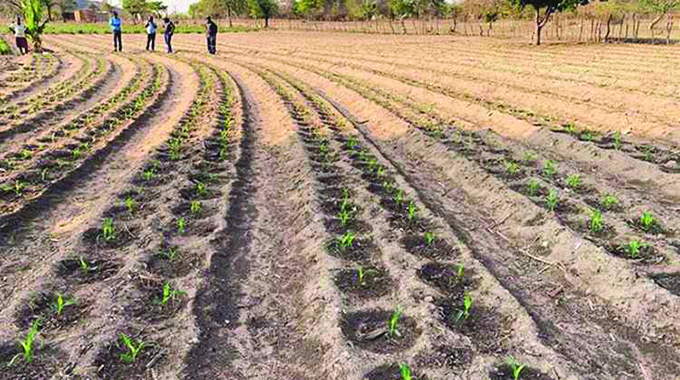
“We encourage farmers to embrace these. As they grow arable crops, they should also allocate a portion for fodder crops.
“Large-scale farmers can replenish their pastures by irrigating and introducing other pasture species to ensure adequate feed during the dry season. It’s a process and a revolutionary step for small farmers to grow non-food crops that provide feed for livestock,” said Prof Jiri.
Prof Jiri added that when farmers harvest food crops, they should not burn plant residues but bale them as stover for livestock. He also highlighted the ministry’s silage-making programme, which is vital for dairy and livestock farmers.
“On the ward scale, we are encouraging and training farmers to do this, and we want it established among all livestock farmers in the country,” he said.
Meanwhile, Prof Jiri revealed that Zimbabwe’s livestock sector is dominated by cattle, with the latest assessment showing about 5,7 million head of cattle nationwide. However, more than 4 million of these are not used for economic transactions.
“That is the herd we must grow. Our focus over the next year and five years is to expand the national herd through programmes we are defining during this strategy session. The plan focuses on four pillars: genetics, animal health, nutrition and marketability. Genetics must improve so we can have better animals and increase numbers. This involves introducing new breeds, importing quality stock and using artificial insemination to boost breeding,” said Prof Jiri.
Government has expressed concern over the livestock sector’s performance and introduced a blueprint to address constraints. Key challenges include animal health and feed safety, inadequate nutrition (pastures, fodder and water), poor genetics, lack of infrastructure for accessing lucrative markets, and limited financial resources.
These issues have resulted in low off-take, poor fertility, high mortality, low carcass weight, poor quality and inability to compete on export markets.
In 2020, Government approved the Livestock Recovery and Growth Plan (2021–2026) to implement interventions aimed at improving production and productivity. The plan seeks to strengthen disease surveillance and control systems, develop resilient livestock production systems and reduce mortality rates to adapt to recurring droughts caused by climate change.
The ultimate goal is to transform farmers’ livelihoods, provide raw materials for agriculture-led industrial development and position the livestock sector as a key driver of economic growth.




 Bongani Ndlovu