admin
adminMercy Ngwebvu
THE link between food security and climate change can be positively explored to benefit the nation if farmers embrace the latest production techniques that are environmentally and climate smart.Climate change is already negatively impacting agricultural production locally and its risks to cropping and livestock are increasing especially in countries where community adaptive capacity is weaker.
Its impacts on agriculture threaten both food security and agriculture’s pivotal role in rural livelihoods and broad-based development.
Climate smart agriculture is an integrative approach to address these interlinked challenges of food security and climate change. It aims to sustainably increase agricultural productivity, farm incomes, food security and development; building resilience of agricultural and food security systems and reducing greenhouse gas emissions from agriculture.
It entails the consideration of climatic risks that are happening more rapidly and with greater intensity than in the past. These new climate risks require changes in agricultural technologies and approaches to improve the lives of those still locked in food insecurity and poverty and to prevent the loss of gains already achieved.
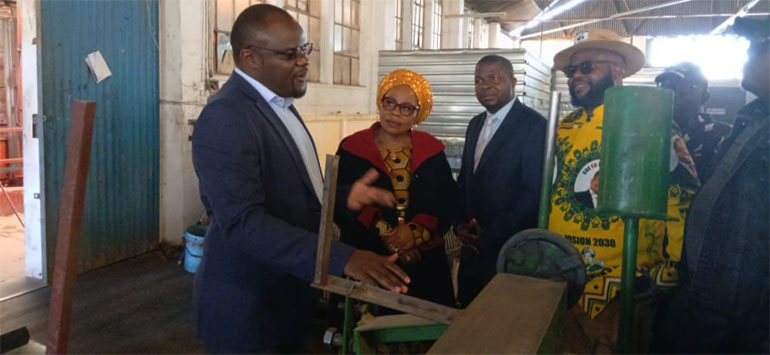
This was the main thrust of a Tobacco Farming Forum held at Chiwere Business Centre, Odzi, last Friday by various farming stakeholders like Boka Tobacco Sales Floors (BTSF), Tobacco Research Board (TRB), Tacshen and Climate Smart Trust.
The forum called for greater investment in managing climate risks, understanding and planning for adaptive transitions that may be needed, for example, into new farming systems or livelihoods and exploiting opportunities for reducing or removing greenhouse gas emissions where feasible.
TRB representative, Mr Amos Kambare, said tobacco farmers must be pro-active and diligent in implementing the latest farming technology.
“Tobacco farmers need to be careful throughout the tobacco farming process to ensure the best of the gold leaf crop. While most farmers are now familiar with the tobacco growing process, it is sad to note that that perfect crop is ruined during the curing stage. Farmers must exercise extra caution so that their efforts do not go down the drain,” warned Mr Mambare.
Officials from the Forestry Commission Zimbabwe and the Environmental Management Agency (EMA) stressed the need to protect natural resources like indigenous trees, which fall prey to tobacco curing, as one big way of practising climate smart agriculture.
Substantial amounts of indigenous trees like mutondo, mupfuti, musasa and muunze which have become endangered species are preferred wood-fuel because they are cheap and readily available in the communities, ignoring the ecological consequences that will obtain out of their extinction.
“You should not use indigenous trees to cure tobacco. We urge farmers to use exotic trees (gum, pine and wattle) instead. Farmers must plant their own exotic woodlots so that they will use to cure tobacco in future. This is the surest way to preserve our natural resources for generations to come,” said Millicent Machona from FCZ.
Environmentalists are urging farmers to join the Hwange Colliery Company programme on the use of coal in curing the golden leaf to assist in the conservation of indigenous trees, which are under threat from massive deforestation, especially in most small-scale tobacco growing communities.
Under the programme initiated by the coal mining giant, farmers benefit from coal availed by rural district councils at subsidised prices to ensure viability. Apart from conserving the forests, coal cured tobacco is said to have a good quality compared to the crop cured using fire-wood. The farmers interviewed this week said they were still learning the ropes of climate smart agriculture.
“I have one hectare under tobacco and I am expecting to harvest at least 22 bales. My worry is I might not accrue maximum benefits out of my sweat owing to poor barns and curing methods. I am guilty of using indigenous trees to cure my crop,” said Mrs Clara Medzayi (53) of Chiwere.
Tacshen donated barn materials to Mrs Medzayi following her plea.
Mr Tichaona Mazambara had this to said: “The issue of barns remains a tricky part of tobacco farming. I had two barns and both were destroyed by rains because the construction was poor. This affected me because I had planted a lot of tobacco thinking that my barns would be adequate. I made a loss last season as a result, managing to get just $2 600.”



 Online Reporter