malvernmugadzikwa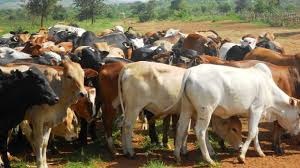
Theseus Shambare
Tiriko Mutyavaviri looks deep in thought as he watches over herd of cattle as it forages on what remains of Show Farm in the Chinyani area of Muzarabani District, Mashonaland Central Province.
Oblivious of nature’s relentless armoury assaulting him from every angle as the penning out of November brings no respite to his province and beyond, the 44-year-old farmer ponders his next move, and what to do with the 90 he inherited, should the ancestors refuse to let go of their spittle this rainy season.
Watching his predominantly Mashona herd, showing signs of stunted growth, ageing defects and inbreeding impedance, scrounging on the once luscious pastures of his childhood, now tired and exhausted, Mutyavaviri’s heart bleeds as he weighs his options.
In response to shifts in climatic conditions, water sources have long since vanished or receded to the horizon which also exacerbates his predicament.
Mutyavaviri’s dilemma, however, goes beyond the vagaries of nature and the passage of time.
Although the cattle are his, all right, they do not belong to him per se.
As per culture, his mother, Tambudzai Mandedza, got two heifers as an honour from her two sons-in-law.
But fate intervened and she died before she performed the expected rituals on her ceremonial motherhood cows (mombe dzehumai).
And, as the years became decades, the herd ballooned too.
Former University of Zimbabwe lecturer and African tradition expert, Dr Augustine Tirivangana said, the Shona tradition values ‘mombe yehumai’ as a symbol to recognise the fertility status of a mother-in-law (ambhuya) and her female line in the marriage protocol.
“The mother or her sisters and nieces are expected to do rituals called “madiro” to signify accepting the token and pronouncing blessings upon the life of the married couple,” he said.
Madiro, do as you please, depicting unfettered merriment, the offsprings are regularly feasted upon in ceremonies led by ambhuya’s kinsmen.
Dr Tirvangana asserts that slaughtering “mombe yehumai” while you are not entitled to it is a metaphysical crime called ngozi that may lead to unending deaths to the offenders’ family.
“Upon the mother’s death, the offspring of that cow have to be formally surrendered to her family for closure,” he revealed.
This did not happen.
Due to displacements during the war, Mutyavaviri’s family could not trace back to the family of their mother to let them do the expected rituals.
Mutyavaviri cannot sell or slaughter any of the herd.
The least he could do all these decades, he said, is to bury the carcass.
To date, he is torn and tormented.
His situation is not far from other families keeping Ancestral bulls (mabhuru emusha).
It is unheard of killing that bull willy-nilly.
There are procedures to be followed.
Due to the complexity of the process, this has made people keep them growing older.
On the other hand, within the rural communities, keeping a small herd of cattle (less than five) is also considered to be for the “poor”.
Cattle is wealth and the larger the herd, the more respect rendered an individual.
It may be hard to ask for a hand marriage if one have a small herd of cattle.
It is not about the quality, but the quantity.
However, climate experts say, while keeping livestock is considered to be of economic and nutritional value, it has to be done in a sustainable manner taking cognisant of climate change.
According to research, livestock has been identified as the major source of methane gas, which has a global warming potential (GWP) 28 times greater than carbon dioxide.
Greenhouse gases (GHG); Carbon dioxide, together with nitrogen and methane, is said to cause the earth to heat up, causing global warming.
As a result, poverty has become a perennial epidemic, with a lack of access to water becoming an insurmountable obstacle to productive agriculture that Mutyavaviri and other farmers are subjected to.
Dr Walter Svinurai, a climate expert and consultant who made compilation and review of the United Nations Framework Convention on Climate Change (UNFCCC)’s transparency reports, such as agricultural greenhouse gas emission inventories, including Zimbabwe’s first Tier 2 GHG inventory for cattle (2023) said farmers need to adopt climate-smart livestock production.
“The sub-sector is a significant source of GHG emissions, contributing about seven percent of Zimbabwe’s key category sources and 80 percent of enteric fermentation methane contribution by livestock.
“Farmers need to move away from unproductive livestock systems,” Dr Svinurai said.
“Enteric fermentation takes place in the digestive systems of animals, particularly ruminants like cattle.
“There is no reason for farmers to keep older animals that are no longer productive in the herd but instead contribute a lot of emissions.
“Farmers need to eliminate that part of the herd so that, as we grow our herd, it will be productive and profitable to the nation,” said Dr Svinurai.
On cultural practices, he said, there is a need to continuously replace the older animals with smaller ones while maintaining the culture.
“We can still be guided by elders on how to transfer those ancestors from older animals to the next smaller bull so that we strike a balance by maintaining our culture while mitigating GHG emissions,” he said.
Dr Clarice Mudzengi, who is a livestock, wildlife and fisheries lecturer at Great Zimbabwe University, believes climate-smart livestock is key to production.
“On top of keeping livestock for short periods, being climate-friendly also increases productivity and profits.
“It is not a matter of keeping a large herd that can make livestock production profitable; it is about maximizing production per unit area.
“In dairy farming, we can increase production per animal by yielding more litres of milk and in beef, we need to increase quality and balance with mass for a farmer to enjoy much profits,” said Dr Mudzengi.
“Livestock must not be treated like museum, it must be a business.”
Food and Agriculture Organization (FAO) data analysis specialist Roger Kamana said if farmers are taught on beneficial management practices, livestock herd would be manageable.
“Farmers need to be taught on the use of high-quality feed additives that play a pivotal role in the overall health of livestock, improve weaning and conception rates and immune system response.
“We also encourage rotational grazing to sequester carbon in the soil. Farmers need to manage cattle manure to reduce methane and nitrous oxide by covering the storage facilities while optimising manure use with a nutrient management plan,” he said.
“All of these benefits add up to a more valuable livestock investment while reducing GHG emissions,” said Kamana.
Livestock and Meat Advisory Council executive administrator Dr Chrispen Sukume believes the Government and other stakeholders need to amp up farm business management workshops.
“My position as a farmer representative, our farmers believe that more cattle translates to more money.
“The Government and their partners need to improve and emphasise awareness so that we give people knowledge on the dangers of keeping unproductive animals and their implications for the environment, like greenhouse emissions and losses to their income as well,” said Dr Sukume.
In line with the Paris Agreement of 2015 on climate change, greenhouse gas (GHG) emissions should be reduced as soon as possible and reach net zero by the middle of the 21st century.
To stay below 1.5 °C of global warming, emissions need to be cut by roughly 50 percent by 2030. This is an aggregate of each country’s nationally determined contributions.
Zimbabwe as signatory to the Paris Agreement, has already ramped up efforts through coming up with climate-smart agricultural method Pfumvudza/Intwasa, that reduce tillage operations.
Animal drought power has been widely used among smallholder farmers, but this has been considered to increase GHG emissions almost as much as fossil-fuel powered equipment.
Today, weather experts could not tell farmers who rely on rain-fed agriculture whether to plant or not, despite it being the first week of January.
Traditionally, by this time, lush green vegetation would be dominant in most parts of the country following quenching rains fallen on thirsty ground.
On the contrary, recent erratic summer seasons are evident enough to show that climate change is real and upon us.
It is a clear call for mitigation and adaptation measures to be in place as neglect to these may lead to unbearable future temperature conditions.
X@TheseusShambare



 Online Reporter