admin
admin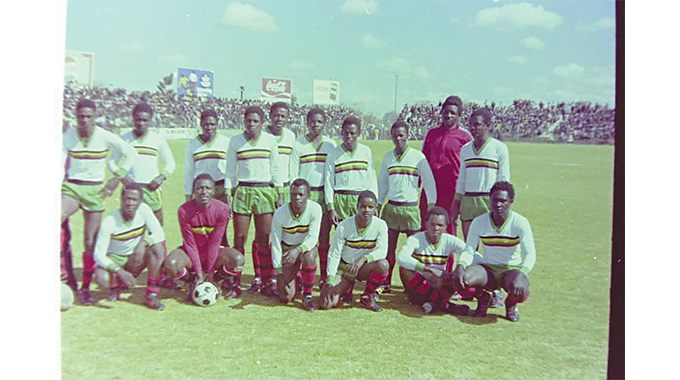
Lovemore Dube, [email protected]
JERRY Chidawa ranks the most famous and successful among the liberation war heroes who returned to Zimbabwe after Independence to continue playing football.
Chidawa was a member of Zanla Forces.
His most memorable triumphs are two league medals with Rhinos.
When he returned he formed a potent strikeforce with a number of strikers to make Black Rhinos one of the best teams in the Super League. Like most of the former guerillas, Chidawa was identified through trials that were conducted within the Zimbabwe National Army after the defence forces’ first Commander Solomon Mujuru initiated the move.
Over 150 players heeded the call and went through a rigorous selection exercise to stay among the almost 40 players identified for Chauya Chipembere towards the end of 1982.
That gave birth to Rhinos who went on to win the 1983 Zifa Northern Region Division One league. The win came with a ticket to the Super League where they joined big guns Arcadia, Caps United, Dynamos, Gweru United, Highlanders, Rio Tinto, Risco, Wankie and Zimbabwe Saints.
For almost a decade he was the shining star of Rhinos and the combined Defence Forces team for World Military Games such as the one held in Italy where Stix Mtizwa impressed Belgian scouts who eventually signed Moses Chunga.
He played alongside Maronga Nyangela, Mike Abrahams, Simon Machorani, Hamid Dhana, Mtizwa, Stanley Ndunduma and Jimmy Mbewe in an exciting Rhinos that had flair in its game.
Chidawa was not the only player who went to war to star for a club after the attainment of Independence.
For many in Bulawayo and Matabeleland North, the Gwayi River Assembly Point football team has a special place in their hearts.
The team curtain raised for Highlanders and it is from one of the matches when Highlanders were on tour in Zambia that the former Zimbabwe Vice President of Zimbabwe Dr Joshua Mqabuko Nkomo asked why Madinda Ndlovu was not in the first team.
On that day Madinda showed athleticism and great skill running rings around a fit as fiddle Gwayi side at a Zapu function where football was the main entertainment. After Dr Nkomo’s words and the departure of Doughty Sithole immediately after to the US, a new star who would go on to be Highlanders’ best player for the 1981-90 decade was born.
The Gwayi River team had among them Charles Ndebele who played briefly before moving to 2.2 Brigade in Murewa. He played as a winger but after being identified for Black Rhinos Sherperd Murape switched him to goalkeeper where he helped Rhinos gain promotion and was knocked off the Number One position by the legendary Japhet Mparutsa who joined from Dynamos FC.
Ndebele stayed as Mparutsa’s Number Two until 1987 when he moved to Bulawayo.
Gwayi River had another player George Moyo who was in the books of Highlanders FC when he left for Zambia in 1976.
Moyo returned to play for Highlanders where at one stage he deputised Peter Nkomo.
Several of his teammates played for Dynamo Kiev, a name borrowed from Ukraine football giants where some had trained during the war.
Dynamo Kiev went on to set base at Njube Ground (Desert) and played in the Bulawayo Zifa lower leagues for almost 10 years.
According to Ndebele at Rhinos former player and club coach Droment Chirova (midfielder), Jeremiah (Jerry) Chidawa (striker), Collen Dube (midfielder), Derrick Sachiti (midfielder) and Robert Ngwenya (striker) who were part of the Rhinos side in 1984 when they won the League, these players were ex-combatants.
Edward Dube a midfielder had come from the Rhodesia Front. Most of those who became part of the team came from the civilian ranks and won the League in 1984 and 1987.
Prominent Lupane business centre war veteran Jabulani Ndlovu also played for Black Rhinos as a goalkeeper and is remembered for standing in between the goalposts with Mparutsa not available and saving penalties in an Africa Champion of Champions game in 1985.
Ndebele revealed that in the camps they played football in Zambia to keep fit and for entertainment purposes.
“We played football at Mwembeshi (training base) in between trees that were left tall so that the Rhodesia Front soldiers would not identify us on aerial observation and bomb us,” said Ndebele.
Another former Zipra cadre, Ralitali Ngwenya who had just been promoted into the first team at Highlanders in 1976 and crossed into Botswana enroute to Zambia to train as a Zipra cadre, said last week they played football in the camps for recreation.
Ngwenya crossed with 15 guys a majority of them Highlanders reserve team players with goalkeeper George Moyo having crafted the letter that they used to trick juniors coach Mackenzie Sibanda to release a uniform and balls that they deceived Rhodesian Front and police at roadblocks that they were going to a soccer match in Seula Village, Matobo District.
So many returning to an independent Zimbabwe got a chance to follow their passion and play football in an equal opportunities environment.


 Online Reporter