Online Reporter
Gibson Mhaka, Zimpapers Politics Hub
NEARLY 10 000 submissions have been recorded since the commencement of the ongoing Gukurahundi hearings targeting victims in Matabeleland provinces where traditional leaders are directly engaging affected families.
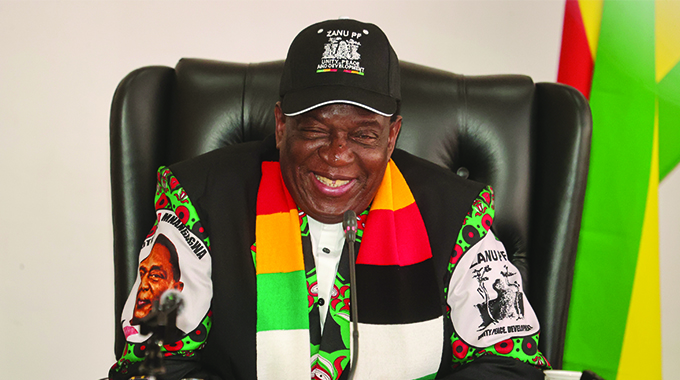
President Mnangagwa officially launched the Gukurahundi public hearings programme in July last year and hearings began in full swing in June this year with traditional leaders empowered to conduct the hearings.
The programme seeks to resolve through an internal, home-grown process that reinforces national unity, the early 1980’s civil strife, popularly known as Gukurahundi, which resulted in the loss of lives mainly for people in Matabeleland and part of the Midlands provinces.
The Second Republic, led by President Mnangagwa, has demonstrated a strong commitment to facilitating lasting healing and reconciliation that brings closure to past conflicts, aligning with President Mnangagwa’s vision of nation-building and fostering unity.
Zimpapers has gathered that, as of September 3, 2025, the latest data highlights continued community participation and underscores the scale of the ongoing documentation efforts.
Official figures indicate that a total of 9 025 submissions have been recorded to date. Of these, 203 online submissions were received from Binga District in Matabeleland North, with 107 of these accompanied by audio testimonies.
The report indicates that Chiefs Siachilaba, Sinamusanga and Sinakatenge are leading the local documentation efforts, having contributed 57, 77 and 69 forms respectively, as the evidence-gathering phase intensifies.
The total number of chiefs who have posted on the online platform now stands at 70, reflecting the broad involvement of traditional leadership in the process.
Overall statistics show a near-equal distribution of submissions between the two provinces, with Matabeleland South accounting for 4 536 submissions (50,26 percent) and Matabeleland North contributing 4 489 (49,74 percent).
The data also shows a strong female participation rate, with women constituting 5 412 (59,97 percent) of the total submissions against 3 613 from men (40,03 percent).
As of September 3, 2025, a total of 864 audios had been transcribed since the programme’s inception, with 35 transcribed on that day alone.
Responding to questions on the programme’s timeline and scope, Attorney-General Mrs Virginia Mabiza, who is also head of the secretariat of the Matabeleland Peacebuilding Outreach Programme, said the final report and recommendations will only be drafted after the “transcription, translation and verification of testimonies” are complete.

She said the programme remains in the evidence-gathering phase, with no date yet set for the final report.
“Our immediate priority is the transcription, translation and verification of testimonies. Only once this process is complete will we proceed to analyse the evidence and draft our recommendations,” said Mrs Mabiza.
“The programme is still in the evidence-gathering phase, which is why no date has yet been set for the final report.
“What I can assure the public is that a clear timeline will be announced once verification is completed, because accuracy and integrity must take precedence over expediency in this process.”
On whether the hearings programme will be expanded, Mrs Mabiza said the current focus is on Matabeleland North and South and that any decision to include other regions, such as the Midlands, would be a future consideration requiring additional planning.
“We recognise the importance of other regions, including the Midlands, in this process. Once the first phase is completed, any decision to expand the programme will be communicated publicly,” she said.
“Such an expansion would require additional logistical and budgetary planning, and the public will be informed once these arrangements are in place.”
On the legal framework for compensation and memorialisation, Mrs Mabiza said: “The legal framework will be guided by the outcomes of the outreach programme, including provisions for compensation, memorialisation, psychosocial support, and social reintegration measures.
“We aim to ensure that all interventions are victim-centred, inclusive, and responsive to the needs of those affected.”
The hearings programme’s commitment to a unified approach is demonstrated through its co-ordination with all relevant Government ministries, traditional leaders and local structures.
Mrs Mabiza reaffirmed the central role of the National Council of Chiefs in the implementation of the programme.
“To ensure the recommendations are implemented, the Government, through His Excellency the President, (Mnangagwa) initiated the process and endorsed the traditional leaders to lead it,” she said.
“Once the process is complete, the recommendations will be tabled before His Excellency the President, and all Government agencies will be responsible for their implementation,” she explained.
In a bid to safeguard the programme from politicisation, Mrs Mabiza reiterated that it is a “national, citizen-driven process that puts victims and their experiences first”.
“It is led by traditional leaders and co-ordinated through the National Council of Chiefs, with a clear focus on promoting national healing, unity, and reconciliation,” she said.
“Every step is guided by transparency, integrity and respect for communities, and we have measures in place to protect the confidentiality and safety of all victims.
“These safeguards ensure the process remains above politics and serves the collective interest of our nation.”
National Chiefs Council president, Chief Mtshane Khumalo, confirmed that the process is proceeding smoothly on the ground.
He expressed satisfaction with the progress, noting that community engagement has been strong and that the traditional leaders are effectively leading the documentation efforts in their respective areas.
“The process is going on smoothly on the ground. We are very satisfied with the progress.
“Community engagement has been strong, and the traditional leaders are effectively leading the documentation efforts in their respective areas,” said Chief Khumalo.