

 Online Reporter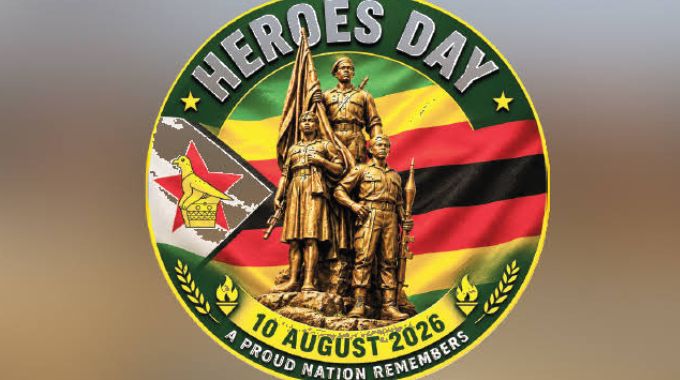
Gibson Mhaka, [email protected]
THIS year’s Heroes Day commemorations come at a defining moment in Zimbabwe’s post-independence history.
As the nation prepares to gather at the National Heroes Acre and provincial shrines on August 10 under the theme, “Lest We Forget,” Zimbabwe is not only remembering the sacrifices of the men and women who fought to liberate the country from colonial rule.
It is also witnessing the closing chapters of another significant national process, the Gukurahundi Community Engagement Outreach Programme — an initiative that has sought to confront one of the country’s most sensitive historical episodes through dialogue, truth-telling and reconciliation.
The convergence of these two national milestones is more than coincidental.
It reflects the evolution of Zimbabwe’s nation-building project, where remembrance is increasingly being understood not simply as an act of honouring liberation heroes, but as an enduring commitment to healing historical wounds, strengthening national cohesion and building an inclusive future.
In many respects, the theme “Lest We Forget” acquires deeper significance this year because it speaks to both remembrance and responsibility.
It reminds Zimbabweans never to forget those who sacrificed everything to secure independence, while simultaneously acknowledging that preserving the fruits of that liberation also requires confronting painful chapters of the nation’s own history with honesty, dignity and mutual respect.
This is precisely the philosophy underpinning the Second Republic’s approach to the Gukurahundi Community Engagement Outreach Programme.
Rather than allowing historical grievances to remain unresolved or become instruments of perpetual political contestation, the Government opted for an indigenous, community-led process that places victims, survivors and traditional leaders at the centre of dialogue.
That decision marked a departure from externally prescribed models of reconciliation.
Instead, Zimbabwe embraced its own cultural institutions, recognising that chiefs have historically served as custodians of justice, reconciliation and social harmony.
The outreach programme, officially launched by President Mnangagwa in July 2024, therefore represents more than an administrative exercise.
It embodies a broader political philosophy that sustainable nation-building cannot be achieved without national healing, and that reconciliation is not an event but a continuous process requiring trust, patience and community participation.
Latest progress reports indicate that the initiative is entering its final phase.
Addressing the recent meeting of the Gukurahundi Steering Committee in Bulawayo, Attorney-General Mrs Virginia Mabiza, who heads the Secretariat of the Matabeleland Peacebuilding Outreach Programme, confirmed that the process has continued to record remarkable progress.
The figures themselves tell an important story.
More than 25 000 online submissions, over 25 800 physical submissions and approximately 25 500 recorded audio testimonies had been received by mid-July, while thousands of testimonies have already been transcribed for further processing.
Beyond statistics, however, lies a more profound national message.
Communities have responded positively because they increasingly view the process as their own.
The overwhelming participation reflects growing public confidence in a reconciliation framework anchored in local ownership rather than external intervention.
The outreach has allowed affected families to narrate their experiences within familiar cultural settings, under the stewardship of traditional leaders who understand the history, customs and social dynamics of their communities.
For decades, discussions surrounding Gukurahundi have often been characterised by political polarisation, competing narratives and international attention that frequently overlooked local voices.
The Second Republic sought to reverse that trajectory by empowering traditional leaders to facilitate dialogue from within communities themselves.
It is a model that recognises reconciliation as something that cannot be imported.
Instead, healing becomes most meaningful when communities themselves become active participants rather than passive recipients.
This explains why the programme has attracted overwhelming participation across affected provinces.
It also explains why the Steering Committee has resolved that consultations may continue into next year to ensure no affected person is denied the opportunity to tell their story.
The decision reflects the Government’s broader governance philosophy of leaving no one and no place behind.
That principle has often been associated with infrastructure development, economic empowerment and social service delivery.
Increasingly, however, it is also being applied to national healing.
No community should remain excluded from Zimbabwe’s development agenda, just as no community should remain excluded from the country’s reconciliation process.
This broad understanding of inclusive governance strengthens the political significance of this year’s Heroes Day commemorations.
The liberation struggle itself was fought in pursuit of a united Zimbabwe.
Freedom fighters came from different ethnic groups, regions, languages and backgrounds, united by one national objective, ending colonial rule and restoring majority governance.
The unity forged during the liberation struggle remains one of independent Zimbabwe’s greatest political inheritances.
Heroes Day therefore serves not only as an occasion to celebrate military victories but also as an annual reaffirmation of the ideals upon which the nation was founded.
Unity. Peace. Sovereignty. National dignity.
These are precisely the values that the ongoing reconciliation process seeks to reinforce.
Remembering heroes while simultaneously advancing reconciliation creates a powerful national narrative.
It demonstrates that patriotism is not confined to commemorative ceremonies.
Rather, patriotism is equally reflected in efforts to preserve peace, strengthen unity and ensure future generations inherit a stable and cohesive nation.
The Second Republic has consistently argued that economic transformation cannot flourish in an environment characterised by unresolved historical grievances.
Investment, infrastructure development, industrialisation and rural modernisation all require social stability.
National healing therefore becomes not merely a moral obligation but an important pillar of sustainable development.
Peace itself becomes a productive capital.
Communities that trust one another are better positioned to pursue collective development initiatives.
Regions that feel included are more likely to contribute meaningfully to national growth.
This explains why reconciliation increasingly features alongside economic development within Government policy discourse.
Healing and development are presented not as separate agendas but as mutually reinforcing national priorities.
Political observers note that the Gukurahundi Community Engagement Outreach Programme has become one of the defining governance initiatives of the Second Republic because it extends the concept of inclusive development beyond roads, dams, schools and hospitals into the equally important arena of social cohesion.
In this sense, reconciliation itself becomes nation-building.
The symbolism surrounding this year’s Heroes Day is therefore unmistakable.
As Zimbabwe remembers those who laid down their lives for national independence, the country is simultaneously witnessing one of its most comprehensive peace-building exercises nearing completion.
The liberation struggle was about securing political freedom. The reconciliation process seeks to strengthen national unity.
Together, they represent different chapters of the same national story.
One secured independence, the other seeks to consolidate it through dialogue and healing.
The message emerging from both processes is clear.
A nation honours its heroes not only by remembering their sacrifices, but also by safeguarding the unity they fought to establish.
“Lest We Forget” therefore becomes more than a commemorative slogan.
It becomes a national call to preserve history, protect unity and strengthen reconciliation.
It reminds Zimbabweans that the country’s future will not be built through selective memory or perpetual division, but through collective remembrance balanced with collective healing.
As the Gukurahundi Community Engagement Outreach Programme approaches its conclusion, Zimbabwe stands at an important historical crossroads.
The country has an opportunity to demonstrate that confronting difficult histories need not undermine national unity.
Instead, when managed through dialogue, mutual respect and indigenous institutions, historical reflection can become a foundation for stronger national cohesion.
The nearing completion of the outreach programme, coming just days before Heroes Day commemorations, offers a compelling reminder that nation-building is never static.
It is a continuous journey requiring remembrance, reconciliation and renewal.
In remembering the heroes of the liberation struggle, Zimbabwe is also charting a future where unity is strengthened by healing, peace is sustained through dialogue, and the ideals of independence continue to find expression in a nation determined to move forward together.
Indeed, if the sacrifices of the liberation heroes secured Zimbabwe’s political freedom, then the ongoing pursuit of reconciliation seeks to ensure that the legacy they left behind is preserved within a peaceful, united and confident
nation.
That is perhaps the enduring message behind this year’s Heroes Day commemorations.
To remember is not simply to look back.
It is to build forward.


I think we are getting too far with trying to confuse what celebrating our heroes and heroines should mean. The definition of heroes and heroines has already been clouded by the inclusion of certain individuals who did nothing for the country or who blatantly sold our revolution out. Now we want to link the Gukurahundi episode that has absolutely nothing to do with the liberation of this country to such important commemoration of the heroes and heroines who contributed so much for what we have today. How does one justify linking the two? Why shouldn’t Gukurahundi, whatever that refers to, be linked to the Unity Day? The two events are completely different and occupy totally different chapters in the history of this country. We have failed as a country to account for a lot of our fallen heroes and heroines who lie scattered in the length and breadth of Zimbabwe and beyond claiming that it was not affordable yet we found unlimited resources to pursue the so called Gukurahundi episode that was officially closed by the Unity Accord of December 23 1987. Let’s us not try to redefine history. History is truth and not opinion.