Online Reporter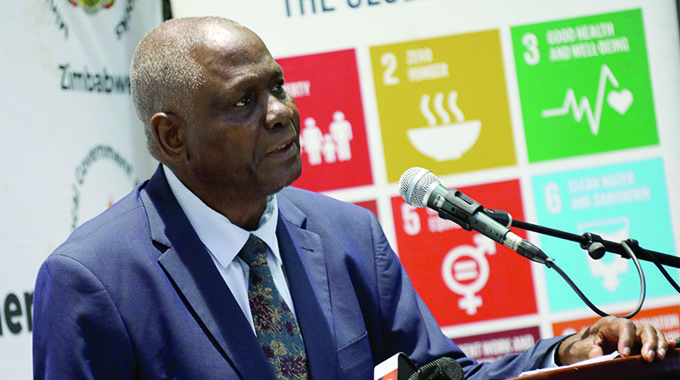
Gibson Mhaka, Zimpapers Politics Hub
THE significant progress in the Gukurahundi hearings, with over 1,000 submissions already received from survivors and affected families in Matabeleland North and South, has discredited and disgraced the so-called Gukurahundi Alliance, a movement ostensibly formed to disrupt the ongoing national healing and reconciliation efforts.
The Gukurahundi Alliance comprises the Assembly of Minorities, represented by Mudenda Chilumbo, who is also the alliance’s spokesperson, Zapu, by Sibangilizwe Nkomo, the Matabeleland and Midlands United Forum (MMUF), by Patricia Tshabalala, the Freedom Alliance, by Dr Samukele Hadebe, the Mayibuye People’s Party (MPP), by Zanele Mguni, The Patriotic Front (TPF), by Mr Prosper Ncube and the Progressive Alliance of Mthwakazi Unions (Pamu), represented by Mr Cosmas Ncube.
In an apparent display of shame, seemingly realising the potential success of the process, Mr Chilumbo said in a press release that the alliance has no intention of thwarting a genuine, inclusive, and transparent process to bring finality to Gukurahundi.
“Without fear of contradiction, we believe in the important role the Government should play in resolving Gukurahundi.
“That does not imply that we absolve the Zimbabwean State from culpability. No! We are being realistic that a genuine solution can come from all stakeholders, including the Government participating in seeking a lasting solution,” his statement reads in part.
This stance from the alliance comes as the National Chiefs Council president, Chief Mtshane Khumalo, who leads the traditional leaders in the process, declared that the smooth progress of the Gukurahundi hearings is a clear shaming of opposition elements, who had urged victims and their families to boycott the crucial process.
“The Gukurahundi hearings are progressing well in both provinces of Matabeleland and there are no challenges, which have been expressed so far.
“The progress is just a revelation against those political parties and their affiliates, who were urging people to shun the process,” said Chief Khumalo, highlighting that these groups continue to voice their criticisms even as significant progress and participation are being recorded on the ground.
Chief Khumalo emphasised the commitment of traditional leaders to ensure a genuine and inclusive process for addressing the emotive Gukurahundi issue.
Further cementing the narrative of substantial progress, Attorney-General Virginia Mabiza, who heads the peace-building outreach secretariat, recently confirmed that the Government has received over 1,000 submissions from Gukurahundi survivors and affected families.
She said that these cases, gathered since the official launch of the Gukurahundi community outreach programme, mark a major step in acknowledging decades-old grievances stemming from one of the country’s most painful chapters.
“Since the official launch of the outreach programme, traditional leaders have begun hearings in selected districts of Matabeleland North and Matabeleland South. The programme has been implemented in a structured manner, informed by community perspectives and grounded in a victim-centred approach,” she said.
“As of 15 July 2025, a total of 1,297 submissions have been received from survivors, affected families, and community members across both Matabeleland North (344 submissions) and Matabeleland South (953 submissions).”
“These submissions include oral testimonies, community grievances and requests for redress or assistance,” said Mrs Mabiza.
She said hearings are conducted in familiar communal settings such as traditional courts and homesteads where victims are encouraged to recount their experiences in their native languages, in the presence of trusted community leaders.
Mrs Mabiza said so far, the outreach has progressed smoothly across all targeted areas, with no significant challenges in community engagement.
“The collaborative efforts of traditional leaders, local structures and supporting teams have ensured broad participation and steady momentum in the process.
“Operational and logistical challenges, where they arise, are being addressed on a case-by-case basis,” she said.
“Traditional leaders, with the support of the coordinating centre, have played a central role in identifying and resolving such issues promptly, thereby ensuring that the outreach continues with minimal disruption.”
The President officially launched the Gukurahundi public hearings programme last July, empowering traditional leaders to conduct the hearings.
Initiated in February 2019, the Government’s approach seeks to resolve the Gukurahundi issue through an internal, home-grown process that reinforces national unity.
The Second Republic has demonstrated a strong commitment to facilitating a healing process that brings closure to past conflicts, aligning with President Mnangagwa’s vision of nation-building and fostering unity.