Online Reporter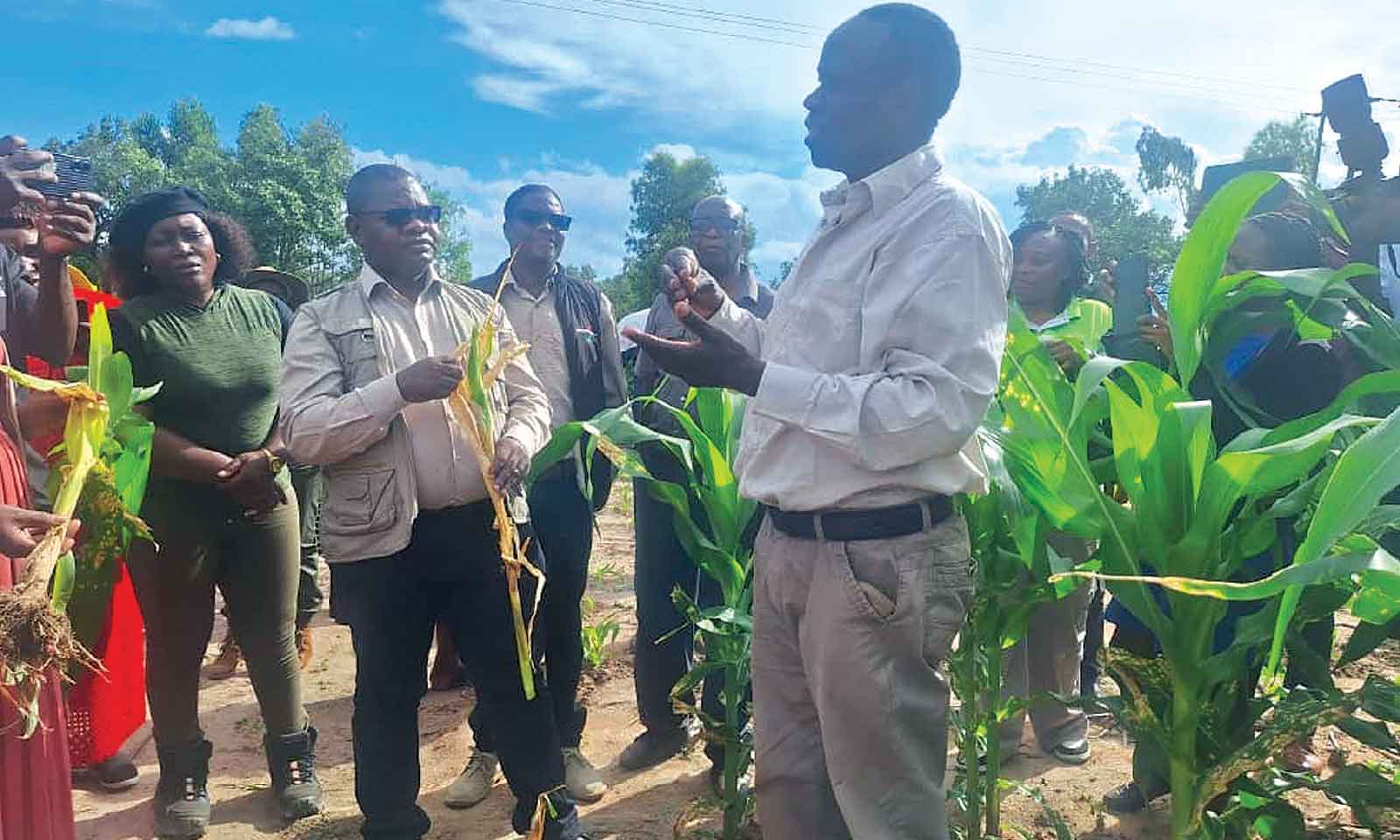
Muchaneta Chimuka
THE arrest of suspected murderer and serial killer, Anymore Zvitsva, has brought a fragile sense of relief to Mashonaland Central – a province better known for its fertile red soils than for fear.
For months, farming communities lived under an invisible curfew. Fields were abandoned early.
Agricultural extension officers cut short their rounds, while business hours shrank and progress stalled.
And as the rains fell, fear travelled faster.
Zvitsva, who is alleged to have killed 19 people, was arrested on January 3, after a joint operation involving the Zimbabwe Republic Police (ZRP) and the Zimbabwe National Army.
Community members also assisted during the manhunt.
He was shot in the left leg as he scrambled for cover in a vegetable garden and is nursing his wounds in hospital under police guard.
Zvitsva appeared before provincial magistrate Mr Vakayi Chikwekwe facing eight counts of murder involving the 19 people, mostly women, two of attempted murder and two of rape.
His arrest has prompted national celebration, but in Mashonaland Central it has also triggered reflection on the cost of his alleged crimes.
Beyond the deaths of the 19 people, Government officials say his actions disrupted agricultural activity in one of Zimbabwe’s most productive provinces, threatening what had been shaping up to be a bumper harvest.
That impact was laid bare on Tuesday last week when the Ministry of Lands, Agriculture, Fisheries, Water and Rural Development conducted a Monitoring Planting Progress and Crop Situation assessment in Bindura district.
Mashonaland Central, long prized for both farming and mining, endured months in which daily life was reshaped by fear.
According to officials, business hours were halved as communities sought refuge at neighbouring homesteads, while farmers and extension officers limited movement to protect their lives.
Speaking during the province’s first crop assessment programme at Mr Tawanda Bonde’s 17-hectare maize farm in Glendale, acting provincial director in the Ministry of Lands, Agriculture, Fisheries, Water and Rural Development, Mr Misheck Chitokomere, described Zvitsva’s alleged actions as “terrorism-like”, saying they directly undermined farm operations.
“We are happy with the collective efforts by the police and members of the communities, which led to the arrest of Zvitsva because farmers and extension workers were no longer going to the fields as expected or even collect their inputs as they feared for their precious lives,” he said.
“The guy really terrorised the community, thereby undermining the progress of farming.
“As you know, extension officers are highly mobile persons, who are supposed to move around giving information to farmers, but their duties were truly limited.”
Mr Chitokomere made the remarks while briefing the Permanent Secretary in the Ministry of Lands, Agriculture, Fisheries, Water and Rural Development, Professor Obert Jiri, during the assessment.
Despite the disruption, officials say the province has defied expectations.
Good rains and farmer resilience have helped steady production, particularly in maize and tobacco.
“We thank God for the rains and most crops are in good condition. We called off the planting season for maize by end of December,” Mr Chitokomere said.
“However, those who are planting short season varieties can continue until mid-January, but taking into consideration that the rain season might tail off by mid-March.”
He said the province had so far received 260mm of rain, compared to 156mm during the same period last year.
Production figures suggest strong recovery.
Maize hectarage has increased by 101 percent, with farmers planting 271 637 hectares against a target of 270 000 hectares.
The province recorded a first-ever hectarage of 51 169 hectares, while tobacco registrations reached 134 percent due to lucrative markets.
“Soya beans production is at 75 percent, sorghum (99 percent), finger millet (403 percent), groundnuts (94 percent), cotton (40 percent), tobacco (134 percent) and millet (83 percent),” Mr Chitokomere said.
He added that 20 000 chickens had been distributed in Guruve South district under the Presidential Poultry Inputs Scheme, helping to strengthen rural livelihoods.
Professor Jiri commended farmers for persisting despite a convergence of challenges.
“We have heard about Anymore Zvitsva’s disruptions, fall armyworms, power cuts which affected irrigation and decline in dam levels in the Mashonaland Central Province, but we are happy that you managed to make it and he are seeing a bumper harvest ever,” he said.
He praised innovations such as organic farming, which he said reduced reliance on chemicals linked to climate change and environmental contamination.
Above all, he said, Government initiatives spearheaded by President Mnangagwa were sustaining food security through continued input support.
Professor Jiri warned that fall armyworms and African armyworms had been reported across provinces, calling on farmers, Agritex officers and chemical companies to work together to combat them.
Among the farmers highlighted was Mr Teddy Muchekesi of Chief Negomo village in Chiweshe, who has practised agroecology farming for seven years.
“I have been into agroecology farming, we create a compost using plant residue, food left overs, chicken and cattle manure,” he said.
“My land had sand soils which are not conducive for crop production, but now they are rich and I have better results in terms of harvest.”
He is supported by Seed-Co agronomist, Mr Steward Zura, who supplied SC719 maize seed suitable for the region.
Nearby, shiny green maize leaves stand as visible proof of organic farming’s viability.
Mr Muchekesi keeps over 2 000 road runner chicks.
“My children help me out because it’s a mammoth task, but with rich rewards,” he said. “Farming is a real business indeed.”
Meanwhile, Mr Bonde expects between 10 and 12 tonnes of maize from his 17 hectares.
“We are commercial farmers and I have learnt farming from childhood,” he said. “Hard work brings success.”
As Mashonaland Central looks toward harvest season, fields once overshadowed by fear are slowly returning to life.