Online Reporter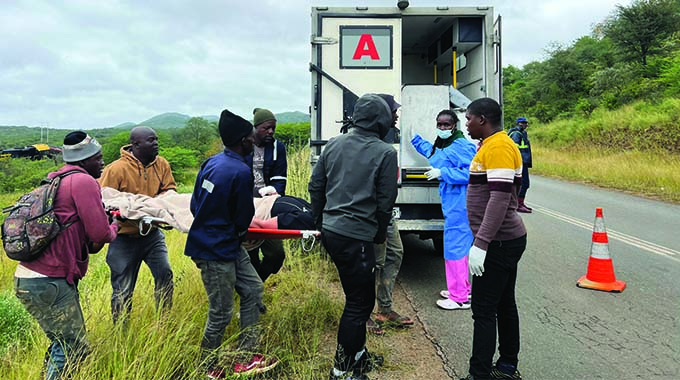
Sukulwenkosi Dube-Matutu, [email protected]
THE community of Gwanda District has been lauded for the crucial role it played during a rescue operation for the train collision accident, which occurred recently just outside the town.
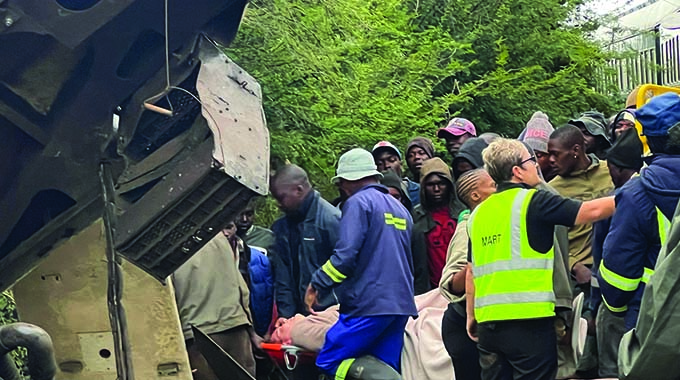
A Rovos Rail passenger luxury train and a Bulawayo-Beitbridge Railway (BBR) goods train recently collided in the Hantinya area. Upon impact, one of the Rovos coaches was ripped off the tracks and landed on its side about 5 metres from the railway line, trapping a crew member inside.
Another coach veered off the rail into the bush, while a third coach collided with the one ahead of it. The Rovos Rail train was travelling to Victoria Falls with a total of 47 tourists hailing from different countries such as the USA, Canada, Denmark, Switzerland and the United Kingdom.
It also had 31 crew members.
While authorities such as the Gwanda fire brigade, ZRP, Gwanda Civil Protection Committee and Gwanda Provincial Hospital staff reacted swiftly, the involvement of community members lightened the load.
The medical staff had to move across coaches, checking for injuries. Community members assisted by carrying the injured in stretchers up a steep slope for a distance of about 50 metres from the accident scene to ambulances parked by the roadside. They also cleared the land around the accident scene to ensure easy access by authorities.
They also assisted the Gwanda Fire brigade team to safely move the body of an injured crew member who had been trapped for about three hours in a coach that had overturned.
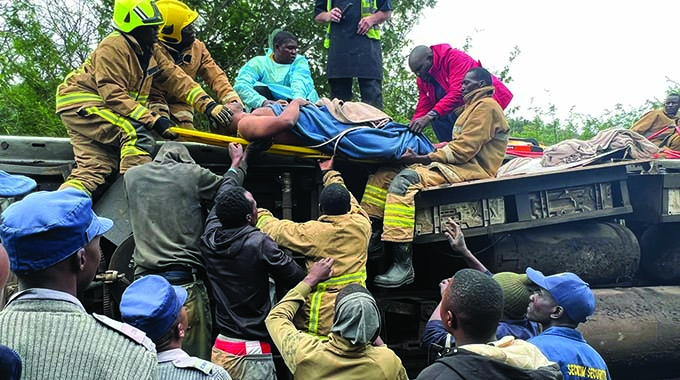
Gwanda District Development Co-ordinator, who is also the district Civil Protection Committee chairperson, Ms Nomathemba Ndlovu, said the response of the community to the train accident is a testament to the effectiveness of District Risk Reduction (DRR) training.
“As the Civil Protection Committee, one of our mandates is cascading Disaster Risk Reduction training in communities and we have covered much ground under this component. Under DRR, we are saying communities shouldn’t just be spectators, but they must take part in preventing and mitigating disasters. They have a role in identifying hazards and possible threats and implementing measures to prevent them from becoming disasters.
“We are also saying when disasters strike community members have a role to play in mitigating the effects of reducing and adapting to the effects of disasters. In this case, a disaster had struck and the community assisted. Their intervention also helped to prevent further disasters from happening. This is the kind of response that we want from the people,” she said.
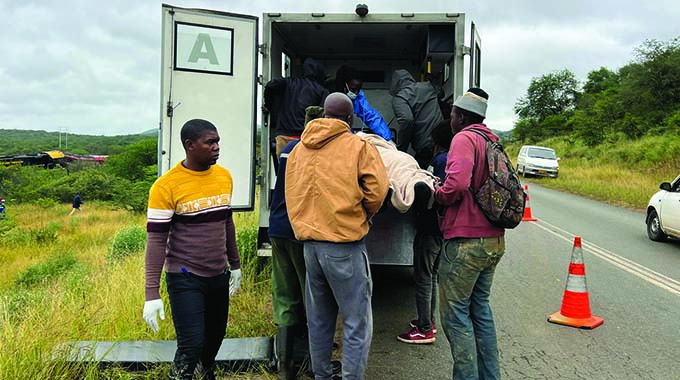
A villager, Mr Brendon Ncube, said that as community members, they are delighted to have a hand in the situation.
“When I heard about the train crash, I rushed from my homestead in the Maphane area to see what had transpired. I walked for more than five kilometres to get to the scene. When I got there, I realised that there was a lot of work and as a community member, I saw it prudent to assist. We took part in carrying the injured from the train to the ambulances.
“The nurses were busy checking on passengers in the train and we noticed that they had limited manpower. We then offered to carry the injured in stretchers. It was also crucial for us to assist as we had to carry the injured up a steep slope,” he said.
Another villager, Mr Sailus Ncube, said it was not only the duty of the authorities to assist following the accident. He said civilians also have a role to play in finding solutions to problems within their communities. Mr Ncube said communities should not just be bystanders, as this leads to a dependency syndrome.
A BBR crew member who spoke during a visit to the accident scene by Minister of Tourism and Hospitality Industry Barbara Rwodzi, after the incident, also highlighted that the community played a crucial role in clearing the wreckage. — @DubeMatutu