Online Reporter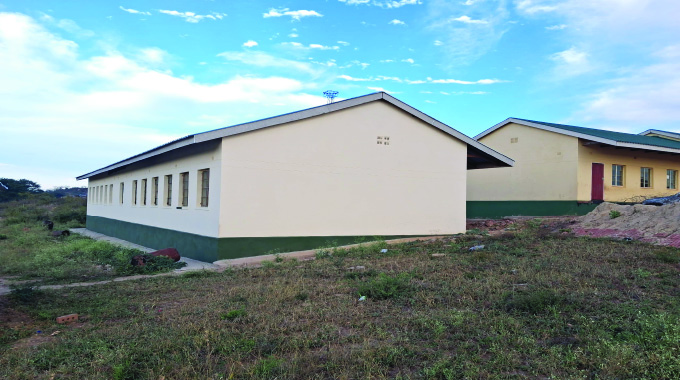
Sukulwenkosi Dube-Matutu
GWANDA Municipality has completed the construction of another classroom block at the newly established Phakama Primary School, as part of ongoing efforts to address overcrowding in local schools.
Built using devolution funds, the new block will accommodate additional grades and ease the overwhelming enrolment pressure at neighbouring schools.
Located in the Garikai/Hlalani Kuhle area, Phakama Primary School previously had only one block, catering to ECD and Grade One learners.
The additional infrastructure now enables the school to enrol more pupils, helping to decongest Senondo and Jahunda primary schools, whose enrolments have more than tripled their intended capacities.
Jahunda Primary accommodates 2 700 pupils, while Senondo has 1 500 — both schools were originally designed for around 800 learners.
In an interview, Gwanda Mayor Alderman Thulani Moyo said the new block is ready for commissioning, while refurbishment of the existing block is underway, to ensure the school is fully operational.
“Phakama Primary School is now awaiting commissioning. We’ve completed the second block and are now sprucing up the first one, so the school will be in a good state,” he said.
Alderman Moyo explained that the project began with devolution funds received between 2019 and 2023.
“As we didn’t receive funds this year, the council stepped in to complete the block. We now aim to build a third classroom block and an administration block,” he said.
He said that once those are completed, the school will be officially handed over to the School Development Committee for further expansion, while the council will shift focus to building another school in Spitzkop suburb.
He emphasised the importance of constructing new schools to meet the needs of the growing town, which is grappling with severe overcrowding in existing facilities.
“Our vision is for Phakama to become a stand-alone school, not an annex of Jahunda Primary as it currently is.
“Building more schools will ease congestion and reduce the long distances learners walk to access education,” said Alderman Moyo.
The school is also a testament to strong community involvement.
In 2020, residents took the initiative by mobilising resources to build the school, each contributing a US$1, to construct a slab for the first classroom block. Their efforts were later bolstered by devolution funds, which also helped procure furniture.
Alderman Moyo noted that the construction of new schools is a key component of the municipality’s five-year strategic plan, aimed at improving the teacher-pupil ratio, which directly impacts learning outcomes.
Mr Brian Ncube, a resident of Garikai/Hlalani Kuhle, expressed excitement over the progress of the school project and hopes for continued development.
“As residents, we’re excited. We want to see more blocks so that all grades can be accommodated. This school has been long overdue,” he said.
Infrastructure development — including schools, clinics and roads — is a central pillar of the National Development Strategy 1 (NDS1).
Through devolution funds, local authorities have been empowered to implement projects that directly respond to community needs.
Under the Second Republic, the Government operationalised the devolution model by allocating five percent of national fiscal revenue to local authorities.
These funds have transformed communities across the country, particularly in Matabeleland, in line with the Second Republic’s commitment to inclusive development and the mantra of leaving no one and no place behind. —@DubeMatutu