Online Reporter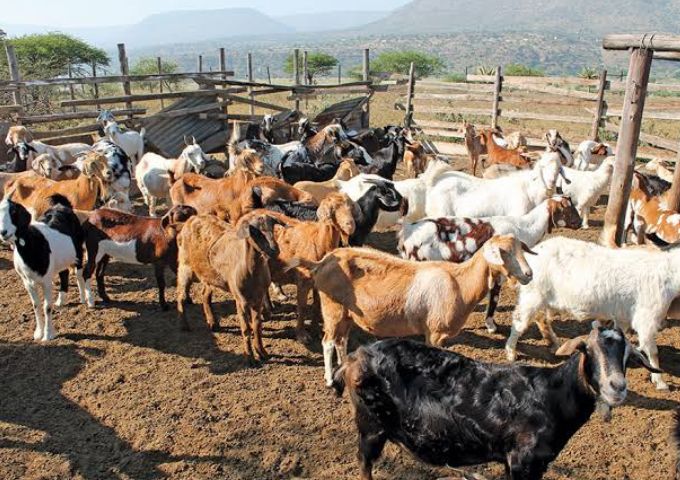
Sukulwenkosi Dube-Matutu, [email protected]
COMMUNAL farmers in Gwanda District are turning to goat breeding as a climate adaptation strategy, with villagers increasing production of Matabele and Kalahari Red breeds to safeguard livelihoods against drought.
Small livestock production has been identified as one of the strategies farmers in drought-prone areas can adopt to sustain household incomes and strengthen resilience to climate shocks.
Matabele goats are known for their ability to adapt to low-nutrition conditions and harsh weather, as well as their medium to large body frame, low maintenance costs and good mothering ability.
Kalahari Red goats, meanwhile, are characterised by their large body frame, adaptability to dry environments, high carcass weight, good carcass quality and twinning ability.
Members of Sibambene Group in Ward 17 are among the farmers benefiting from a goat pass-on scheme being implemented by the Edward Ndlovu Memorial Trust to promote goat breeding and improve livestock production.
The group received 16 goats in 2024 and has since increased its herd to about 50 goats. It has also passed on 19 goats to another farmers’ group as part of the scheme.
Sibambene Group chairperson Ms Siphephisiwe Ncube said the project had helped improve their goat production practices, particularly in the areas of nutrition and animal health.
“We received 16 goats under the pass-on scheme in April 2024. The year 2024 was difficult because there was a drought, but because we had stocked some feed for our goats, we were able to preserve our animals. Although we were buying some feed, it was just a little to augment what we had.
“Our goats did not perform as expected that year because of the drought. In 2025 and this year, our goats did well and now we have about 50 goats. Today we are passing on 19 goats to another group,” she said.
Ms Ncube said the group had shifted its focus towards producing fodder in its fields and gardens to ensure a reliable supply of feed for the animals.
The farmers grow lablab, cowpeas and lucerne, which she said were highly nutritious and helped sustain the goats during dry periods.
She added that dosing, vaccination and dipping had also contributed to preserving the herd and improving livestock management.
Ms Tsoile Moyo of Bambanani Group in Ward 14, another beneficiary of the scheme, said the group was targeting a 100 percent reproduction rate among the goats it had received.
The group received 19 goats and has set aside stock feed to sustain the animals in anticipation of the forecast drought conditions associated with the El Niño phenomenon. “We had already started a goat project and this addition, which we have received through the pass-on scheme, will help boost our income. Our group is comprised mostly of widows hence we need such livelihood projects in order to fend for our families.
“Now that we have received additional goats, we will ensure that they are properly taken care of to achieve high reproduction. If each goat can give us two kids, then it will mean that by the time we pass on the goats next year, we would have tripled what we received,” she said.
Mr Thembani Ncube of Vukuzenzele Group said the training provided through the project had helped farmers appreciate the economic potential of goat production.
“The education we have received on goat breeding has made us realise that there is money in goats which can help alleviate poverty,” he said, adding that the group’s priority was to care for the animals properly to generate income.
Edward Ndlovu Memorial Trust director Mr Michael Moyo said goat production was an important source of income for households in Gwanda, particularly those living in drought-prone areas.
He said the goat pass-on scheme, which was launched in 2022, sought to improve the breeds kept by communal farmers while promoting livestock production as a business.
The initiative has benefited villagers from three wards in Gwanda District. Under the scheme, farmer groups receive Matabele goats and offspring from a Kalahari buck, which they are expected to multiply before passing on the goats to other groups.
The beneficiaries have also received training in goat nutrition, health, hygiene and business management.
“The farmers have been equipped with the necessary nutrition, health and hygiene practices involved in goat breeding. We have been teaching the farmers and also monitoring how they are running their own goat projects to ensure that they qualify for the pass-on scheme.
“As we are holding a pass-on exercise today, we are witnessing the continuation of a development model built on local ownership, collective responsibility and the principle that one community can create opportunities for another community.
“When receiving these goats, farmers are accepting the responsibility of growing the livestock and passing goats on to other groups,” he said.
@DubeMatutu