Sukulwenkosi Dube-Matutu [email protected]
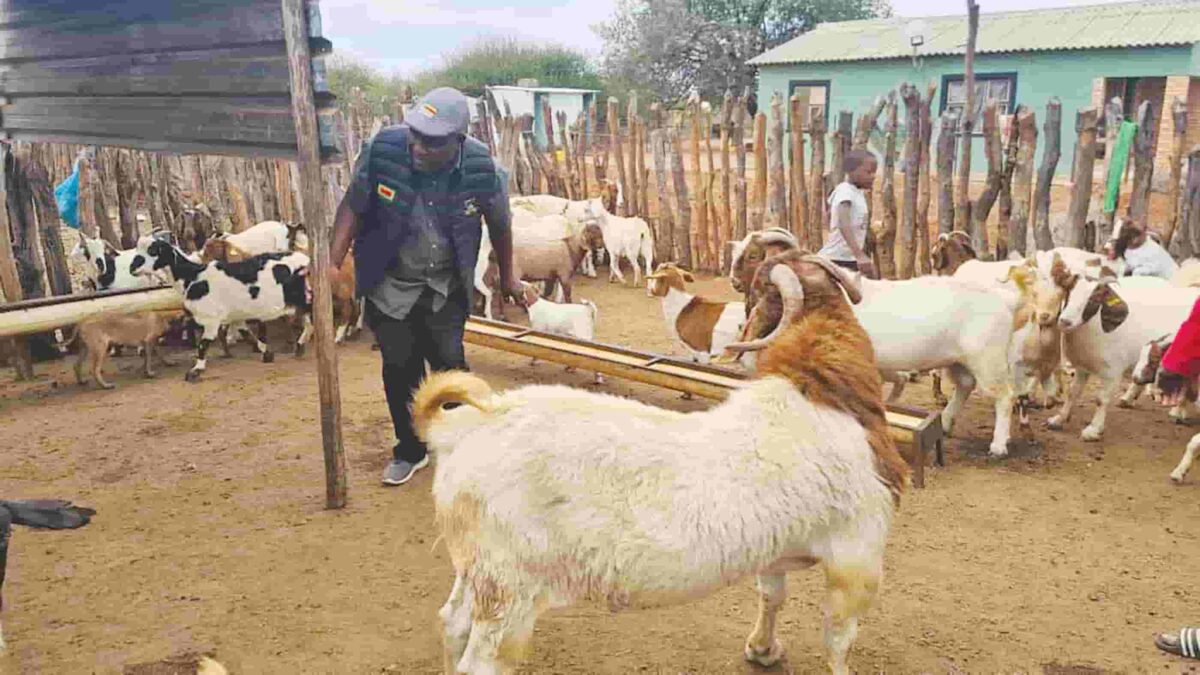
IN the drought-prone Tshanyaugwe area of Gwanda District, farmer Mr Sibangani Dube is turning goat breeding into a business, focusing on improved breeds and quality livestock to build a more resilient rural enterprise.
Mr Dube has more than 80 Boer goats and is targeting a herd of over 200 as he responds to growing demand from buyers across the country.
He said his approach to goat farming had evolved from keeping large numbers of animals to investing in quality breeds, carcass weight and market requirements.
“As a farmer who is into goat farming, I have learnt a lot over the years, and one of the lessons is the importance of goat breeding. I used to focus on keeping large numbers of goats, but now my focus is on the quality of the breeds,” said Mr Dube.
He said his focus is on Boer goats and targeting to increase the herd.
“I started off with 80 Boer goats and it’s no longer about numbers but about business. Demand is high, with buyers coming as far as Harare and Mutare. We now focus on carcass weight, age and quality, and that is helping us grow as farmers,” said Mr Dube.
He said he was also working with other farmers to encourage them to embrace improved goat breeding, particularly young people seeking opportunities in agriculture.
“I’m working with other farmers from the area to encourage them to also embrace goat breeding. I also urge more young people to embrace goat breeding. Through goat breeding we will be able to drive the rural economy through improved breeds,” said Mr Dube.
Across Matabeleland South Province, farmers are increasingly looking to small-stock production as a way of managing recurring droughts, diversifying income and building livestock enterprises suited to dry conditions.
Unlike cattle, goats generally require less feed and water, making them a practical option for many smallholder farmers in drought-prone areas. However, improved breeds still require proper nutrition, disease control, suitable housing and planned breeding to realise their commercial potential.
For farmer Mr Emmanuel Moyo, who keeps Matabele and Kalahari Red goats, investing in fodder production is central to maintaining healthy animals through the dry season.
He grows a range of fodder crops, including lablab, sunn hemp, lucerne, Bana grass and sorghum, among others, to supplement grazing and build feed reserves.
Mr Moyo said preparing feed in advance had helped him sustain his herd during dry periods, when natural pastures become scarce.
“Investing in fodder production is crucial in commercial goat breeding. There is a need for special attention to what you are feeding your goats,” he said.
“Therefore, there is need for planned fodder production. Producing fodder also helps to preserve animals during droughts. With an anticipated super El Niño this farming season, I have already prepared feed for my goats.”
Livestock farmers have been urged to make fodder production part of their livestock management plans, particularly as climate variability and recurrent dry spells threaten grazing and water supplies.
While fodder production is more commonly associated with cattle, farmers are being encouraged to adopt the practice in goat farming to maintain animal condition, support breeding and reduce livestock losses during droughts.
Matabeleland South provincial livestock officer Mr Hatityi Muchemwa said the shift towards improved goat breeds was consistent with the Government’s drive to match agricultural production with suitable agro-ecological conditions.
He said small-stock production could help rural households withstand drought while creating opportunities to generate income from livestock.
“Farmers who adopt small-stock farming are better able to withstand drought. As Agritex, we have continued to disseminate information to farmers and conduct trainings to promote farming as a business,” said Mr Muchemwa.
He said it was encouraging that some farmers were moving away from keeping livestock purely for numbers and were instead investing in breeding and commercial production.
“What is encouraging is that several farmers have adopted the concept and they are no longer keeping livestock simply for numbers but are crossbreeding and turning it into a profitable business,” said Mr Muchemwa.
Government-supported initiatives, including the Presidential poultry and goat schemes and village business units, are also intended to support rural livelihoods, promote livestock production and strengthen rural economic activity.
The Matabele goat is valued for its adaptability to harsh weather conditions and low-quality feed, as well as its mothering ability and relatively low maintenance requirements.
The Kalahari Red is a larger-framed breed suited to dry environments and known for its carcass potential and ability to produce twins. Boer goats are widely used in meat production because of their growth and carcass characteristics.