Stephen Mpofu
The predicted El Nino weather phenomenon now upon us has sent Zimbabwean communal farmers scrambling back to the rain of Munhumutapa in this country when Portuguese traders and sailors seeking a route to the East introduced maize from the Americas to West Africa, a crop that eventually supplanted small grains that withstood difficult weather conditions such as those induced by El Nino across our country and the region.
To this date and because of its lucrative high price in spite of its vulnerability to drought spells maize has continued to supplant small grains which are resistant to dry spells with the result that maize-crazy farmers, as it were, suffer losses by not going all the hog on growing small grains, resulting in hunger as what is likely to happen in our motherland during the super El Nino – a period when the sea surface in the central and eastern Pacific Ocean gets warmer than normal. That warm water shifts the winds and rainfall patterns around the whole world.
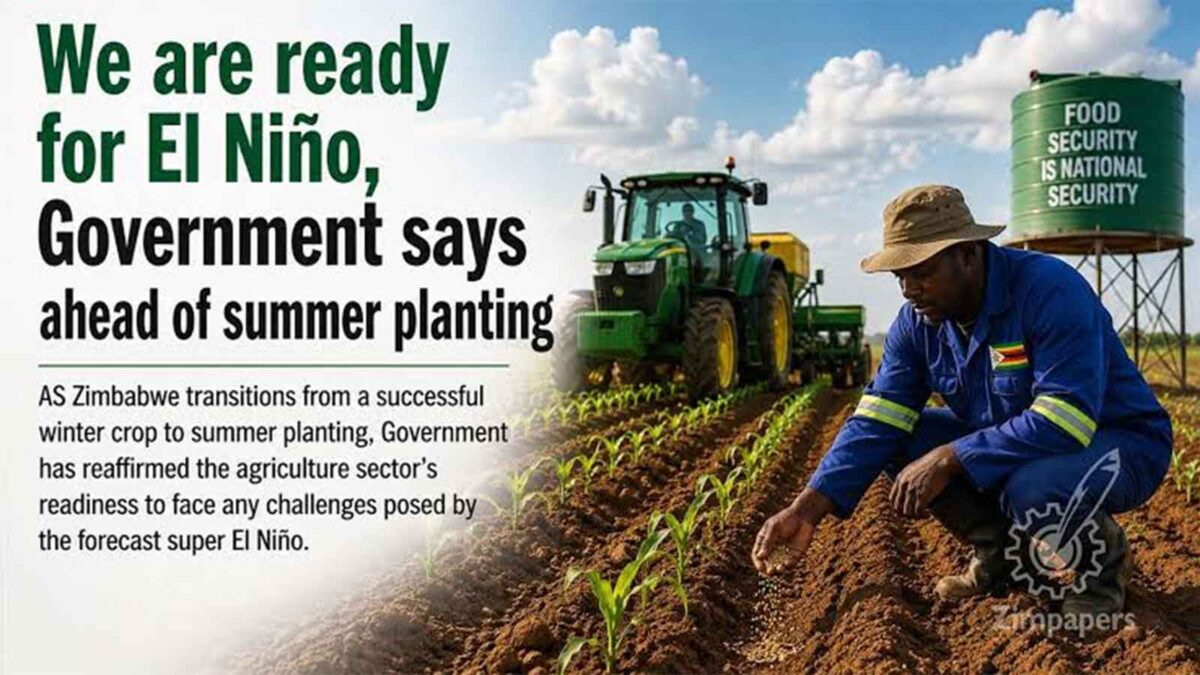
Which is what Zimbabweans are facing today, but thanks to the powers that be agricultural demonstrators are now busy working with traditional leaders in rural areas in preparing land for cropping during the El Nino period when not much rainfall is expected.
Communal farmers are being urged to dig shallow holes in their fields, among other required measures, to preserve whatever rain falls for nourishing the crops for growth instead of the precious liquid draining off into bushes, according to reports from various rural areas in the country.
In addition to other desirable measures the agricultural demonstrators want the traditional leaders and farmers to follow in order to grow enough food, the powers that be might wish to take other measures such as banning alluvial gold panners, for instance as their actions silt water in rivers and dams, depriving people and cattle and wildlife of the vital liquid.
At the same time, our government of the people by the people for the people might wish to consider other measures that accord with its mantra of leaving no one and no place behind in national development.
At the same time the powers that be might also see it fit to start putting together money for food imports just in case should the worst come to the worst due to the super El Nino scourge so that purveyors of opposition politics — for mere opposition are demobilised.
In the mean time sorghum and millet should rein in fields instead of maize which, as stated above is vulnerable to drought in spite of its lucrative price.