Online Reporter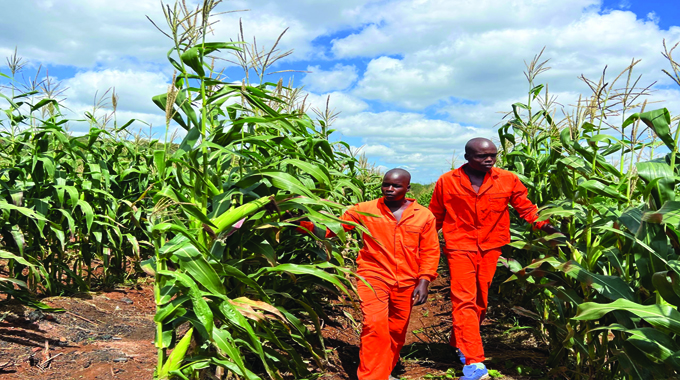
Sukulwenkosi Dube-Matutu, Matabeleland South Bureau
GWANDA Prison Farm has adopted innovative soil and water conservation methods that have significantly improved production at the correctional facility, moving it closer to food self-sufficiency.
Among various crops, the farm utilises two hectares for maize cultivation, which has thrived due to the adopted conservation practices, with plans to expand the hectarage in the future.
In collaboration with the Department of Agricultural Engineering, Mechanisation and Soil Conservation, the prison implemented soil conservation techniques last October, prior to growing maize.
Some of the methods adopted include dead-level contours, infiltration pits, tied ridges, mulching, rip lines and live mulch.
The farm also has 22 hectares of grass intended for baling to support livestock. Currently, it houses a herd of 50 Nguni cattle and 110 cross-bred Boer goats.

Matabeleland South Provincial Mechanisation Engineer, Mr Dalisto Varegeyi noted that their department provided technical expertise and machinery, while the prison contributed labour.
“We successfully integrated several infield water harvesting techniques, allowing us to capture a significant amount of water within the fields, maximising rainfall infiltration and reducing runoff,” he said.
“In a dry region like Matabeleland South, it’s crucial to harvest every available drop of water rather than letting it flow away.”
He said the dead-level contours utilise infiltration pits that further enhance water collection, ensuring a higher water table during the dry season and alleviating moisture stress on crops.
As for tied ridges, he said it was another effective infield water harvesting method, which also increases the water captured, while the mulch serves to retain moisture during drier conditions.
Mr Varegeyi said they employed both live mulching with cowpeas and dead mulching techniques during the learning phase, to identify, which practices yield the best results, adding that they intend to expand the areas under conservation technology for the upcoming farming season.
“It’s essential for farmers to adopt these techniques to enhance production in light of climate change,” he emphasised.

The acting officer-in-charge of the Zimbabwe Prison and Correctional Service (ZPCS) Matabeleland South, Assistant Commissioner Rever Mbedzi, elaborated on how the partnership with the Department of Mechanisation has enhanced the rehabilitation of inmates.
“This project has provided significant benefits by reinforcing our rehabilitation efforts. Our inmates have gained valuable knowledge about conservation farming, which will prove beneficial even after their release, aiding them in leading improved lives and reducing the likelihood of re-offending. The inmates have been actively involved in planting and weeding, gaining hands-on experience throughout the process,” he said.
With an impending harvest of a promising maize crop, Asst Comm Mbedzi indicated plans to sell the surplus, which would contribute income to the prison.
Assistant Principal Correctional Officer Fungai Muranda, the farm manager, said inmates have received training in silage making, crucial for producing livestock feed. After maize harvesting, the remaining stover will be utilised for silage production and they have begun baling the grass.
“We aim to expand our tillage to 15 hectares and incorporate small grains into our conservation farming practices,” he said.

“Our maize crop has thrived, thanks to the conservation techniques, despite the last rainfall occurring in early March, our crop remains robust due to our water harvesting strategies.”
Looking ahead to the 2025-2026 farming season, he expressed confidence in further expanding tillage and employing additional conservation methods.
“Our mandate is to ensure food security for both our inmates and the nation and I believe we are on the right track,” he noted.
The Government has intensified efforts in soil and water conservation to bolster the agricultural sector. The initiatives are critical for achieving Vision 2030, aimed at enhancing agricultural production and productivity to ensure household food security.
The Agriculture and Food Systems Transformation Strategy targets a US$8.5 billion agricultural economy by 2025, serving as a comprehensive plan derived from the agricultural recovery plan, horticulture recovery plan and livestock growth plan.
These strategies align with the goals of Vision 2030, which are supported by the National Development Strategy 1 (NDS1) and recognises that attaining food security relies heavily on efficient soil and water management practices.-@DubeMatutu