Online Reporter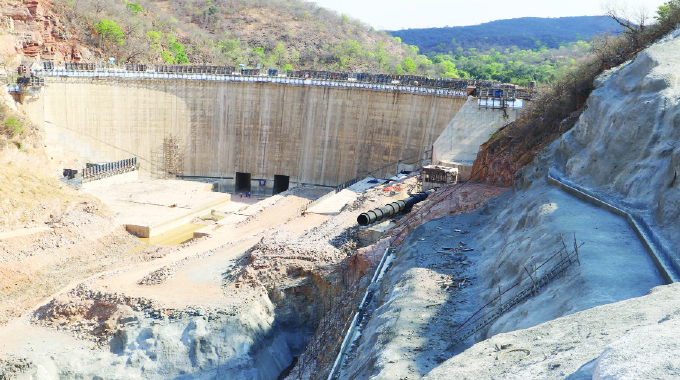
Debra Matabvu, Zimpapers Writer
THE walls of two dams that are critical in addressing water shortages in Bulawayo and Harare, Gwayi-Shangani and Kunzvi respectively, are expected to be completed in the next five months after Treasury started allocating US$5 million every month for each of the projects for ongoing works, in line with President Mnangagwa’s directive.
Gwayi-Shangani Dam, which will become the third-largest inland water body after Tugwi Mukosi and Lake Mutirikwi, is presently 71,2 percent complete, while progress at Kunzvi Dam stands at 62 percent.
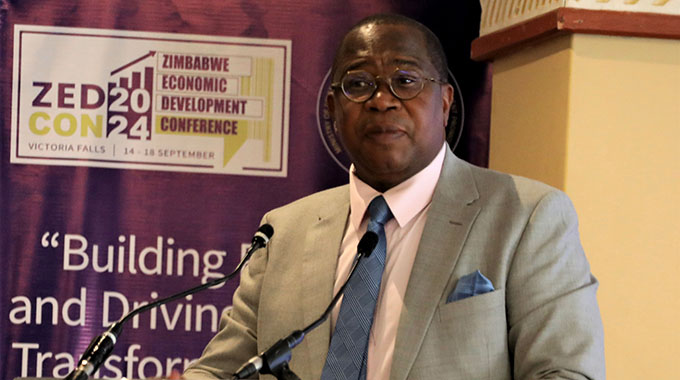
Finance, Economic Development and Investment Promotion Minister Professor Mthuli Ncube told Zimpapers that once construction is complete, the Government will focus on the pipeline that will deliver water to Bulawayo.
“This year, we have two targets in terms of our water infrastructure development: One is Lake Gwayi-Shangani; the other is Kunzvi Dam. President Mnangagwa has been saying we must focus on Gwayi-Shangani. He has made it very clear and so we have been allocating US$5 million every month towards the completion of the dam,” he said.
“We will do so until the year ends. Once that is completed, we can then focus properly on the pipeline, so that the water can be conveyed down to Bulawayo.”
Kunzvi Dam is also receiving the same monthly allocation.
“We are applying the same formula at Kunzvi Dam. We want to push them to make sure that we really alleviate the water situation in Harare,” he said. “I cannot give you timelines at the moment; however, we are rushing to complete the projects.
“We should start moving the water once the dam wall is completed. It (dam wall) should be completed by the end of the year.”
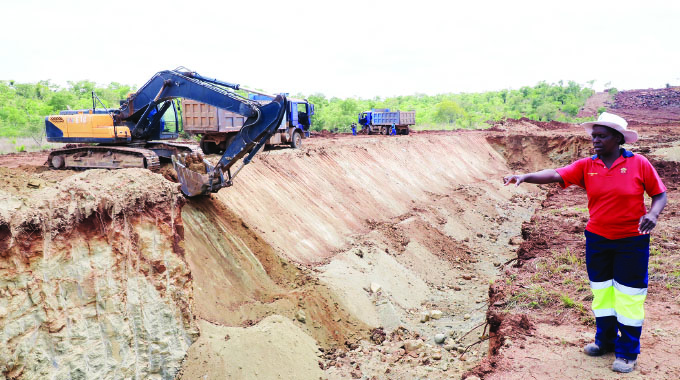
Lake Gwayi-Shangani resident engineer Paul Dengu said they had started working on the dam wall following the recent disbursement of funds.
“We are at 71,2 percent and we resumed in July when we received disbursements,” he said. “So, we are now working on the dam wall and the hydropower station.”
Creating a green belt
Work has also started on two of the five pump stations that will be installed along the 252-kilometre pipeline.
“We have started working on the pump station that is near the dam and the other one in Lupane, which is about 120km from the dam,” added Eng Dengu.
“There will be five pump stations along the pipelines, and communities where these pipelines will be installed are set to benefit from irrigation schemes.
“However, we are going to ensure the resettlement area in Binga will also have an irrigation scheme. We are also going to start work on that soon.”
From the dam, the pipeline will pass through the Gwayi community in Matabeleland North province, the Hwange National Park and Cross Dete.
Other communities set to benefit from the pipeline include Lupane, Nyamandlovu and Bulawayo residents.
The pipeline will run parallel to the Bulawayo-Hwange-Victoria Falls railway line.
In the 2025 National Budget, the Government set aside ZiG2 billion for the construction of dams across the country, with Gwayi-Shangani and Kunzvi dams taking the bigger chunk of the amount.
The Gwayi-Shangani water project — part of the National Matabeleland Zambezi Water Project that was initially conceived in 1912 — involves the construction of Lake Gwayi-Shangani, a 10 megawatt hydroelectric power station and a 252-kilometre pipeline with six booster stations from the water body to Cowdray Park in Bulawayo.
Kunzvi Dam, which will carry 158 million cubic metres of water, will serve as an additional source of clean water for Harare’s main supply system.
The dam is also expected to provide water to irrigate at least 500 hectares.
Additionally, it will provide water for domestic purposes in expanding growth points such as Juru, Cross, Musami and Majuru. Construction in both projects commenced after 2018, with the advent of the Second Republic.