Online Reporter
As part of the build-up to the Heroes Day commemorations next week, we revisit an interview our Assistant Editor Mkhululi Sibanda (MS) had with former ZPRA zone commander, Cde Andrew Ndlovu in an operational area code named the Northern Front 2 (NF2) region.
NF2 region covered Lupane, Nkayi and Binga districts in Matabeleland North Province where Cde Ndlovu, also known by his pseudonyms Cde Cleopas Ndanga and Volunteer Commando Mkhwananzi operated from during the armed liberation struggle in the 1970s.
In the interview first carried out in December 2018, Cde Ndlovu reflected about the harrowing day he was shot by a sniper, resulting in the loss of 14 teeth and severe damage to his tongue and gums. Below are excerpts from the interview:
MS: You have spoken about various battles. I understand one incident saw you being shot and losing several teeth. What happened on that day?
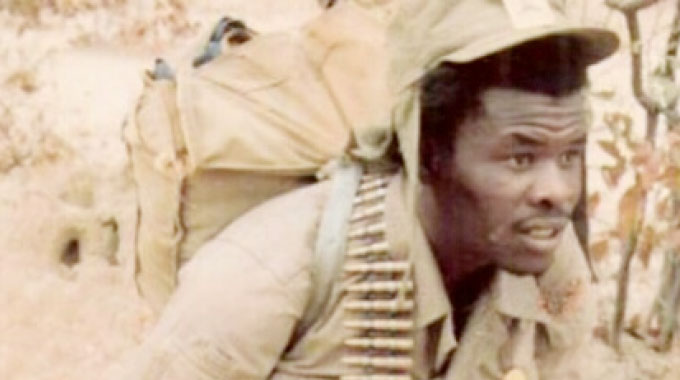
Cde Ndlovu: It’s true. I was shot and seriously injured. This happened after the Tshangane battle in Lupane District. The Rhodesian soldiers came for Mr Songo of Songo Stores. They raided him, forced him onto the bonnet of their truck, and drove away with him. Once we heard he had been raided, we decided to retaliate. I was commanding a unit of 16 comrades.
We had been engaged in heavy fighting over the previous two days. We decided to ambush the Rhodesian truck.
Unfortunately, we were unaware that Songo was still clinging to the bonnet. When we opened fire, he was caught in the crossfire and shot in one leg. Nonetheless, the enemy took him to their camp.
The following day passed quietly as we carried out patrols. Later, we broke into small groups. Cdes Richard Mabhontsini, Mazithulela Ndlovu and I were due to travel north for a meeting with comrades from other operational areas.
I swapped my Dectarov or Grunov for a lighter AK-47 to ease the long journey.
In the afternoon, likely 9 September 1978, we passed the homestead of a man named Mabandawule, roughly 500 to 600 metres before Dongamuzi River. This location becomes significant later in the story.
MS: Okay, go on.
Cde Ndlovu: After crossing the river, we reached Mr Tshuma’s homestead about 400 metres away and decided to rest there. Around 5.30pm, we saw Mabandawule’s son Nelly, who was about 20 years old, walking with another boy.
We exchanged greetings. Though we knew them, we became suspicious, they appeared to be monitoring our movements. Still, we let it pass.
MS: That was not the day you were injured?
Cde Ndlovu: No, I am providing the background. That evening we stayed at Tshuma’s homestead. Mrs Tshuma, whom we called masalu (mother), was kind to us. She cooked supper, asked us whether young as we were, we were not missing our families especially our mothers.
She also wanted to know what Zimbabwe might be like after independence. She gave us blankets and showed us where we could sleep. We stayed up past midnight, periodically patrolling to ensure our safety. Around 5am the next morning, just as we were preparing to leave, the enemy attacked.
MS: Take us through those moments.
Cde Ndlovu: We heard a dog barking and looked up, to see the enemy in battle formation approaching the homestead. They thought we were still inside, it was clear we had been sold out. Although we could have fled, we were young and defiant. I knelt, took aim at a white soldier in the centre and fired.
I saw him fall. Gunfire erupted. They had walked into our ambush. I then started firing at shoulder level. The fight lasted about 30 minutes. Suddenly, I found myself jumping backwards, taking several steps while holding my weapon. I turned, fell to my knees but kept my grip on the gun. I felt a strange sensation, as if
I wasn’t alone. I stood up, others were still fighting but I felt compelled to withdraw.
I made three short runs, ngavula isipandawo (firing rapidly) and lay low. I became separated from the others and noticed I was losing my speech and breath. Eventually, I reunited with Richard and then Mabhontsini near Dongamuzi River.
The enemy had stopped shooting, which was very unusual for Rhodesians to do.
Mabhontsini suddenly said, “Aah, commander, kukhanya udutshulwe, it could be a Brengun.”
When I tried to respond, I couldn’t. I felt bits of flesh in my mouth, my tongue and gums were badly damaged. That bullet had torn through my cheek. I had lost 14 teeth.
I looked down and saw my clothes soaked in blood. There was no time for despair, we crossed Dongamuzi River and walked about 10 to 15 km to the Mthupha homestead.
I had been hit in the morning and we arrived there in the afternoon. At the Mthupha homestead, I was given warm water mixed with Dettol to gargle. From there, we moved to another village and then on to koNyoni.
That is where our medical corps began treating me. For three months, I was hidden during the day in the bush and taken into a homestead at night.
I could not eat solids and survived on isobho yenyama (meat soup), which had to be carefully poured into my mouth to avoid affecting the wound and bandages. The pain was immense.
Meanwhile, Rhodesian forces were combing the area, sometimes firing randomly into the bush.
Enemy forces from Wankie (now Hwange) and Dete joined in, but they never found me. My comrades had fortified the area.
When the enemy discovered my former hiding spot, they bombarded it using helicopters and artillery, but by then, I had been moved to a place 20 km away. Villagers told us, “Bebebhomba iganga leliyana ebelilobhudi uMkhwananzi”.
The comrades had formed a protective ring to prevent enemy access. It took another three months for me to heal and learn to speak again. I endured that pain for the freedom of this country.
MS: When you began to recover, what did you do?
Cde Ndlovu: We launched an offensive. The enemy even told villagers, “These people are on a revenge mission.”
Amakhiwa aphela. We later discovered that Mabandawule and his son Nelly had been working with the enemy, they were the ones who had betrayed us.
MS: What happened to them?
Cde Ndlovu: One morning around 8am, we descended on Mabandawule’s homestead, about 60 guerillas.
We found him in the kitchen hut and demanded he explain his collaboration with the Rhodesians. He stammered, wakiliza umdala and the boys began “dealing” with him right there.
His homestead was surrounded by armed revolutionaries.
MS: When you say they dealt with him what do you mean?
Cde Ndlovu: In military terms, it means he was punished severely. We were the governing authority in those areas, there were no courts or police, we were the custodians of the law there.
We were the ones who were in charge. Mabandawule had obstructed the revolution. He suffered the consequences.
As we were dealing with him, his son Nelly returned from Songo Stores. I called him over and told him that his father had confessed they were both sell-outs.
It was a ruse to extract the information from him and he admitted. After taking them through our won court process a verdict was reached and they were sentenced to death. We immediately executed them at their homestead.