Richard Muponde-Zimpapers Politics Hub
GWERU occupies a sacred and enduring place in the political history of ZANU PF and the broader liberation struggle of Zimbabwe.
It was in this central geographic and ideological space that the party convened its first congress, a defining moment that transcended organisational formality and culminated in the historic decision to wage an armed struggle against colonial rule.
That Congress marked the irreversible transition of ZANU from a nationalist pressure movement into a revolutionary vanguard party, prepared to sacrifice, organise and mobilise for total liberation.
The choice of Gweru was not accidental.
As a central point in the country, it symbolised national unity, inclusivity and strategic convergence. Ideologically, it represented a meeting point between political consciousness and revolutionary action. Decisions taken in Gweru reshaped Zimbabwe’s destiny, anchoring the liberation struggle in discipline, collective leadership and ideological clarity.
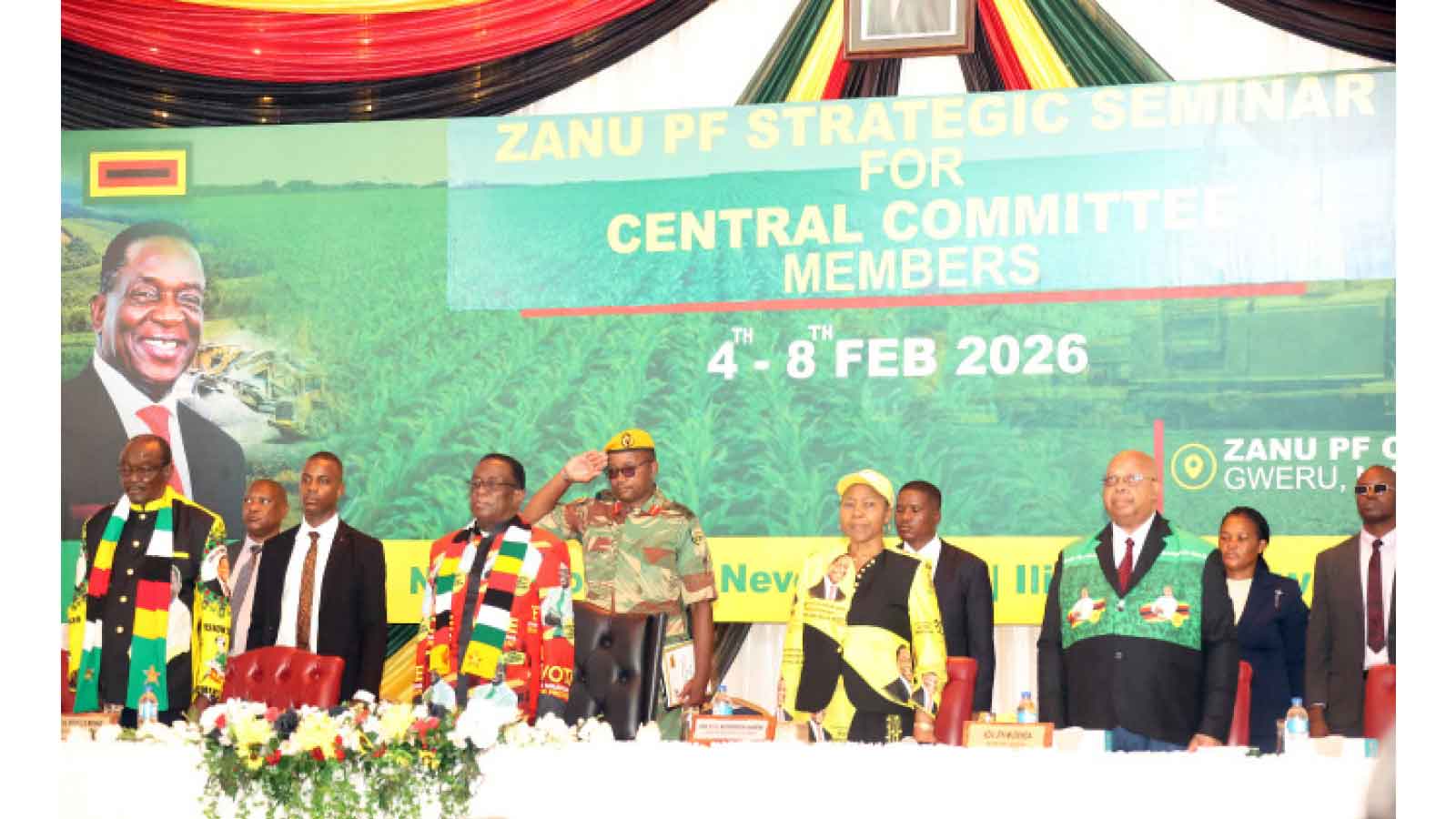
It is against this profound historical backdrop that the ZANU PF inaugural Central Committee Strategic Seminar, which concluded on Saturday at the ZANU PF Midlands Convention Centre in Gweru, acquires deep symbolic and political significance.
From armed struggle to economic liberation
While the historical first congress resolved to prosecute an armed struggle to reclaim political sovereignty, the contemporary Strategic Seminar reflects a shift in the terrain of struggle, not a departure from revolutionary ethos. Today’s battlefront is economic transformation, institutional efficiency, ideological defence and national development under Vision 2030.
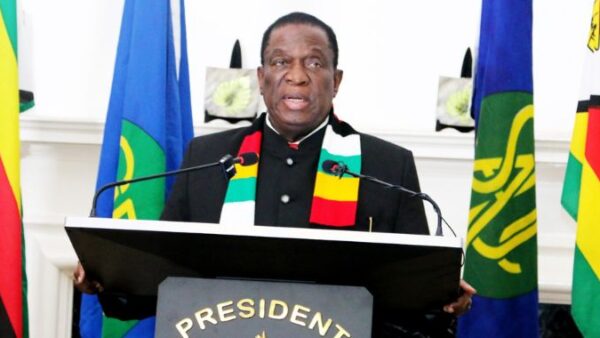
President Mnangagwa’s address to the Central Committee on Friday deliberately situated the party within this continuum of struggle. In reminding members of their constitutional mandate, ideological responsibility and developmental role, the President reaffirmed that ZANU PF remains a party defined by purpose, history and responsibility to the masses.
Just as the first congress demanded courage and clarity in confronting colonial domination, the Strategic Seminar demanded strategic thinking, discipline and innovation in confronting contemporary challenges such as global economic shifts, information warfare and internal institutional weaknesses.
The Central Committee: Then and Now
Historically, ZANU PF’s strength lay in its collective organs, whose authority derived from ideology, discipline and loyalty to the masses. The Central Committee, as emphasised by President Mnangagwa, remains “the principal organ of the party in-between Congresses”, entrusted with translating resolutions into action.
In the liberation era, similar structures ensured cohesion between political leadership and the armed struggle. Today, the Central Committee is positioned as the engine of party power, bridging party policy and Government implementation. Its constitutional role under Section 39 places it at the centre of national governance, supervision and policy coherence.
The seminar, therefore represented a moment of institutional introspection and recommitment, echoing the seriousness with which earlier cadres approached revolutionary duties.
Reviving thematic committees: Institutional renewal as revolutionary duty
One of the most critical parallels between the first congress and the strategic seminar lies in organisational renewal.
Where the liberation struggle required the creation of new structures to prosecute armed resistance, the current phase requires the revival of thematic committees to drive sectoral economic transformation.
President Mnangagwa’s acknowledgement that these committees became dysfunctional during the First Republic is itself a revolutionary act of honesty.
Their reactivation signals a deliberate move away from complacency towards strategic governance.
Through insisting that the Central Committee must lead economic engagement from the front, the President redefines revolutionary leadership for the modern era, anchored in productivity, innovation and policy implementation.
This revival mirrors the adaptability that characterised the liberation struggle, where tactics evolved without compromising ideology.
The first congress was marked by ideological discipline and collective decision-making.
Similarly, the Strategic Seminar places heavy emphasis on constitutional literacy and principled leadership. President Mnangagwa’s warning against opportunism and ideological bankruptcy reflects lessons drawn from both history and post-independence governance.
Leadership, as framed by the President, is not positional entitlement, but earned service to the party and people. This resonates deeply with liberation values, where authority flowed from sacrifice, discipline and commitment to collective goals.
Foregrounding constitutional discipline, the seminar’s objective was to inoculate the party against threats such as factionalism, indiscipline, and detachment from the masses, all of which history shows can derail revolutionary movements.
Party–Government synergy: Completing the liberation cycle
The liberation struggle sought political power as a means to transform society. Today, the party–Government relationship is framed as the vehicle through which that transformation must be completed.
President Mnangagwa’s insistence on constructive, people-centred collaboration reinforces ZANU PF’s self-conception as both a revolutionary movement and a governing party.
Oversight, supervision and support of Government programmes by the Central Committee echo the liberation-era insistence on accountability to the masses. The Seminar thus reinforces the Party’s role as the ideological compass of the State.
Mobilisation, media and the new battlefront
Where the liberation struggle relied on political education and mass mobilisation, today’s struggle includes new media and narrative control.
President Mnangagwa’s call to embrace digital platforms while guarding against indiscipline reflects an understanding that ideology must now be defended in both physical and virtual spaces.
This modernisation of mobilisation strategies, without compromising Party identity, mirrors the adaptability that sustained the armed struggle under changing conditions.
Gweru revisited: History reasserting itself
That this strategic seminar took place in Gweru was not merely symbolic nostalgia. It was history reasserting itself. Just as Gweru once hosted a congress that set Zimbabwe on the path to liberation, last week, it hosted a seminar repositioning ZANU PF for economic transformation, institutional renewal and ideological defence.
The party returns to Gweru not to commemorate the past, but to draw strength from it, reaffirming that revolutionary movements must periodically renew themselves or risk stagnation.
The inaugural strategic seminar marked a decisive moment of renewal, much like the first congress did decades ago. The terrain has changed, but the mission remains: to safeguard sovereignty, uplift the masses and shape Zimbabwe’s destiny.
Emerging from Gweru with revitalised structures, sharpened ideological clarity and renewed commitment to Vision 2030, ZANU PF once again presents itself as a colossal revolutionary party in motion, rooted in history, responsive to the present and resolute about the future.