Chronicle Editor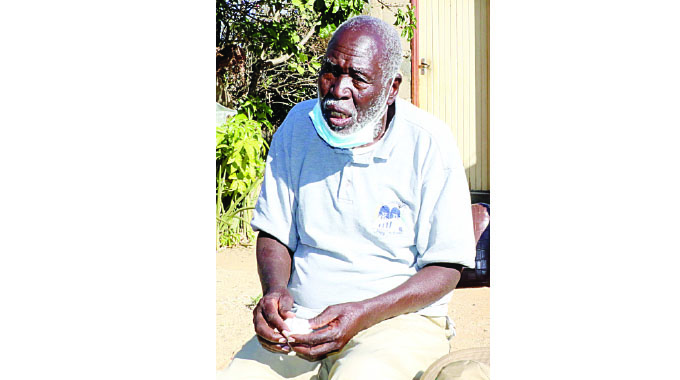
Mashudu Netsianda, Senior Reporter
MARCHING up an escarpment in a rough terrain without adequate cover, Zimbabwe People’s Revolutionary Army (ZPRA) and Umkhonto we Sizwe (MK) guerrillas under the command of Cde Moffat Hadebe, laid an ambush on the Rhodesian Forces leading to a fierce battle that lasted for eight hours.
The encounter marked the beginning of the famous Sipolilo Battles, which subsequently became known as the Eastern Front, when Zipra cadres combined with South Africa’s Africa National Congress (ANC) military wing, MK soldiers waged a valiant battle against the Rhodesian security forces from December 1967 to July 1968.
The famous 1968 Sipolilo campaign followed the famous Wankie battle in which the two forces joined hands under the leadership of, among others, South African freedom fighter Chris Hani.
Cde Hadebe, who was awarded the Grand Officer of the Zimbabwe Order of Merit by President Mnangagwa on Monday during Heroes
Day commemorations in Harare, found himself involved in the Sipolilo campaign following his dramatic escape from Grey Prison (now Bulawayo Prison) in January 1965 together with Elliot Ngwabi and two others who are now late, Cdes Keyi Nkala and Clark Ngiyo Mpofu for attacking Zidube Ranch in Kezi in 1964. The property belonged to Bulawayo senior magistrate, Mr Francis Fairwell Roberts who was part of the judiciary that oppressed black people by issuing out detention orders to the nationalists without any justification.
After the prison escape, Cde Hadebe went for further military training in Algeria and Tanzania and was later deployed back into the country for the Sipolilo campaign.
The campaign followed the first contact between the guerrillas and the Rhodesian forces which occurred three months after ZPRA/MK guerrillas had crossed into Rhodesia from Zambia. The crossing was made on the night of December 29, 1967 at the confluence of the Zambezi and Chewore Rivers.
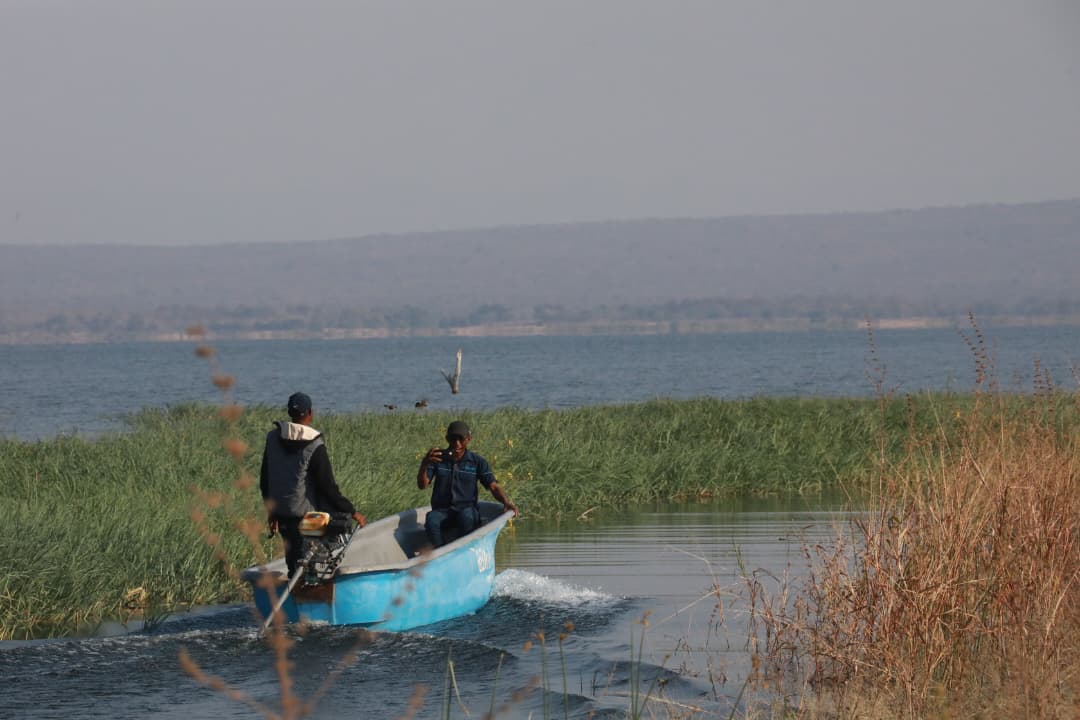
The Pyramid Detachment, as it became known, was made up of 74 ZPRA and 26 MK guerrillas under the command of Cde Hadebe. They crossed the river on small inflatable boats, which only carried three men at a time.
The whole detachment was then reorganised into four platoons to facilitate the establishment of six more bases in Rhodesia.
Each base had an engineering unit and reconnaissance team. Together, they reconnoitred the locations and prepared the hideouts and storage places for arms, ammunition and food.
Upon crossing the river, some had to remain in the water with the boats while the others crossed into the country. The unit was to confront the Rhodesian forces only three months after crossing the Zambezi River.
During the first three months, Cde Hadebe said their radio equipment was in excellent condition and the operators well trained such that they maintained regular contact with headquarters in Lusaka, Zambia.
They established their base camp on the uninhabited Zambezi Valley. Cde Hadebe said their intention was to establish a permanent infiltration route south of the escarpment.
During the first few months, the guerrillas spent time hiding out in mountains before their first contact with Rhodesian forces in March 1968.
He said the guerrillas had to move to and from their base. One of them had left a footprint at the side of the road used by Rhodesian security forces patrols.
In an interview yesterday, Cde Hadebe shared memories of their first contact with the enemy during the Sipolilo campaign.
“It took about three months before we made contact with the Rhodesian security forces. In fact, since we had to move to and from our base in the mountains, it happened that one of us left a footprint at the side of the road used by Rhodesian security forces patrols,” said Cde Hadebe.
“The print was distinctive, because the Czechoslovakian boots issued to the MK guerrillas had a figure of eight on the sole and the same prints had been identified by security forces during the Wankie campaign”
The area was heavily patrolled by two Land Rovers at two-hour intervals. Within days of the tell-tale footprint being found, Rhodesian security forces were ordered to report for duty.
In a few weeks, tracker teams, supported by helicopters and light aircraft, scoured the area from the Zambezi to Sipolilo in the east, their presence blocking all escape routes into Zambia.
“On the actual day of our first contact with the Rhodesian security forces, they found fresh footmarks and followed the trail for a few kilometres to our positions,” said Cde Hadebe.
He said as that happened, the detachment had been experiencing major problems with its radio equipment and communication between the platoons as well as with headquarters in Lusaka.
“All we knew was that enemy aircraft were dropping troops a few kilometres from our position. Early that morning, our members slipped through the enemy lines and made their way to the base to find out what was happening. They found a group of their comrades waiting and quickly organised defences,” Cde Hadebe said.
At about 11 am the Rhodesian helicopters and aircraft began hovering overhead and signalled the position of the camp to the forces on the ground.
“About three hours later, we gathered information that the Rhodesians were approaching our base. By late afternoon, the first assault had been repulsed, thanks to the guerrilla force’s light machine-guns.
“We were the first to open fire and ultimately it turned into a full-fledged battle during which we killed several Rhodesian soldiers. I vividly recall two Rhodesian soldiers who were carrying radios for communication died on that particular day,” he said.
“Since we knew that the Rhodesian security forces would attack again, we laid a well-planned ambush, and inflicted further heavy casualties on the Rhodesians.”
Because they had been killed on open ground, Cde Hadebe said it was not possible for the guerrillas to capture the arms and equipment of the dead Rhodesians, as this would have exposed them to fire from hovering helicopter.
Instead, they retreated swiftly, anticipating that fighter jets would be called in to bomb the area. The battle lasted all afternoon until late in the evening at 7pm.
Cde Hadebe said on their first encounter with the enemy, their camp did not suffer any fatalities. In the days that followed, the Rhodesia security forces adopted a “search and destroy” tactic gradually forcing the guerrillas to break up into even smaller groups.
They were hampered by continuous harassment from the security forces, and by lack of food, communication and military equipment.
Cde Hadebe recalled that following their encounter with Rhodesian soldiers on the banks of the Zambezi, they withdrew and marched for several weeks without incident until they ran into ambush in May.
Those who escaped were forced to retreat into Zambia. Only a small number of MK members who participated in the Walkie campaign managed to make their way to South Africa.
Cde Hadebe said as fierce fighting in the Zambezi Valley battle intensified, a large number of guerrillas were killed by the Rhodesian forces. He managed to escape into Mozambique where he hid in the bush for seven months together with one of his men.
They were later captured by Portuguese forces in that country and deported to Rhodesia leading to his arrest and subsequent incarceration in 1972 Cde Hadebe was only released at independence in 1980. — @mashnets.



 Online Reporter