admin
admin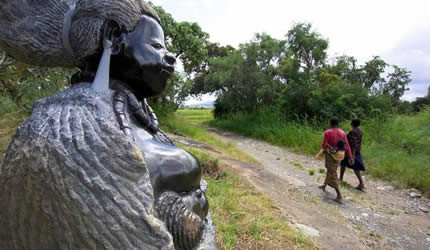
conditions.
Since most works of art are vulnerable to the passage of time, it is therefore, important to know how to preserve and protect what is considered our cultural heritage.
Stone is known to erode, crack, stain and scratch, as does wood, as well as splinters and moulds, ceramics crack, photographs fade and tear, and most metals bend, rust and corrode.
Depending of which medium our artists use, the process of decay can be postponed for centuries or can occur alarmingly fast if placed in the wrong hands.
Art ages and disappears, sometimes to re-emerge in the fragments of some foreign archaeological trove; an example would be our own Zimbabwean Stone Birds from Great Zimbabwe, part of one of which was returned from Germany late last century.
Understandably issues of degradation and protection concerning art do not feature highly with collectors, curators and artists, yet these are the stark realities – art is vulnerable.
High-profile and famous artworks have to endure many travel schedules to foreign exhibitions, and this makes the risk of accidental damage and accumulated wear and tear real, and constant.
Even storage can take its toll with temperatures and humidity extremes, corrosive acidic micro dust, electro smog, and a whole host of mechanical, chemical and physical influences that possess a latent capacity to erode artworks as the hang or stand displayed in various environments.
Examples of efforts to safeguard art in transit abound throughout history.
These efforts have been recorded where art has been forcibly removed, as war spoils, or colonial plunder and pillage from the colonialist empirical armies who carried out trans-African looting sprees to Chiang Kai-shek relocation of Chinese national treasures to Taiwan, the Elgin Marbles from Crete to England, Ethiopian Obelisk looted by the Italians, Napoleon’s trans-European looting sprees into the hands of the Louvre in France.
It is therefore mandatory for Zimbabwean museologists, curators, conservators, gallerists and gallery wardens and workers to be trained in the skilful management and transportation of artworks and cultural relics.
Zimbabwe at present does not have institutional training in these fields where we risk the potential of damaging and losing our artworks and archaeological finds further.
Overseas millions of dollars are invested in the conservation and protection of the world’s most reassured works of art.
However, in these fields African governments and institutions are found wanting – in that many do not create substantial national budgets to conserve, restore, and preserve the great art of their forefathers which should be preserved for the enjoyment and edification of future generations.
In adjunct to the later, it is important that our children are introduced to the appreciation, respect and preservation of art as early as possible, as they will become the future preservers and appreciators of art in Africa.
The early exposure of children to museums, galleries art and materials as a serious discipline in schools will ensure that our children are cognisant of the importance of appreciation and preserving their cultural heritage.
Over the course of the past 37 000 years in world history, the often violent and anarchic collapse of societies as well as imperial invasions and wars have led to the loss of many cultural treasures – from the early Chinese, Egyptian and Sumerian dynasties to Tsarist Russia and the Weimar Republic, all lost a great deal of cultural material.
Similarly, in our own Zimbabwean, Munhumutapa dynasties, a substantial amount of our tangible cultural heritage was pilfered by colonialists as well as by other unscrupulous Portuguese and Oriental traders.
These treasures have yet to be physically traced and completely accounted and restituted to Zimbabwe.
It is therefore important that our own indigenous custodians of art and culture today, learn lessons from history and consider conservation, preservation, recording and fiscal insurance of art and cultural heritage as a national priority.
New age technology and refined techniques for art conservators are at our disposal today.
However, the experimental use of synthetic materials and found objects used by many Zimbabwean artists today will create new challenges for conservators and gallerists.
It is also essential that we research for new protective options in order to transport, store, exhibit, handle, and conserve both our antiquity, post-colonial heritage and contemporary Zimbabwean art with due care, expertise and commitment.
Dr Tony Monda holds a PhD in Art Theory and Philosophy and a DBA (Doctorate of Business Administration) in Post-Colonial Heritage Studies. He is a lecturer, writer, musician, art critic, practising visual artist and corporate image consultant.



 Online Reporter