admin
admin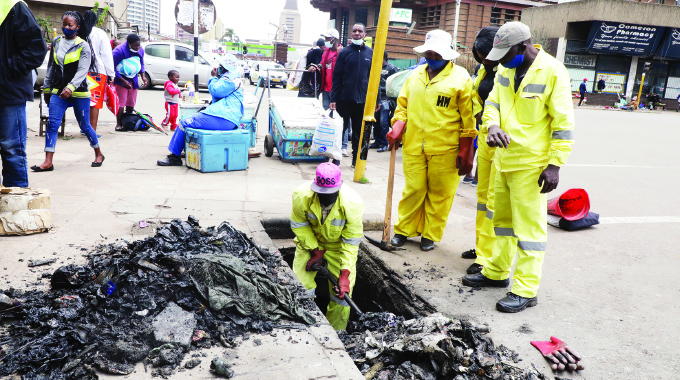
Municipal Reporter
Harare City Council workers were yesterday opening and clearing out garbage from the catch-pits that drain street rain water into the underground drains, after many clogged in the first major showers for many months on Monday.
Catch-pits are used by litterbugs to dump rubbish, but in any case when it rains litter on the streets is washed into the catch pits along with the dirt and any leaves that may have fallen. While the drains can be self-cleaning with just mud and leaves, larger pieces of rubbish such as take-away boxes and empty drink containers can clog the catch-pits.
When clogged even quite modest showers can cause large pools to appear on the streets, especially on the outer edge of the pavements. The catch-pits are normally cleaned out before the rains start and because of the littering culture in Harare, quite often during the season.
This year the clean-out was late. Piles of rotting garbage were piled up next to many catch-pits waiting for a truck to come and load them, and pedestrians were already starting to throw their rubbish into the now cleared pits.
Last Monday, the city experienced heavy rainfall that led to massive congestion as some traffic lights were dysfunctional while the roads were flooding. This, combined with the tendency for people to pick up family and friends from outside their workplaces, instead of walking to a car park, and more vehicle in town because public transport is less popular in the rains, caused the usual expected traffic jams.
Mr Michael Chideme yesterday said the council was conducting routine maintenance of traffic lights and repairs including upgrading of obsolete equipment.
“There is installation of a central traffic management system and we are engaging ZETDC for restoration of power supply at various failed intersections,” he said.
Many traffic lights at major Harare intersections are either not working or working intermittently, creating massive traffic jams especially when there is a sequence of failed robots along a road. With more traffic, as when it rains, what becomes intolerable at peak hours, when at least police officers are regularly deployed to direct traffic, becomes total gridlock.
The grid road network requires a lot of functioning lights so east-west and north-south traffic can alternate at intersections, and the heavy traffic can flow without gridlocks developing as eight cars drive into the centre of the intersection from all four directions, blocking everyone for long periods.
Bank Street is a critical link between the two halves of the city centre and has been remodelled to ensure smooth traffic flows, but when the intersections of Mbuya Nehanda Street, Chinhoyi Street, Leopold Takawira Street and Julius Nyerere Way have no working traffic lights, as is the case now, there is a gridlock at peak periods.



 Online Reporter