


 Sundaymail Editor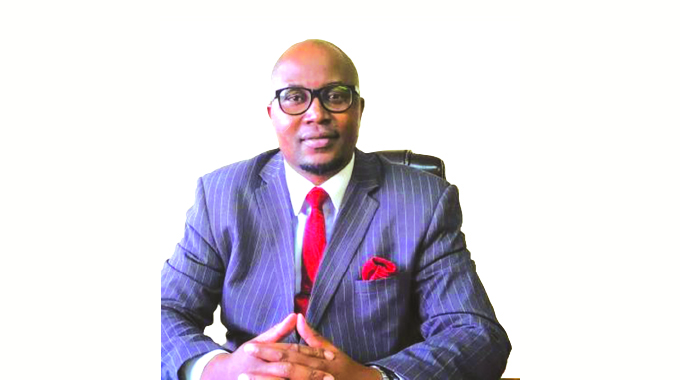
Harare Metropolitan province’s four local authorities have been the biggest beneficiaries of devolution funds since the beginning of the programme. The Sunday Mail’s RUDO MANDIRO (RM) engaged Harare Metropolitan province Secretary for Provincial Affairs and Devolution in the Office of the President and Cabinet Mr Tafadzwa Muguti on a range of issues, including how devolution funds have been used so far.
*****************
RM: Can you begin by outlining how local authorities in Harare Metropolitan province spent their devolution funds last year?
TM: Let me start with the City of Harare, which was given $387 million.
They did not do anything with the money for housing and roads. They did not rehabilitate or fix any of their dams.
They did not develop any community building or clinic.
All the money went towards work on the sewer treatment plant at Crowborough and rehabilitation of the Kuwadzana sewer line, which is one kilometre long.
That is what they used their devolution funds for.
For Ruwa, they received $93 million worth of devolution funds.
They did nothing on infrastructure development, in terms of housing development.
However, the Ruwa Local Board did some construction.
The first project they did was construction of a one-classroom block at Rujeko Primary School, which is now 80 percent complete.
They also rehabilitated their water station.
The third project they did was installation of a pump station at Greensykes.
The Ruwa board was quite effective in using their funds in that they also managed to do their valuation rolls.
A lot of our local authorities do not have valuation rolls, so they don’t know the value of their landholdings and property portfolios.
They also purchased a transformer for the Nora Dam pump station using the same funds.
In terms of clinics, they renovated Damofalls Clinic.
They also did road markings on Chiremba, Chizhanje and Orange roads.
This year, they are planning to use their funds to finish the Damofalls Clinic.
We are hoping the clinic will be functional in the second quarter.
There is also the water augmentation project we are hoping to start and complete this year.
So, devolution funds managed to have the following benefits for Ruwa: improved access to potable water, improved education facilities and improved public access to health.
As for Epworth, we gave them $89 million.
They drilled and equipped 10 boreholes.
They also completed a classroom block at Glenwood Primary School.
The local authority built and completed vendors’ markets at Solani and Chiremba.
They similarly constructed a vendors’ market at Mabvazuva, which is yet to be completed.
Further, Epworth installed a solar power backup system at their offices, which is now almost 70 percent complete.
On health care, the local authority constructed ablution facilities at Mabvazuva Clinic, which had no such facilities.
They also upgraded the clinic and installed an X-ray machine.
The Epworth Local Board also resealed Jacha Road using devolution funds, and this was done outside of the Emergency Road Rehabilitation Programme (ERRP).
For 2023, the Epworth Local Board has plans to use devolution funds to develop the water supply and reticulation extension at Glenwood, develop a masterplan for the whole of Epworth, put up three more solarised boreholes, as well as build two additional SME (small and medium enterprise) markets and ablution facilities.
Chitungwiza was allocated $133 million from devolution funds.
They drilled 17 ward-based and eight institutional boreholes.
They also bought two refuse collectors, two ambulances, an IT (information technology) server, rehabilitated their water drainage system and procured protective clothing for their employees.
The Unit C sewer line is also being rehabilitated.
RM: Can you give us an update on progress of the Emergency Road Rehabilitation Programme in the province?
TM: There are claims that we are not giving the City of Harare money, which is actually not true.
Our last disbursement to all local authorities was done on December 16, 2022.
Last year, Harare was allocated $958 944 703 and a supplementary $769 544 822, meaning it was given a total of $1,7 billion under ERRP and from Zinara (Zimbabwe National Road Administration).
I am happy to report that out of that allocation, $1,4 billion was disbursed as of December 6.
As of this year, Harare is supposed to get over $2 billion.
However, the City of Harare is yet to acquit itself for $566 million it received last year.
As a result of rampant corruption, bribes for contract schemes, at the local authority, it has taken forever to implement ERRP.
While it must take between two and seven days to secure a contractor, it is taking the City of Harare an average of 90 days to find contractors.
Chitungwiza received the second-highest allocation, $81 million, and a supplementary budget of $65 million, disbursed by December 16.
The problem with Chitungwiza is that they don’t have a single engineer and have to outsource, and this leads to inordinate delays in project implementation.
Ruwa was given an allocation of $38 million and an additional budget of $30 million, to make a total allocation of $68 million.
They have not acquitted themselves for $27 million.
This year, they have been given a budget of $91 million.
Epworth was also given $38 million and a supplementary $30 million.
So, all in all, Harare Metropolitan was given a budget of $2,69 billion.
We hope to have more acquittals on time and procurement being done quickly.
We have also asked Zinara to audit all their accounts.
RM: Can you outline progress on the development of Kunzvi Dam?
TM: On Kunzvi Dam, the tenders have been awarded and construction has commenced.
In terms of Muda Dam, we will give you all the details after the project has received Cabinet approval.
RM: We understand some public boreholes in Harare have been decommissioned after traces of human waste were detected in the water. What are the authorities doing to address this?
TM: Yes, it is true.
This is common in informal settlements like Caledonia, where we also have people drilling boreholes next to blair toilets.
We also have people drilling boreholes without authority from the local authority or proper mapping.
We are working towards addressing this challenge.
RM: How has your fight to rid the province of land barons progressed?
TM: In a move to force land barons to comply with proper regularisation, over 300 land barons were arrested last year.
The operation is still ongoing and residents are encouraged to report any cases of double allocations by cooperatives.
The barons who have been arrested are facing charges of theft of trust property, receiving money from cooperative members and converting it to personal use, and selling non-existent stands.
RM: Can you also outline progress on the blitz on unregistered schools?
TM: We had a total of 400 unregistered schools as of 2021.
We are happy to announce that around 300 of those schools have been registered, translating to over 70 percent compliance.
This year, we are going to shut down those that did not comply.
RM: Harare province has been blighted by rising cases of drug abuse. What are the authorities doing to arrest this menace?
TM: Harare Metropolitan has declared war on drug lords.
We have been meeting with stakeholders to find a lasting solution to this problem.
We now know that drug havens operated by drug lords are well known in our communities.
However, there has been a lot of intimidation within communities, where people are afraid of coming forward and speak up against the drug lords.
Obviously, the recent case of the Dominican Convent learners came as a shock.
We are glad the school authorities cooperated with the police.
Police are still investigating the matter.
We will continue digging until we find out where exactly these children get the drugs.
Dominican Convent is not the only school where learners are involved in drugs.
We have learners at some former Group A schools who are coming to school with drugs.
This problem is also being witnessed at schools in high-density suburbs, especially high schools.
This is something that needs to be addressed.
Our province has rolled out an aggressive and robust campaign against drugs, which involves speaking to children through our health officers and police officers, and going to schools to counsel children.
We want to ascertain where these drugs are coming from.
Twitter: @rudomandiro


 Bongani Ndlovu
 Online Reporter