


 malvernmugadzikwa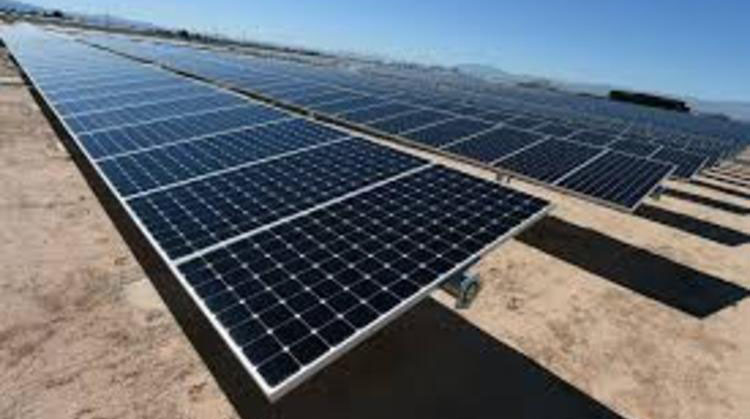
Nokuthula Dube
POWER cuts will not affect the treatment and pumping of water to residents in the future, as the Harare City Council is planning to develop a 50-megawatt (MW) solar plant at its farm in Crowborough to power water and sewer treatment plants.
Development of the US$50 million project is expected to commence next year.
The local authority will set aside an initial capital injection of US$5 million from its 2025 budget.
Presenting the city’s 2025 budget last week, Harare’s finance and development committee chairperson Councillor Costa Mande said the project will help reduce the city’s operational costs and enhance sustainability.
“One of the signature projects for the 2025 financial year is the Harare 50-megawatt solar plant,” he said.
“The project involves the establishment of a 50MW solar plant at the council-owned farm in Crowborough at a total cost of US$50 million.
“In 2025, US$5 million capital injection has been proposed.
“The solar plant will generate electricity to power the city’s water and sewer treatment plants, with any excess energy being supplied to the national grid under net metering arrangements.
“This project is very important for the city because it will reduce operational costs significantly and also reduce our dependence on the national grid.
“Furthermore, the project is poised to assist the city in reducing its carbon footprint and ensure environmental sustainability.”
Cllr Mande said the city was poised to undertake two other major capital projects next year — development of three waste transfer stations and a material recovery centre — as part of its efforts to accelerate development and improve service delivery.
He said the projects will be undertaken through public-private partnerships (PPPs).
“By combining the strengths of both the public and private sectors, PPPs can address challenges that may be difficult for either sector to tackle alone,” he added.
“In view of the above, the following projects will be funded under the PPP model in 2025 — three waste transfer stations valued at US$150 000 and one material recovery centre valued at US$50 000.”
The solar farm project, he said, aligns with the city’s sustainable development goals by promoting the use of renewable resources.
“It ensures that Harare’s growth is environmentally responsible and that natural resources are preserved for future generations,” he continued.
“Building a 50MW solar energy farm is not just about generating electricity, it is about creating a sustainable, economically viable and environmentally friendly future for Harare.
“The project promises significant cost savings, enhanced energy security, environmental benefits and economic growth.
“It positions Harare as a leader in renewable energy in Africa, setting a benchmark for other cities to follow.
“By investing in solar energy, Harare is lighting the path to a brighter, greener future.”



 Online Reporter