Oliver Kazunga
Senior Reporter
ZIMBABWE’S electricity wheeling framework is set for its biggest test to date, with a landmark 7,4-megawatt rooftop solar plant in Harare now ready for commissioning and set to wheel power to private industry through the national grid.
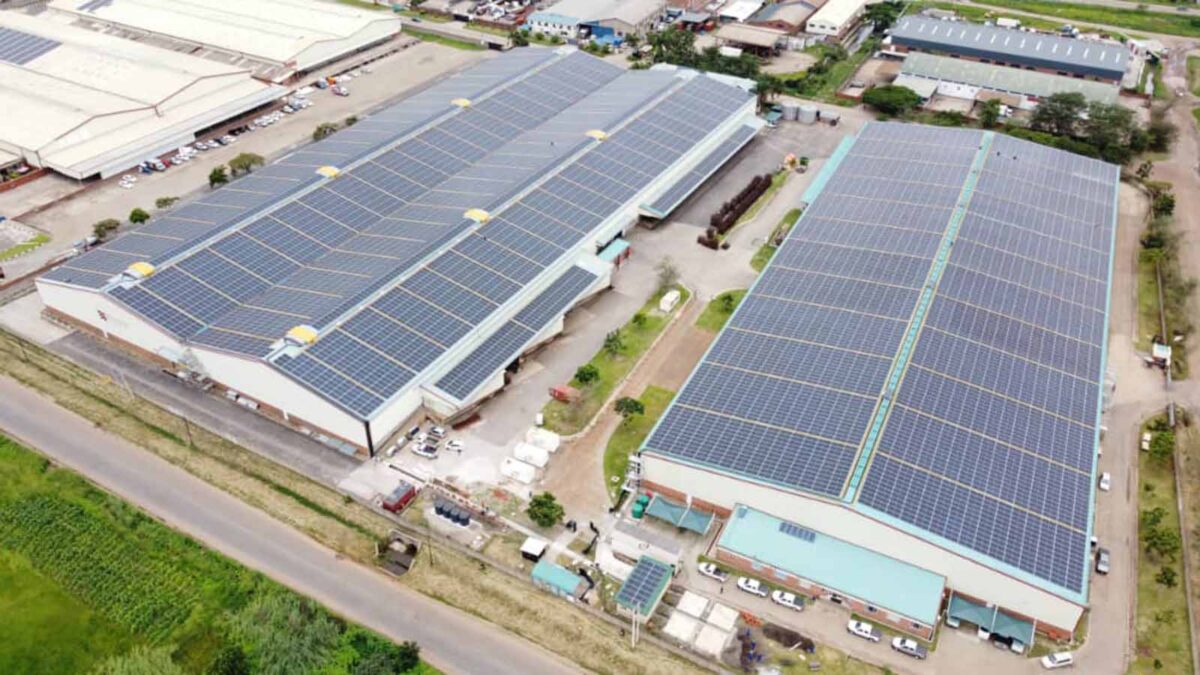
The Limpopo Way Power project would be one of the largest rooftop solar installations in sub-equatorial Africa, covering 33 500 square metres of warehouse roof.
Unlike conventional captive plants that supply only on-site users, the project will inject its full 7.4 MW into the national grid for delivery to an agreed private off-taker under a use-of-system agreement with the Zimbabwe Electricity Transmission and Distribution Company (ZETDC).
It is hoped that the model could unlock a new wave of private investment by allowing IPPs to build where roof space exists and sell where demand is, using the national network as a carrier.
Limpopo Way Power head of business development Mr Timothy Brown said all major works were complete and the project was now undergoing final tests and remedial works as required by ZETDC.
“We have completed installation and constructed a 7,2km 33kV line to Kambuzuma substation. We are predicted to be producing 7.4 MW, which we believe will make us the biggest rooftop solar plant in sub-equatorial Africa,” he said.
The plant is built on two adjacent warehouses of 20 000 sqm and 13 500 sqm, avoiding the need for additional land.
The EPC contractor is Solar Energy Projects. If successful, the arrangement would demonstrate commercial viability of wheeling for renewables at a time when manufacturers and miners are seeking alternative, reliable power to cut costs and raise capacity utilisation.
Mr Brown said while the wheeling mechanism exists, it has so far been used by only a limited number of IPPs.
The project is also expected to deliver technical benefits. By feeding power close to demand in Harare’s industrial belt, it is projected to save about 1,5 MW in technical losses on the grid.
Zimbabwe has liberalised power generation to attract private capital, with solar emerging as a key option. The success of wheeling will, however, depend on tariffs, wheeling charges and grid capacity.
The project is now awaiting final ZETDC approvals for commissioning, which will determine when it starts delivering power.