Ivan Zhakata
Herald Correspondent
ZIMBABWE has blamed illegal Western economic sanctions for constraining the full enjoyment of human rights and said the measures were undermining access to international finance, essential medicines and industrial equipment.
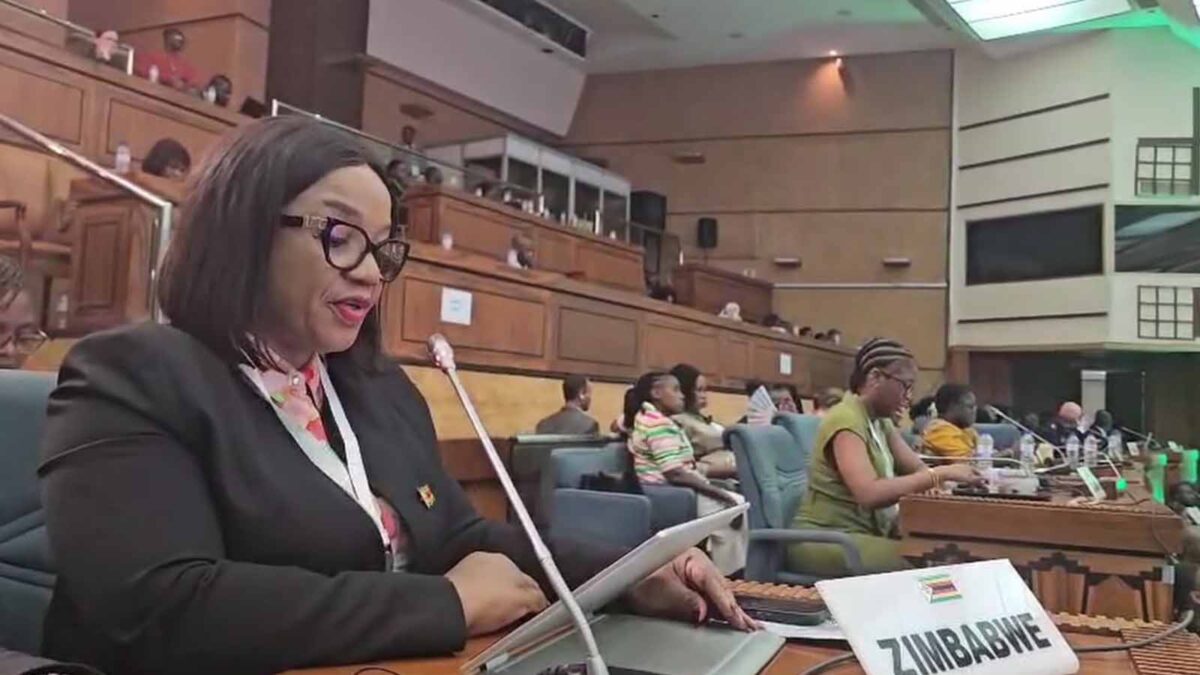
Speaking at the 89th Ordinary Session of the African Commission on Human and Peoples’ Rights in Dakar, Senegal, Permanent Secretary for Justice, Legal and Parliamentary Affairs Mrs Vimbai Nyemba said the sanctions were also affecting the country’s capacity to achieve the Sustainable Development Goals.
“The enjoyment of fundamental human rights in our country continues to be severely constrained by the illegal, unilateral economic sanctions imposed on us by certain Western powers,” she said.
“These measures directly undermine our capacity to fully achieve the Sustainable Development Goals (SDGs) and erode the social fabric by restricting access to international finance, essential medicines, and industrial equipment.”
Mrs Nyemba called for the immediate and unconditional removal of the sanctions, while acknowledging the support Zimbabwe has received from the African union and regional organisations.
The session, which ran from October 12 to 21, 2026, provided Zimbabwe with an opportunity to outline its human rights record, ongoing legal reforms and social development programmes.
Mrs Nyemba said the Government was reforming the country’s legal frameworks in line with the Constitution, Vision 2030 and the National Development Strategy 2 (NDS2).
She said Zimbabwe continued to prioritise food security, universal healthcare and infrastructure development despite climate-related challenges, particularly the devastating El Niño-induced droughts that affected the region.
“The Government of Zimbabwe has successfully rolled out social protection safety nets to guarantee the right to food for vulnerable rural and urban populations,” she said.
Mrs Nyemba said investments in dam infrastructure and other water security projects were strengthening climate resilience and protecting livelihoods.
Zimbabwe is also aligning its human rights agenda with the African Union’s 2026 theme, which focuses on sustainable water availability and safe sanitation systems to achieve Agenda 2063.
Mrs Nyemba said the country was implementing a whole-of-Government programme for 2026 to 2028 linking water security, biodiversity, climate adaptation and agricultural productivity.
On constitutional developments, she informed the Commission that amendments enacted in 2026 had extended the electoral cycle from five to seven years and provided for the election of the President by a joint sitting of Parliament.
The amendments also reassigned delimitation functions and electoral responsibilities.
“The Government of Zimbabwe remains committed to keeping the Commission informed of these developments, and to ensuring that they are implemented within the framework of the rule of law,” she said.
Mrs Nyemba also highlighted Zimbabwe’s efforts to facilitate the voluntary return of nationals affected by disturbances in the Southern African Development Community region, expressing appreciation for cooperation from the countries concerned.
She said Zimbabwe’s hosting of the third edition of Africa Skills Week in Harare from October 12 to 16 demonstrated the country’s commitment to addressing skills gaps and youth unemployment.
The initiative also provided an opportunity for Zimbabwe to share its skills-auditing frameworks with other African countries and promote skills development as a means of advancing the rights to education and employment.
Mrs Nyemba reaffirmed Zimbabwe’s commitment to the African Charter on Human and Peoples’ Rights and said the country remained committed to constructive engagement with the Commission and other human rights mechanisms.
“Zimbabwe remains deeply committed to its obligations under the African Charter on Human and Peoples’ Rights,” she said, adding that constructive, objective and non-politicised dialogue remained central to advancing and protecting human rights across the continent.